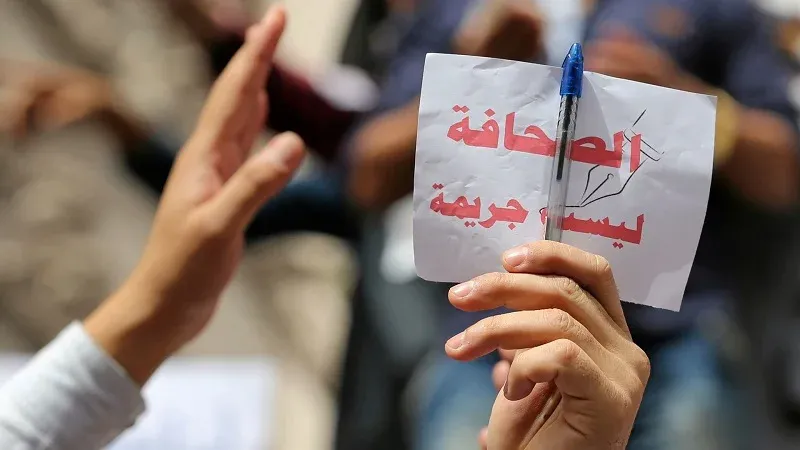

In the wake of Morocco’s legislative elections held on September 23, Reporters Without Borders (RSF) has conducted a thorough assessment of press freedom in the country over the past five years. Their findings reveal a concerning trend of sustained legal pressures on journalists, significant hurdles to field reporting, and a disturbing rise in online harassment directed at media professionals. Despite the passage of time since the 2021 elections, the landscape of journalism in Morocco remains fraught with challenges that impede the free flow of information.
RSF highlights that the judicial system has been a primary tool for exerting pressure on critical journalists, with many cases being pursued under the Criminal Code rather than the more appropriate Press and Publishing Code. Notable instances include the Court of Cassation’s July 2023 decision to uphold the sentences against prominent journalists Omar Radi and Soulaimane Raissouni. Additionally, Hamid El Mahdaoui was sentenced to 18 months in prison in November 2024, while further legal troubles ensued for him in 2025. The ongoing prosecution of journalist Ali Anouzla, dating back to 2013, and the brief detention of French-Moroccan journalist Ali Lmrabet in July 2026, underscore the precarious situation journalists face in Morocco. Although Lmrabet was released three days after his detention, the investigation surrounding him remains unresolved.
Another significant development in this period was the closure of Akhbar Al Yaoum in March 2021, which RSF cites as a critical event. This situation is compounded by the legal challenges faced by the newspaper’s director, Taoufik Bouachrine, and former editor-in-chief Soulaimane Raissouni, alongside journalists Omar Radi and Imad Stitou, all of whom have encountered severe repercussions for their work.
Royal Pardon and Continued Pressures
In a notable but complex turn of events, RSF addressed the royal pardon issued on July 29, 2024, which included several journalists. While this pardon was a welcomed gesture, RSF emphasized that it did not alleviate the ongoing pressures faced by these individuals. Subsequent legal actions, coupled with online harassment and smear campaigns targeting both the journalists released and their families, continue to pose significant challenges.
The issue of self-regulation within the media landscape has also been a focal point for RSF. The National Press Council has been functioning under a transitional arrangement since 2023, following an extraordinary extension of its mandate in October 2022 and the establishment of a temporary committee. Changes to the council’s legal framework were made after the Constitutional Court’s intervention, leading to a revised version being adopted in June 2026. However, this reform has attracted criticism from media professionals, who express concern over its potential implications for press freedom.
Furthermore, RSF reported on the restrictions journalists faced while attempting to cover crucial events, such as the deportation in September 2023 of French journalists Quentin Müller and Thérèse Di Campo from Casablanca while they were engaged in investigative work. The report also highlights the obstacles encountered by journalists during the GenZ 212 protests in autumn 2025. In addition to these physical barriers, there has been a notable spike in online defamation and harassment against journalists, particularly a hate campaign that escalated between September 14 and 16 during the legislative election campaign.
As a reflection of these challenges, Morocco ranks 105th out of 180 countries and territories in RSF’s 2026 World Press Freedom Index, a modest improvement from its position at 120th in 2025. This ranking underscores the ongoing struggles for journalistic integrity and freedom in the country.
As reported by en.yabiladi.com.