
Morocco's Restaurant Industry: A Beneficiary of the 2026 Tourist Surge
The Moroccan restaurant sector is experiencing a significant upswing, fueled by the robust growth in tourism as of 2026. By the end of May, Morocco welcomed an impressive 7.7 million visitors, marking a 7% increase compared to the previous year. Travel revenues surged by 21%, while overnight stays in classified establishments rose by 9%. With an anticipated 7.74 million air seats scheduled for the summer—a 13% increase—restaurants, cafes, rooftop venues, beach clubs, and hotels are capitalizing on an exceptionally favorable environment.
Marrakech: The High-End Dining Hub
Tourism remains the primary catalyst for the restaurant industry's growth. Following a record-breaking year in 2025, which saw nearly 20 million tourists and travel revenues hitting 138 billion DH, the momentum continues into 2026. Marrakech is particularly benefiting from this surge, attracting a diverse clientele that includes international tourists, local visitors, and high-end MICE (Meetings, Incentives, Conferences, and Exhibitions) groups. Dining experiences in upscale restaurants can range from 500 to 900 DH per person, with the most exclusive venues exceeding 1,000 DH, while more affordable dining options are still available for just a few dozen dirhams.
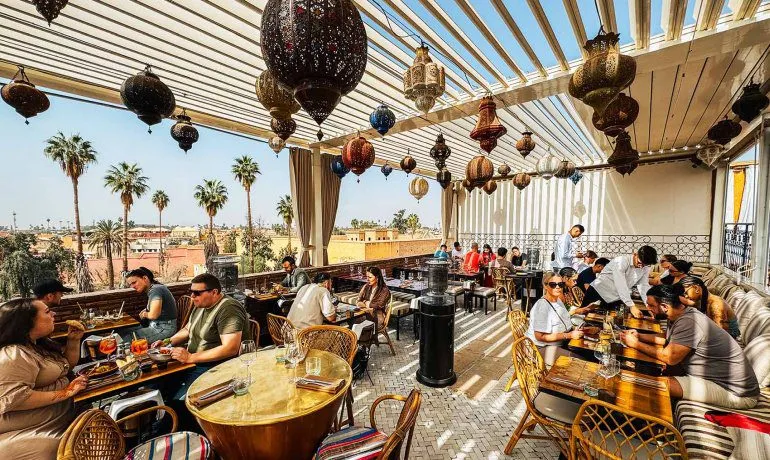
The summer of 2026 marks a profound transformation in the sector, as restaurants evolve into spaces of experience, entertainment, and tourist consumption. In Marrakech, areas like Hivernage, Guéliz, and the Medina are home to various rooftop bars, palace restaurants, beach clubs, and concepts that blend gastronomy with music and entertainment. Nightlife is also gaining traction, with extended hours up to 4 AM during the World Cup period.
Moreover, the increase in travel revenues by 21%, outpacing the growth in tourist arrivals, signals a positive trend for tourism-related activities, particularly in dining. Enhanced air connectivity, with 7.74 million scheduled seats and 52 new international routes launched in the first half of the year, is expected to bolster visitor numbers to key cities, including Marrakech, Agadir, Tangier, Casablanca, and Rabat.
The Moroccan culinary scene is also evolving towards more gastronomic and international concepts. Contemporary Moroccan cuisine, Mediterranean, Asian, fusion, vegetarian, and casual premium dining options are enriching the market. The burgeoning bistronomy segment, positioned between casual dining and high-end gastronomy, shows particular promise. Rooftops are emerging as essential tourist attractions, combining stunning views, exquisite cuisine, music, and digital experiences.
Looking ahead, the preparations for the 2030 World Cup are poised to accelerate these changes. Morocco plans to add approximately 60,000 hotel beds and aims for a target of 26 million tourists by 2030, up from nearly 20 million in 2025. With tourism and infrastructure investments estimated to exceed 190 billion DH, new consumption hubs are expected to emerge, further stimulating demand in the restaurant sector.
However, the increasing demand does not automatically translate into improved profitability. Restaurateurs must navigate rising costs related to raw materials, wages, rent, energy, logistics, and delivery platforms. In major tourist destinations, competition is intensifying, compelling establishments to refine their identity, service quality, digital communication, and market positioning.
In the medium term, prospects remain encouraging. The central bank anticipates that tourism revenues could reach 161 billion DH by 2027. For the restaurant industry, the challenge now is to transform this dynamic into sustainable value. The summer of 2026 is poised to be a pivotal year, gradually transitioning the sector from a primarily local and tourist-driven activity to a genuine industry of gastronomy, experience, and entertainment.
As reported by industries.ma.