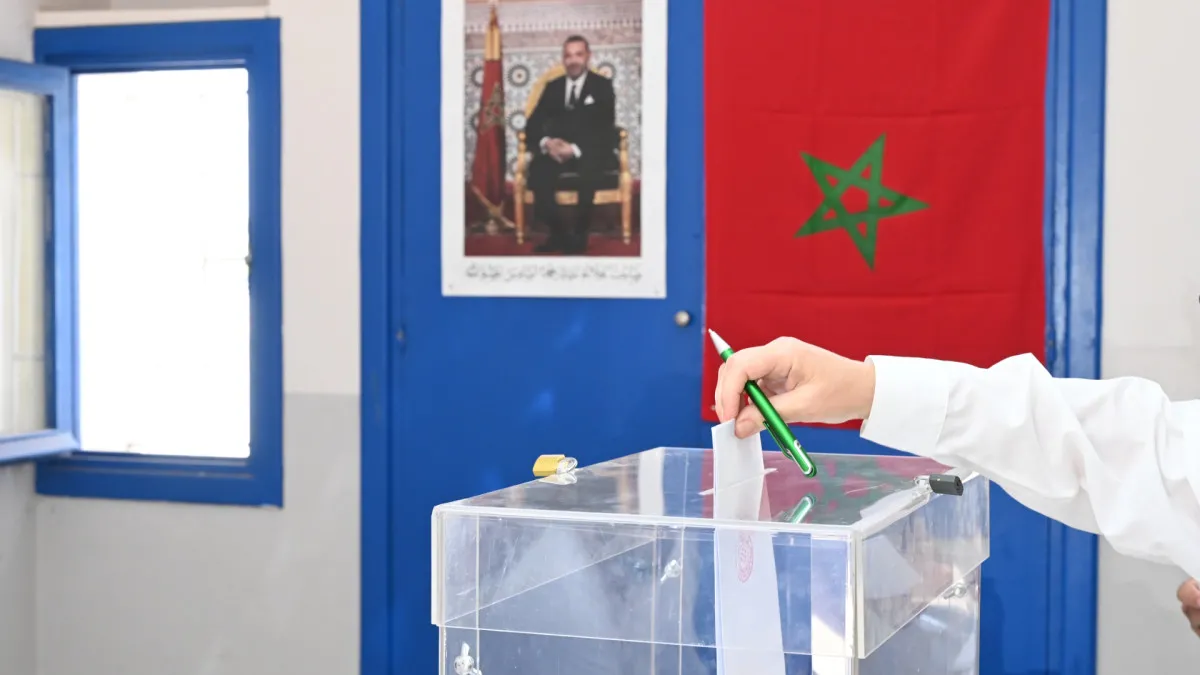

The elections held on September 23, 2023, have significantly disrupted the balance among the political parties governing Morocco. The Authenticity and Modernity Party (PAM) has emerged as the leading party, securing 97 seats. In contrast, the National Rally of Independents (RNI), which previously led the government, has seen its representation drop from 102 to 66 seats, while the Istiqlal Party has also faced a decline from 81 to 65 seats. Interestingly, the Justice and Development Party (PJD), which saw its representation fall to just 13 deputies in the 2021 elections, has rebounded to 54 seats. It is crucial to note that these results are still preliminary.
This electoral outcome alters the political hierarchy, yet it does not preclude the possibility of the coalition remaining intact. The PAM, RNI, and Istiqlal, as the three partners in the outgoing government, collectively hold 228 out of 395 seats, maintaining a sufficient majority to potentially govern together again. Should this coalition be renewed, it would entail a shift in leadership, with PAM taking the helm of a partnership it has been part of during the five years of Aziz Akhannouch's administration.
While ideological differences among these parties are significant, they only partially elucidate the complexities of Moroccan politics. The PAM is characterized by a modernist profile and has historically maintained close ties with the monarchy. Conversely, the RNI aligns with liberal ideologies, the Istiqlal has its roots in historical nationalism, and the PJD represents an Islamist perspective. Beyond these ideological divides, local networks and the ability of certain candidates to mobilize support within their communities play a critical role in the political landscape.
Thus, the primary uncertainty surrounding the elections lies not only in who will lead the next government but also in how the results will influence negotiations for ministerial positions and budget allocations.
The Victory and the Power Negotiation Process
The PAM's victory comes after five years of sharing governance with the RNI, which has experienced a considerable decline. While the PAM can demand a change in leadership, it may find it challenging to dissociate itself from the record of a legislature in which it was also a participant.
Moreover, PAM's rise cannot be merely interpreted as an ideological shift, as the party was established in 2008 through various figures close to King Mohammed VI, including Fouad Ali El Himma, currently a royal advisor. This origin is complemented by a robust territorial presence.
Political scientist Nadia Hachimi Alaoui, a professor at the International University of Rabat, draws a distinction between votes based on political ideology and those linked to local leaders with their own networks, known as 'notables.' This latter form of voting is particularly influential in rural areas, where certain candidates act as intermediaries capable of mobilizing support and negotiating resources for their territories. Before the elections, around fifteen RNI parliamentarians joined the PAM, a shift that complicates a purely ideological interpretation of the results.
According to the Moroccan Constitution, the king is responsible for appointing the head of government from the party that secures the highest number of votes. As of this article's publication, this designation was still pending. Fatima Zahra El Mansouri, the mayor of Marrakech and a prominent PAM figure, has emerged as a key voice for the party following the electoral results. Additionally, Fouzi Lekjaa, the delegated minister of the budget and president of the Moroccan Football Federation, joined the PAM prior to the elections and was notably active during the campaign.
The coalition's future also remains uncertain. El Mansouri stated on September 24 that the PAM is not imposing any 'red lines' at this time, indicating that discussions regarding alliances will occur after the appointment of the head of government. In contrast, Abdelilah Benkirane, the former head of government and current secretary-general of the PJD, has declined to participate in a government led by the PAM.
Investment Decisions and Governance Challenges
The main political parties entered the elections with programs heavily focused on employment and purchasing power. The Moroccan economy experienced a growth rate of approximately 5% in 2025; however, the net job creation during the legislature fell short of 100,000 positions, a stark contrast to the one million jobs that Akhannouch had set as a target. This discrepancy sheds light on why employment and purchasing power dominated the electoral campaign.
The PAM estimates that fulfilling its commitments over the next five years will require an additional 350 billion dirhams, roughly equivalent to 32 billion euros. Its program reiterates the ambitious goal of creating one million jobs while expanding measures related to social protection and housing.
The Istiqlal Party combines this agenda with a more pronounced focus on economic dependencies and national productive capacity. Meanwhile, the PJD has not limited its campaign solely to religious or identity issues; in recent weeks, it has placed greater emphasis on the cost of living, employment, and corruption, alongside its stances on Palestine.
While programmatic differences are important, a national promise does not yield the same results across various regions. Employment policies encounter vastly different conditions in the industrial corridor connecting Tangier and Kenitra to European markets compared to an inland province with limited formal job opportunities. The challenge lies not only in how much investment occurs, but also in where that investment is directed and which stakeholders have the leverage to influence its allocation.
The new territorial development programs illustrate how the implementation of these policies is also contingent on administrative efficiency. Abderrafie Zaanoun, a researcher at the Moroccan Institute for Policy Analysis, warns of the risk that the new framework may reinforce administrative structures that operate parallel to elected bodies. The Integrated Territorial Development Fund is set to allocate 20 billion dirhams (approximately 1.84 billion euros) in 2026, placing the Ministry of Interior in a pivotal position within its management.
The overall scheme is intricate, with proposed programs for the coming years organized across multiple levels. At the provincial level, committees headed by governors will intervene, while at the regional level, coordination falls to the '_walis_', representatives of the state. On the national stage, a committee led by the head of government will validate the programs and coordinate their financing. Collectively, these initiatives are expected to mobilize around 210 billion dirhams over eight years, roughly 19 billion euros. Winning a constituency and determining how to execute an investment are not necessarily the same thing.
The PJD's results also show considerable regional variation. In Casablanca-Anfa, a key constituency in Morocco's primary economic metropolis, the party secured first place with 33.45% of the votes, while PAM received 28.5%, and the Left Alliance, led by Nabila Mounib, a prominent leftist figure, achieved 22.88%. The PJD also performed well in Tangier-Arcila, but in Marrakech-Ménara, PAM triumphed with 12,107 votes compared to the PJD's 9,678. These preliminary local results indicate that the Islamist resurgence is not uniformly distributed, and the 54 national seats mask diverse political geographies.
It remains unclear from where these new supports originate. They could represent a return of former voters, the addition of new supporters, or a result of opponents' fatigue. Without consolidated results and post-election studies, any further analysis would be speculative.
Additionally, caution is warranted when comparing voter turnout. The Ministry of Interior reported a turnout rate of 38.08% among registered voters, with nearly six million participants. In contrast, the turnout exceeded 50% in 2021, when legislative, municipal, and regional elections coincided on the same day. Regional disparities are substantial, with reported participation rates of 77% in El Aaiún-Saguía el-Hamra and 61% in Dajla-Ued Edah, both regions encompassing parts of Western Sahara administered by Morocco, and whose sovereignty remains contested. The minister presented these figures as evidence of the territory's 'Moroccan-ness,' reflecting the political interpretation of Moroccan authorities rather than a straightforward electoral deduction.
Across the nation, abstention rates remain high. This does not categorize non-voters into a single political bloc nor does it imply a shared motivation. Recent mobilizations highlight that a portion of social discontent circulates outside of party politics. Achieving a parliamentary majority and authentically representing this discontent are two distinct challenges.
The upcoming 2030 World Cup encapsulates many of these tensions, although it does not generate them. Morocco has been strengthening its port, railway, and industrial infrastructures for years, linking its key economic hubs with Europe and African markets. The tournament could expedite this trajectory and, crucially, enhance its visibility.
The legacy of the event extends beyond stadiums, as Istiqlal has proposed mechanisms to increase national companies' participation in major projects. The PAM intertwines a significant portion of its employment program with economic activities associated with the World Cup, raising the question of how much of this investment remains in the Moroccan economy post-event.
Moreover, Lekjaa's dual role as budget minister and president of the Football Federation positions him close to economic decisions tied to one of the most politically significant projects of the forthcoming legislature. The World Cup final has also introduced a competitive aspect to the relationship with Spain, with officials from both nations publicly advocating for the event to be hosted within their territories, while FIFA continues to deliberate its decision. Simultaneously, Spain, Portugal, and Morocco must coordinate for years to organize the tournament.
However, for the next Moroccan government, the most delicate issues will be internal. Large-scale projects showcase the country's capability to execute international-level initiatives, yet this capacity is far less visible in the everyday services utilized by a segment of the population.
Furthermore, the World Cup is not the only area where external relations yield internal consequences. In her first statement post-elections, El Mansouri emphasized the necessity of maintaining a close relationship with Spain. This cooperation does not eliminate differing interests nor does it produce uniform effects across regions.
The local context of Castillejos (Fnideq), opposite Ceuta, exemplifies this dynamic. The cessation of informal cross-border trade disrupted livelihoods for many families reliant on such activities. Moroccan authorities framed this measure as a matter of economic sovereignty and fighting smuggling, while for those dependent on these exchanges, the immediate issue revolved around income and the lack of viable job alternatives.
Morocco's foreign policy towards Israel provides another illustrative case. The monarchy largely dictates Morocco's primary foreign policy decisions, yet their repercussions infiltrate the internal political competition. The normalization of diplomatic relations with Israel and the conflicts in Gaza have expanded the space for mobilization among its critics. The PJD's resurgence will enhance the parliamentary presence of these positions, even though the party cannot unilaterally alter foreign policy.
El Mansouri announced on September 24 that the PAM intends to steer the 2027 budget project towards a more socially oriented model while simultaneously maintaining investor confidence. The forthcoming budget will serve as an early test of the extent of this pivot.
The focus will then shift to the territories.
As reported by agendapublica.es.