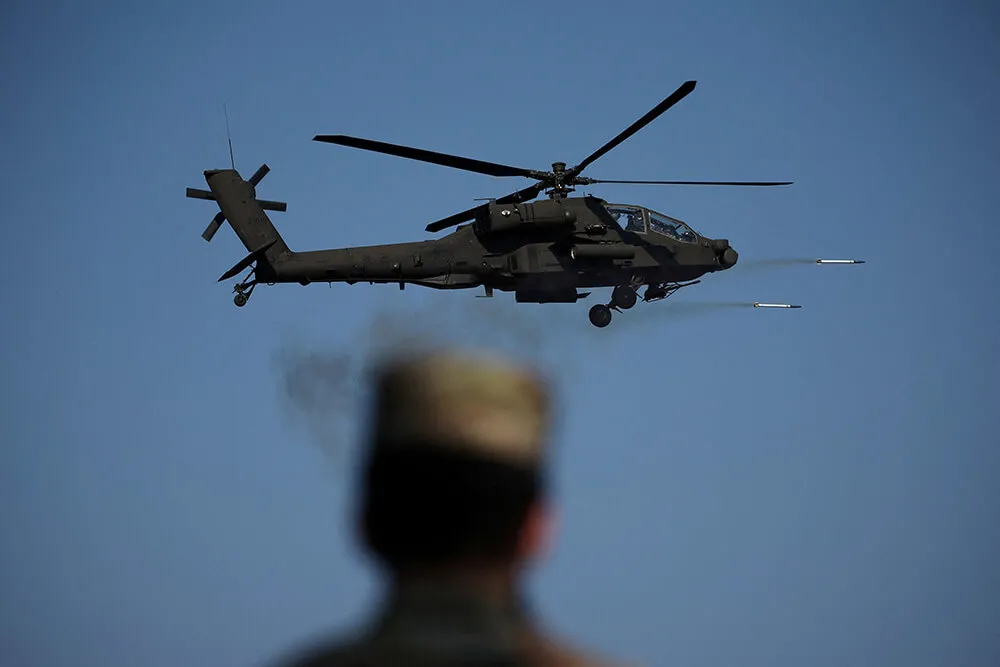

Enhancing Military Operations with Advanced Apache Helicopters
The strategic acquisition of high-precision weaponry necessitates a comprehensive logistical and diplomatic framework that typically operates beyond public scrutiny. The transfer of sensitive military equipment between allied nations is not solely dependent on commercial timelines but also on stringent transnational custody protocols throughout every phase of the logistics chain. Boeing, a leading aerospace manufacturer, constructs these advanced airframes at its facility in Mesa, Arizona. Subsequently, the U.S. Air Force utilizes C-17 Globemaster III strategic airlifters to transport these helicopters with disassembled main rotors along transatlantic routes. With the recent delivery of six additional airframes, the Royal Moroccan Air Force has expanded its fleet to a total of 18 Apache helicopters, strategically positioned across domestic bases following earlier deliveries in March 2025 and spring 2026.
These heavy transport aircraft undertake intercontinental journeys with technical stops at allied military installations before finalizing their delivery to North Africa. This logistical operation is crucial for the Royal Armed Forces (FAR), as it marks the receipt of core units that fulfill the baseline procurement program established with Washington. This acquisition plays a vital role in Morocco's strategic evolution, particularly in adapting its air-land combat doctrine in light of changing security dynamics in the Maghreb region.
Contractual Framework and Diplomatic Support
The procurement process is governed by operational schedules set forth by the Pentagon under the Foreign Military Sales (FMS) program, overseen by the Defense Security Cooperation Agency (DSCA). The formal contract encompasses an initial order of 24 airframes, with additional options for 12 more helicopters, potentially raising the overall Moroccan acquisition ceiling to $4.25 billion. In its official communication to Congress, the U.S. government justified the transfer on geostrategic grounds, asserting that the operation reinforces a major non-NATO ally and enhances stability in North Africa, aligning with broader policy objectives emanating from the White House.
Boeing’s defense division underscored that this platform equips Morocco with precision targeting capabilities, ensuring full tactical interoperability with Western military forces while boasting the continent's most advanced avionics suite. Concurrently, the Moroccan General Staff has affirmed that this procurement is essential to meet long-term national defense needs, securing territorial integrity and maintaining effective deterrence in both conventional and asymmetric warfare scenarios.
To support such significant investments, Moroccan military strategists have completely overhauled their domestic maintenance infrastructure. The Royal Armed Forces selected Khouribga Air Base, located approximately 130 kilometers southeast of Casablanca, for extensive upgrades. This base has been developed into a logistical hub with over 160,000 square meters of climate-controlled hangars tailored to accommodate the 7th Air Base of the FAR. Given the extreme summer temperatures and abrasive dust prevalent in North Africa, these modifications are critical for preserving the sensitive avionics of the Apache helicopters.
Furthermore, the design of the Apache's camouflage scheme deviates from standard American and British airframes. Moroccan Apaches are adorned with a sophisticated disruptive multi-tone desert camouflage, which is a significant evolution from the uniform dark olive drab typically used for European operations. This tactical choice reflects the historical lessons learned from the Royal Moroccan Air Force's engagements in the Western Sahara during the late 20th century, where effective visual concealment was paramount to evade ground observations and mobile anti-aircraft units.
Overall, the integration of the AH-64E Apache helicopters signifies a transformative period for Morocco's military capabilities, enhancing its operational readiness and strategic posture in the region.
As reported by atalayar.com.