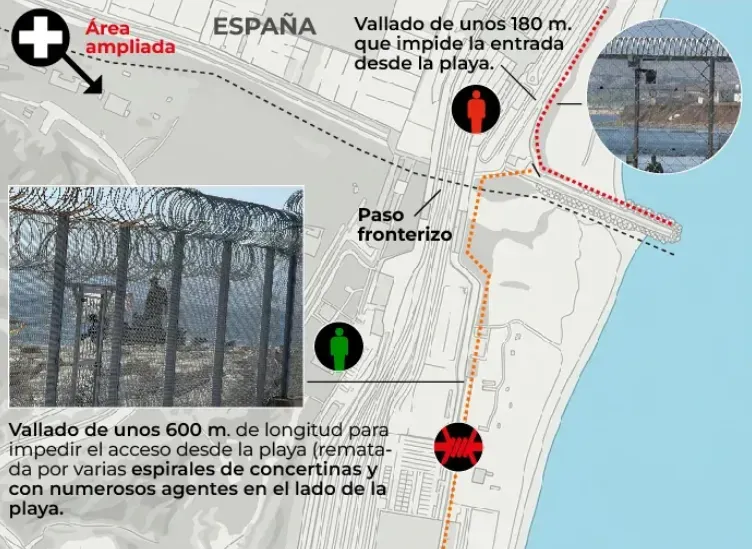

Understanding Morocco's Border Control Measures at Ceuta
The border between Morocco and Ceuta, an autonomous city of Spain located on the North African coast, has become a focal point for migration challenges in recent years. As the potential for mass migration surges, Morocco has implemented a series of strategic measures to manage and control its border effectively. These measures aim to prevent illegal crossings and ensure the security of both its own territory and that of Spain. The Moroccan government has recognized the increasing pressure from migrants seeking entry into Europe and has responded with enhanced surveillance and enforcement tactics.
In the face of a potential wave of mass migrations, Morocco has fortified its border with Ceuta by deploying additional security forces, including police and military units. This bolstered presence is complemented by the use of advanced technology such as surveillance cameras, drones, and other monitoring systems designed to detect and deter illegal crossings. Furthermore, Morocco has been collaborating with the European Union and other international partners to manage migration flows more effectively, seeking financial and logistical support to enhance its border control capabilities.
These initiatives not only reflect Morocco's commitment to regulating migration but also highlight the complex dynamics of migration management in the region. The strategic control measures at the Ceuta border serve as a critical line of defense against the backdrop of ongoing geopolitical challenges and humanitarian crises. As the situation evolves, it remains crucial for both Moroccan authorities and international stakeholders to adapt their strategies to address the multifaceted issues surrounding migration and border security.
As reported by infodefensa.com.