Understanding Morocco's Unique Position in Global Affairs
Morocco, officially known as Al-Maghrib in Arabic, occupies a distinct and influential role within the geopolitical landscape of the early twenty-first century. Positioned at the crossroads of the Atlantic and Mediterranean seas, as well as Africa and Europe, the kingdom wields a level of influence that far exceeds its material capabilities. With a population of approximately 37 million and a middle-income economy, Rabat has successfully utilized its enduring monarchy, strategic geographical location, and adept diplomatic maneuvers to establish itself as an essential ally for competing global powers. This detailed analysis explores the intricate dynamics that characterize Moroccan statecraft through four interconnected layers: domestic stability, territorial disputes and relations with the European Union, regional ties within the Maghreb and the Middle East, and broader continental aspirations.
The Dynamics of Domestic and Foreign Policy
Domestically, King Mohammed VI consolidates religious, executive, legislative, and military powers within a hybrid regime that has adeptly navigated the challenges posed by the 2011 Arab Spring and the more recent GenZ 212 protests through selective concessions and strategic narrative management. This institutional resilience has facilitated Morocco's economic transformation, exemplified by significant initiatives such as a $7 billion investment program focused on the Tanger Med port, the ambitious Nigeria-Morocco gas pipeline project, and renewable energy goals aiming for 52% of installed capacity by 2030. Additionally, Morocco's ongoing continental-scale rail expansion underpins its aspirations to become a vital logistics and clean energy hub between Africa and Europe. However, an investment gap exceeding $37 billion, uncertainty surrounding hydrogen markets, and modest growth in Mediterranean traffic present challenges that could impede the pace of Morocco's transformation.
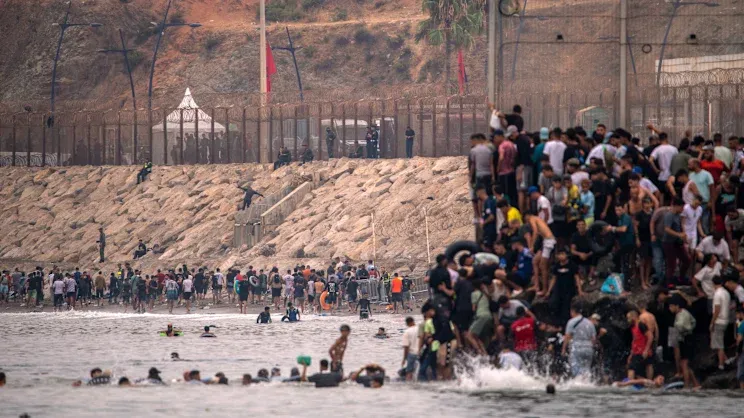
The Western Sahara conflict remains the central element of Moroccan foreign policy. The UN Security Council Resolution 2797, adopted in October 2025, endorses genuine autonomy under Moroccan sovereignty as the most feasible basis for settlement, marking a significant diplomatic achievement since the 1975 Green March and effectively sidelining the independence referendum. Morocco's strategic relationships with Spain and the EU illustrate its broader approach of calculated leverage within a framework of structural interdependence. For instance, the manipulation of migration flows and customs restrictions led to Spain's formal endorsement of the autonomy plan in 2022, while Brussels has progressively adopted a pragmatic stance, aligning with Resolution 2797 by January 2026, despite the Court of Justice's limitations on trade agreements that involve Western Saharan resources without the consent of the Sahrawi people.
Regionally, the rivalry between Morocco and Algeria serves as the primary catalyst for instability in the Maghreb. The diplomatic rupture in 2021, combined with a sustained arms race—evidenced by Algeria's defense budget reaching $25 billion by 2025—and divergent geopolitical alignments (Morocco's alignment with the United States and Israel versus Algeria's ties with Russia and China) have stalled regional integration efforts. The likely trajectory from 2026 to 2031 entails heightened international recognition of Morocco's position, yet it will be coupled with a sustained diplomatic rupture. Mauritania remains a conditional partner, allowing Morocco limited access to the Sahel without full political alignment. Furthermore, Morocco's normalization of relations with Israel as part of the 2020 Abraham Accords has enhanced military and intelligence cooperation, formalized in a joint work plan established in January 2026, although the UAE appears to be taking on an increasingly prominent role as a broker of broader Arab normalization.
On a continental scale, Morocco's 2017 reintegration into the African Union—alongside its status as the second-largest African investor on the continent, the OCP Group's fertilizer operations, and the Atlantic Initiative—reinforces its economic presence and further advances its objectives in Western Sahara. While the instability in the Sahel poses manageable spillover risks, Morocco proactively addresses these challenges through counterterrorism efforts, religious diplomacy, and targeted development programming. The overarching narrative is one of a kingdom that has maximized its institutional and geographical resources to exert considerable influence, yet its continental ambitions—ranging from establishing a hub status to territorial consolidation and becoming a trade nexus—remain contingent upon sustained financial investment, alignment of demand, and the durability of Western diplomatic support. Consequently, Morocco's trajectory is characterized by a managed ascent, shaped as much by the tangible constraints on its aspirations as by the aspirations themselves.
As reported by unav.edu.