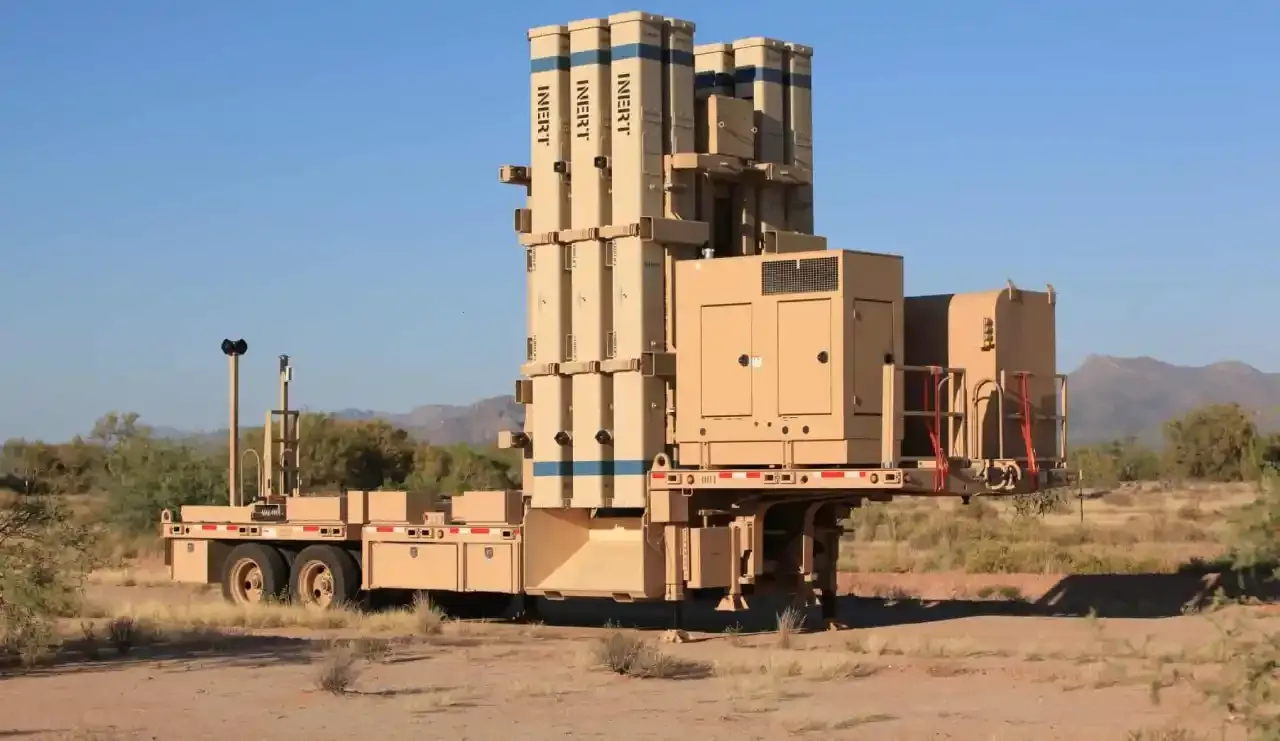

On September 9, 2026, reports emerged highlighting Morocco's ongoing efforts to modernize its air and missile defense systems within the Royal Armed Forces. This initiative reflects a growing trend toward acquiring multi-layered interception capabilities aimed at countering a wide array of threats, including aircraft, drones, ballistic missiles, and cruise missiles. Notably, discussions in August 2026 indicated Morocco's interest in the Israeli "David's Sling" system, recognized as one of the most advanced interception systems in its class.
It is essential to clarify that expressing interest in the "David's Sling" does not equate to a finalized decision regarding procurement or the signing of an official contract, as there has been no formal announcement from Moroccan authorities confirming the acquisition of the system. However, the mention of "David's Sling" as a potential option carries significant weight, particularly when considering Morocco's trajectory in enhancing its air defenses over recent years. This path emphasizes diversifying sources of armament and integrating both Israeli and Western technologies into a cohesive defensive network.
The "David's Sling" system serves as a cornerstone of Israel's air and missile defense architecture. Developed by Rafael Advanced Defense Systems in collaboration with the American company Raytheon, it offers interception capabilities against threats that exceed the operational range of short-range defense systems.
Characterized by its medium- to long-range air and missile defense capabilities, the primary mission of "David's Sling" is to intercept tactical ballistic missiles, heavy missiles, cruise missiles, and certain aerial targets. According to open-source data, the system boasts an interception range of approximately 40 to 300 kilometers, positioning it strategically within Israel's air defense network, situated between the "Iron Dome" and the "Arrow" systems.
The system relies on the Stunner interceptor missile, which measures about 4.6 meters in length, featuring a multi-pulse solid rocket motor with a two-stage propulsion system and an impressive speed of approximately Mach 7.5, as reported by various open sources. The Stunner can engage targets at altitudes reaching around 15 kilometers, although some sources suggest even higher theoretical maximum altitudes. It is crucial to differentiate between the maximum altitude for flight and the actual altitude for interception.
One of the standout features of the Stunner is its non-reliance on a conventional warhead for target destruction. Instead, it employs a Hit-to-Kill principle, whereby the missile directs itself at high speed towards the target, destroying it through kinetic energy. The missile's warhead is equipped with a dual guidance system that combines an active radar seeker with an electro-optical/infrared (EO/IR) sensor. This configuration enhances interception accuracy and enables the differentiation between real targets and decoys, particularly during the final engagement phase.
The primary radar of the system is the EL/M-2084, a multi-function AESA radar operating in the S-band. During surveillance mode, the radar can track up to approximately 1,100 targets with a detection range of around 474 kilometers, while offering an electronic scan sector of about 120 degrees in azimuth and 50 degrees in elevation. The antenna can rotate at a rate of up to 30 revolutions per minute, providing 360-degree coverage. In fire control mode, the radar can track about 200 targets per minute at distances of up to approximately 100 kilometers, continuously supplying the Stunner missile with guidance data during the mid-flight phase.
This distinction is crucial as the radar's detection range does not equate to the missile's interception range. The radar is capable of detecting and tracking a target at significantly greater distances than the Stunner can engage. Therefore, the figure of 474 kilometers pertains to the radar's surveillance capability, while the 40–300 kilometer range is specific to the "David's Sling" engagement envelope, which varies based on the target's nature and engagement conditions.
The launch unit employs a mobile vertical launcher, with each unit capable of holding 12 Stunner missiles. This structure allows for vertical missile launches, which can then be directed towards targets identified by the radar and command-and-control network. The system operates within an integrated air defense network, facilitating data sharing and coordination of interception operations with other defensive systems.
Operationally, "David's Sling" can manage multiple-target attacks, as the radar detects and tracks targets, while the battle management system analyzes their trajectories and assesses threat levels, assigning the appropriate interceptor missile. After launching the Stunner, the missile receives updates from the radar via a data link throughout its mid-flight phase, before transitioning to its onboard seeker in the final engagement stage.
In terms of cost, open-source estimates suggest that the price of a Stunner missile hovers around one million dollars, with variations depending on contracts, production, and equipment. Consequently, its use is primarily directed towards high-value military threats, such as ballistic and heavy cruise missiles, rather than inexpensive targets that could be addressed with less costly defensive measures.
In summary, the most notable figures associated with the system indicate an interception range of approximately 300 kilometers, a minimum engagement range of about 40 kilometers, a Stunner speed of approximately 7.5 Mach, an interception altitude of around 15 kilometers, and a missile length of approximately 4.6 meters, with the launcher accommodating 12 missiles. Meanwhile, the EL/M-2084 radar can detect targets at distances of up to approximately 474 kilometers and track up to 1,100 targets in surveillance mode. Some of these figures remain estimative or contingent on operational conditions, as the manufacturer and operating entities do not publicly disclose all detailed performance specifications.
As reported by defense-arabic.com.