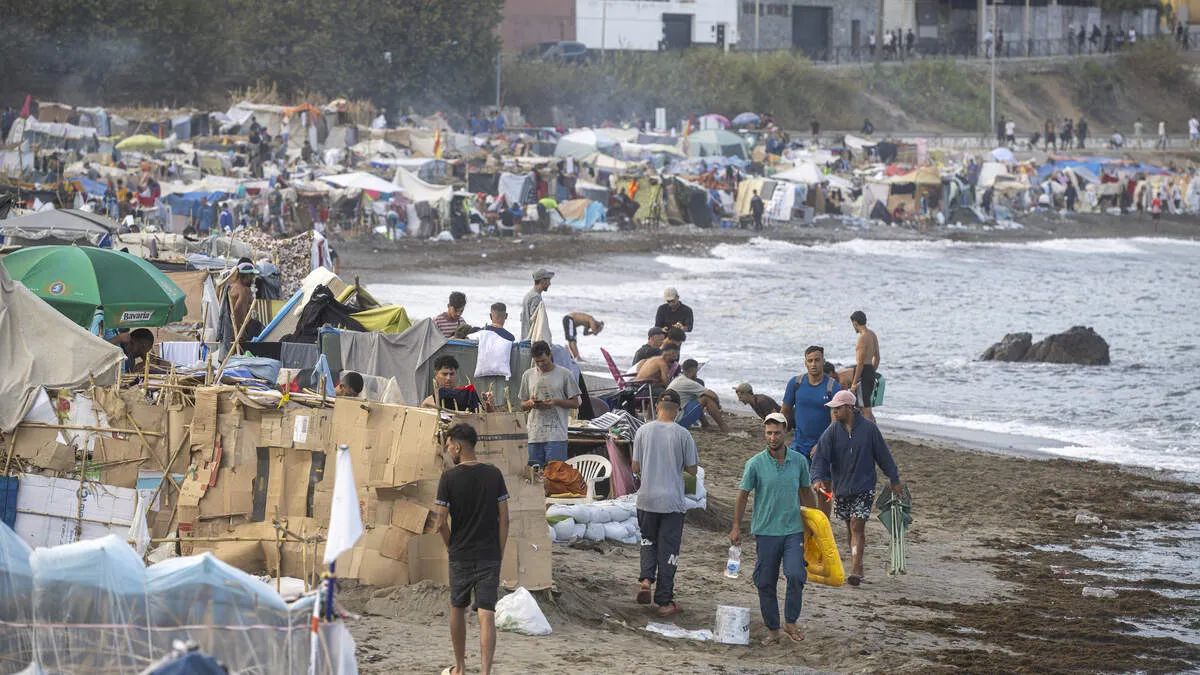
Mass Migration to Ceuta: Understanding the Factors Behind the Crisis
Recent reports from the Moroccan Ministry of Interior highlight a significant surge in mass migration toward the Spanish enclaves of Ceuta and Melilla, revealing complex underlying factors at play. The ministry's analysis indicates that the wave of approximately 40,000 migrants, which resulted in the tragic loss of 11 lives, primarily due to drowning, was not a spontaneous event. Instead, it was driven by a confluence of factors, including the exploitation of digital platforms to disseminate misleading information, the role of human trafficking networks, and misinterpretations of legal and administrative data.
The Moroccan authorities have pointed out that these elements have combined to create a volatile situation, prompting a large number of individuals to attempt crossing into Ceuta. In total, around 1,135 attempts to enter Melilla were thwarted, illustrating the extent of this migration crisis. The Ministry of Interior is currently verifying reports from Spanish sources regarding the number of fatalities, showing the serious and tragic nature of these crossings.
This crisis has not only raised humanitarian concerns but also underscores the need for a comprehensive approach to tackle the root causes of migration and the spread of misinformation that fuels such desperate actions. The government stresses the importance of addressing the misinformation circulating in digital spaces that mislead potential migrants, as well as the operations of trafficking networks that prey on vulnerable populations.
As reported by sabq.org.