
Unprecedented Shift in Morocco-Spain Trade Relations in 2025
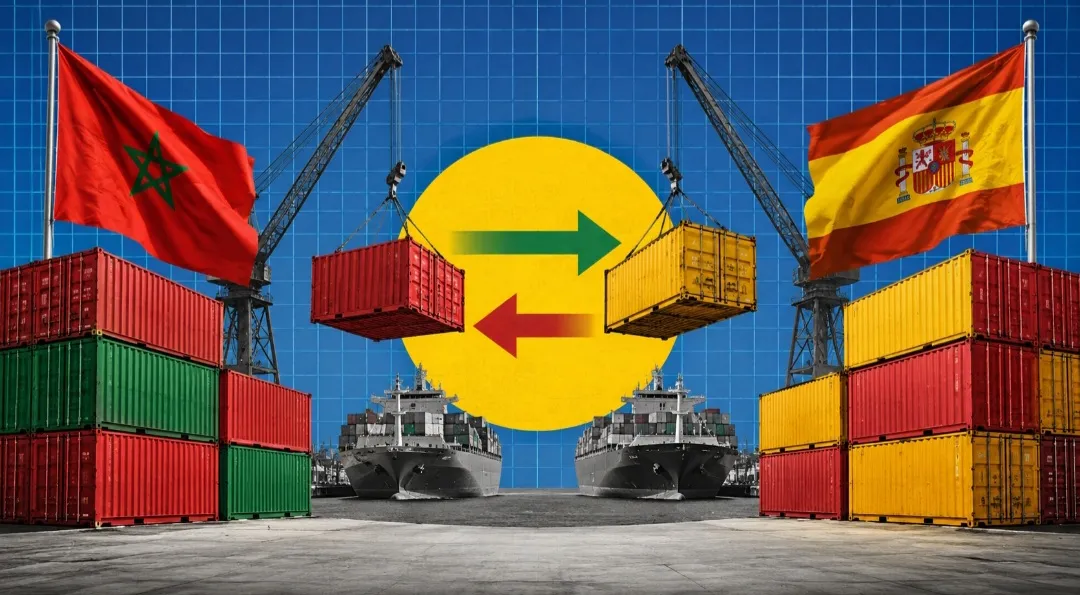
The year 2025 marked a significant turning point in trade exchanges between Morocco and Spain, as the bilateral trade balance shifted in favor of Morocco for the first time in history. This transformation ended decades of Spain's dominance in export values to the Moroccan market. According to data from the United Nations International Trade Database, Spain's imports from Morocco exceeded its exports to the kingdom by approximately 3 billion euros, indicating a rapid change in the trading structure between the two nations.
The statistics demonstrate the scale of this transformation in a relatively short period. In 2024, Morocco's exports to Spain were valued at around 16 billion euros, while imports from Spain reached approximately 18 billion euros, resulting in a Spanish trade surplus of nearly 2 billion euros. However, by 2025, Moroccan sales to the Spanish market surged to 19.6 billion euros, while the value of imports from Spain fell to 16.5 billion euros, resulting in a trade difference of over 3 billion euros in favor of Rabat.
Factors Behind the Trade Shift
This development, according to María Ángeles Ruiz Izbelita, a professor at EAE Business School, is not so much linked to the political tensions that have characterized relations between the two countries at various points but rather reflects the changes occurring within the Moroccan economy itself. The Spanish expert noted, as published in The Objective, that Morocco has been rapidly increasing its exports, nearly doubling its total foreign sales within just three years while also reducing imports from other markets, including the United States.
The nature of the exchanged goods partially explains this shift. Liquefied natural gas stands out as the main product Spain sells to Morocco in terms of value, while cables, components, and electrical equipment dominate the list of Moroccan products directed to the Spanish market. This indicates a growing significance of Moroccan industrial activities linked to production and manufacturing chains, contrasting with Spain's strong focus on energy within the exchanges.
At the same time, the growth of Moroccan exports is no longer limited to industrial products; agricultural and food products have also seen increased presence, alongside olive oil and argan oil used in cosmetics and fragrances. According to Ruiz Izbelita, Morocco previously imported agricultural equipment and technology but has now transitioned to exporting more in this sector than it imports, benefiting from improved production and changes in the conditions for accessing several agricultural and food products in the European market.
Ruiz Izbelita believes that Spain's recovery of the previous trade surplus will not be easy if the current trend continues, as Madrid's capacity to increase exports to Morocco is not limitless. The gas, which represents the most valuable of its exports, is tied to needs that do not rise at the same pace as Morocco's expanding exports of industrial and agricultural products. Conversely, Morocco benefits from its geographical proximity to Spain and the European market to gradually increase its sales.
In conclusion, the figures from 2025 reveal a deeper change than merely recording a temporary deficit in Spanish accounts; they reflect the rise of Morocco's export capacity and the diversification of products that are finding their way to the largest neighboring European market. If this trend persists in the coming years, the Spanish deficit may shift from a statistical anomaly to a new characteristic of trade relations between the two countries.
As reported by assahifa.com.