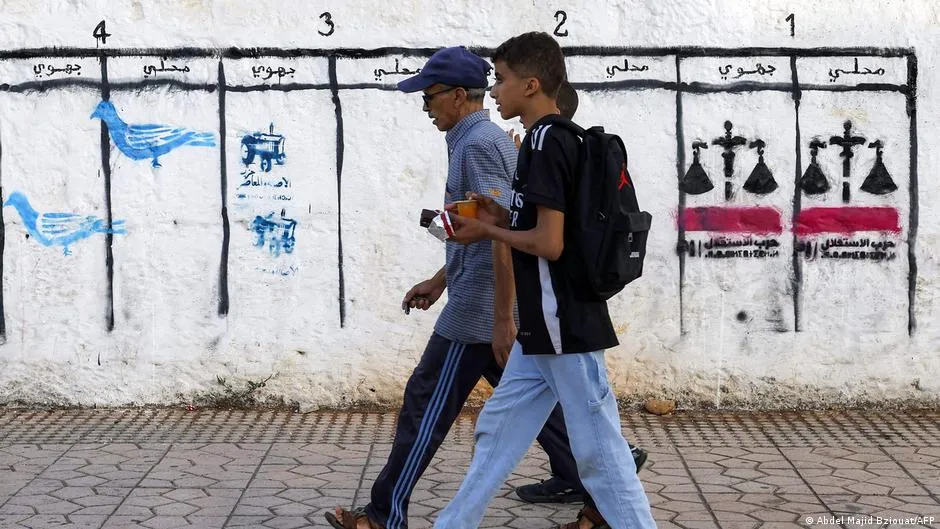

On Wednesday, September 23, 2026, Moroccan citizens will head to the polls to cast their votes in a significant parliamentary election featuring 27 parties vying for 395 seats in the House of Representatives. A remarkable pool of over 7,200 candidates will be competing for these positions, with nearly 2,700, or about one-third, being women. This election is particularly crucial as it involves around 15.8 million eligible voters in Morocco, marking an important moment for the nation’s democratic processes.
Major Political Players and Campaign Focus
Among the key players in this election are the parties currently forming the governing coalition, which includes the business and right-liberal "National Rally of Independents" (Rassemblement National des Indépendants, RNI) led by Prime Minister Aziz Akhannouch, the social-liberal party "Authenticity and Modernity" (Parti Authenticité et Modernité, PAM), and the conservative "Independence" (Istiqlal PI). The central themes of the election campaign revolve around pressing economic and social issues such as job creation, youth unemployment, cost of living, housing, education, and healthcare. Notably, the youth unemployment rate stands at approximately 27%, prompting both RNI and PAM to promise the creation of around one million new jobs. Additionally, substantial infrastructure investments are anticipated in preparation for the upcoming 2030 FIFA World Cup.
Despite the stakes, the public visibility of the election campaign has been surprisingly low. Anja Hoffmann, head of the Heinrich Böll Foundation's office in Rabat, noted that the campaign appears rather dull and uneventful compared to the significance of the election. With only a few days remaining before the vote, the election has not received extensive coverage in mainstream media or visibility in public spaces. Many citizens perceive the election as lacking in importance, according to Hoffmann’s observations.
Challenges of Youth Engagement and Institutional Trust
There are several factors contributing to this low public engagement. Young individuals aged 18 to 24 represent about 12% of Morocco's population but account for only 3-4% of registered voters. A recent Afrobarometer survey indicated that only about one-third of individuals aged 18 to 35 trust the parliament, the prime minister, or political parties. Moreover, some surveys suggest that up to 70% of young people lack faith in elected institutions. Political scientist Muhammad Shuqair emphasizes the need to restore this lost trust, asserting that the youth must feel that their political participation can effect genuine change.
While the House of Representatives plays an important role in legislation and government oversight, its limited powers also contribute to its low esteem among the public. Hoffmann highlights that between 2021 and 2026, representatives posed over 26,000 questions to the government, yet the response rate remained unsatisfactory, with only 34% of questions being answered in one session period. This reflects the broader issue of accountability within the political system.
Furthermore, even though the 2011 constitution granted the parliament greater powers, key areas such as foreign policy, security, and military matters remain predominantly under the king's authority. The king appoints the prime minister from the strongest party in the House and leads the council of ministers, thereby reinforcing the monarchy's preeminence in political decision-making. Aisha Kadaoui, a political scientist, argues that while the parliament has been formally empowered, it has not gained the corresponding political autonomy necessary for impactful governance.
Despite these challenges, there are some positive notes in the current election cycle. An anonymous Moroccan human rights activist has observed that several parties have developed comprehensive programs featuring specific measures, budget allocations, timelines, and implementation strategies. Additionally, there is a noticeable increase in the participation of young people and women in this election compared to previous ones.
On the international front, while the parliament plays a crucial role in domestic matters, its influence over foreign policy is limited. Morocco has garnered significant international support regarding its stance on the long-standing Western Sahara issue, a situation that has been perceived as largely successful. However, public support for Morocco's normalization of relations with Israel has waned since the onset of the Gaza conflict, reflecting changing sentiments among the populace.
Ultimately, the upcoming election will determine not only the composition of the parliament and the formation of the government but also which parties will address social and economic issues. However, it will have limited impact on the broader strategic direction of the state, as the balance of power remains tilted towards the monarchy. This dynamic between a functioning parliament and a politically dominant monarchy will continue to shape Morocco's political landscape.
As reported by dw.com.