
The Ascendancy of Moulay Hassan in Moroccan Monarchy
The Crown Prince of Morocco, Moulay Hassan, is increasingly establishing himself as the prospective king of the nation, following in the footsteps of his father, King Mohammed VI. His growing institutional presence signifies a preparatory process reminiscent of the experiences undergone by King Mohammed VI during the reign of his father, Hassan II. In this manner, the heir apparent is solidifying a position that not only positions him as the future of the monarchy but also indicates a gradual transition within the Alaouite royal family.
Recently, Moulay Hassan was appointed by King Mohammed VI as the Supreme Commander and Chief of the General Staff of the Royal Armed Forces (FAR), taking on the role of Coordinator for the offices and services of the General Staff. This appointment marks a definitive step in his institutional preparation as the future king of Morocco, as he directly engages with the military organizational structure. At merely twenty years of age, the Crown Prince is continuing his education at the highest echelons of the state, thus seamlessly integrating into one of the critical domains of state power.
A Legacy of Engagement and Education
Despite sharing his age with European counterparts, Moulay Hassan's active participation in institutional roles is far from a novel concept. The prince has been fulfilling official duties since his youth, participating in public events and even representing his father, King Mohammed VI, in international arenas. This early presence not only highlights the trust placed in him but also reflects a well-rounded education aimed at preparing him for leadership responsibilities.
Therefore, this recent appointment serves not only to advance a path already set but is also the culmination of a meticulously crafted education that integrates practical experiences within institutional frameworks. The prince, who received comprehensive training at the Royal College, as well as education linked to the aviation sector, has successfully forged a role that intertwines the modernity expected of a 21st-century prince with the rich traditions of an Arab monarchy. His educational journey is a vivid reflection of his actions, showcasing his diplomatic character and highlighting his readiness for the responsibilities awaiting him, all while balancing institutional demands with a more discreet personal life.
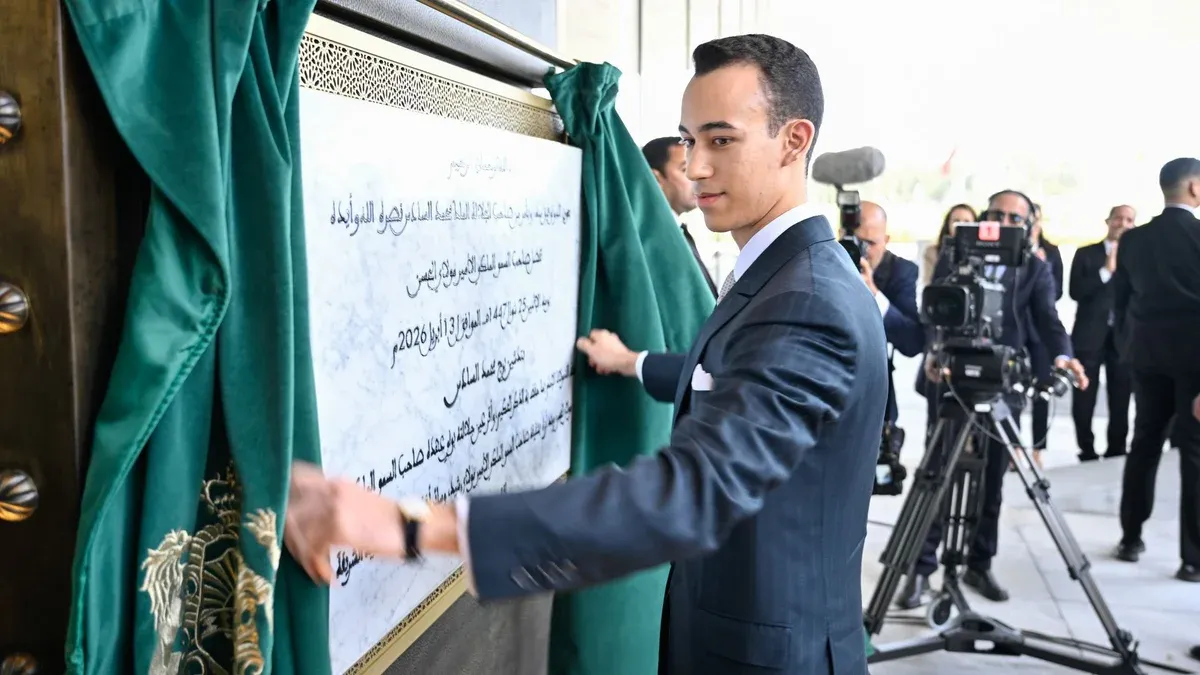
This latest institutional advancement further cements the future king's presence and reinforces a vision centered on stability and a generational transition that is firmly underway. The significance of this development is amplified following the inauguration of the Mohammed VI Tower in April, a landmark that transcends architectural boundaries to also occupy a significant political and institutional space. By entrusting his son with the opening of one of the most emblematic projects of his reign, King Mohammed VI not only reaffirms the continuity of his legacy but also clearly delineates the role of the Crown Prince in shaping the future of Morocco.
As reported by hola.com.