
Understanding the Evolution of Morocco-Spain Relations
Over the past three decades, the relationship between Morocco and Spain has undergone significant transformations, reflecting a substantial economic and commercial partnership that has reached an impressive volume of approximately 23 billion euros. Morocco serves as a vital gateway for Spain into Africa, accounting for more than fifty percent of Spanish exports to the continent. Despite these strong ties, the relationship is marked by complexities and contradictions. These are evident in the potential for establishing a strategic partnership based on geographical proximity and shared interests, contrasted with historical grievances and ongoing crises that foster skepticism and caution about future interactions.
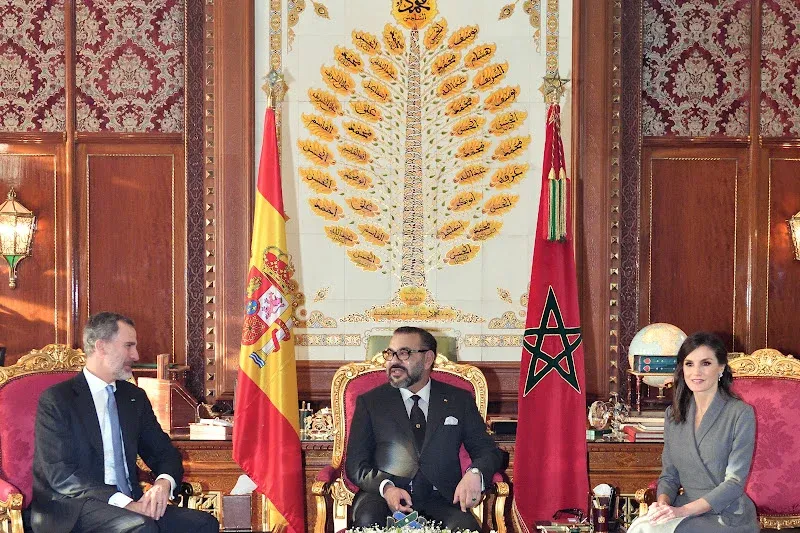
Both countries have managed to turn many challenging episodes and crises from the last thirty years into genuine opportunities for deepening cooperation. Notable incidents include the 2002 crisis over the disputed Perejil Island and the 2021 controversy involving the entry of a Polisario Front leader into Spain using false identity. These events have prompted both nations to collaborate more closely on critical issues such as migration management, counterterrorism, and strengthening economic ties. In 2022, Spain acknowledged Morocco's autonomy initiative as the most credible and realistic basis for resolving the Western Sahara conflict, a move that was well received in Morocco and helped to thaw bilateral relations, highlighted by the return of Morocco's ambassador to Spain and a visit from Spanish Prime Minister Pedro Sánchez to King Mohammed VI.
The Migration Crisis and Its Impact on Bilateral Relations
Recent events, particularly the crossing of over 70,000 individuals into the Spanish enclave of Ceuta, have sparked a crisis in relations between Morocco and Spain. This situation has given rise to extremist rhetoric and anti-immigrant sentiments among opposition parties in Spain, such as the People's Party and far-right groups, which have even accused Moroccan authorities of orchestrating these crossings. Such accusations have been firmly rejected by Morocco, which calls for non-involvement in Spain's internal political disputes.
Despite these tensions, reports indicate that effective coordination and information sharing between the two nations have successfully thwarted several planned mass border incursions. However, Morocco has reiterated its refusal to act as a border guard for the European Union, particularly for Spain, advocating instead for a balanced and serious cooperation that acknowledges the humanitarian dimensions of migration alongside its security implications. Morocco insists on the repatriation of unaccompanied Moroccan minors from Ceuta, while Spain and European countries recognize Morocco's serious efforts to address the sensitive issue of migration. This acknowledgment underscores the understanding that safeguarding Spain's southern borders hinges significantly on solidifying partnerships with Morocco, necessitating a shift from mere rhetoric to substantial financial and logistical commitments to address the challenges posed by human trafficking and migration networks.
The European Parliament recently called on both Spain and Morocco to expedite the deportation of migrants who entered Ceuta in July, reaffirming the strategic partnership between Morocco and the European Union. Fortunately, attempts by extremist factions within the EU to exploit the situation have not succeeded in undermining the robust relationships between the countries involved.
Ultimately, Morocco and Spain, bolstered by their economic and commercial ties, have navigated many difficulties with prudence and wisdom. Yet, historical issues continue to cast a shadow over their relations, such as the dispute over the disputed territories of the Chafarinas Islands, the recent tensions surrounding the enclaves of Ceuta and Melilla, and past grievances stemming from Spain’s use of chemical agents in Northern Morocco during the protectorate era. As former German Chancellor Otto von Bismarck famously remarked, geography is a constant in politics; thus, neighboring countries must engage with one another through the lens of shared interests and challenges while considering future implications.
Building trust between Morocco and Spain is crucial for transforming this geographical proximity into a shared space for mutual development and enhanced economic cooperation. This transformation can foster peace and security in the region and globally. A comprehensive strategic dialogue and constructive discussions are essential to convert historical legacies into genuine opportunities for fortifying the future, ultimately paving the way for sustainable peace that can withstand potential challenges and risks.
As reported by hespress.com.