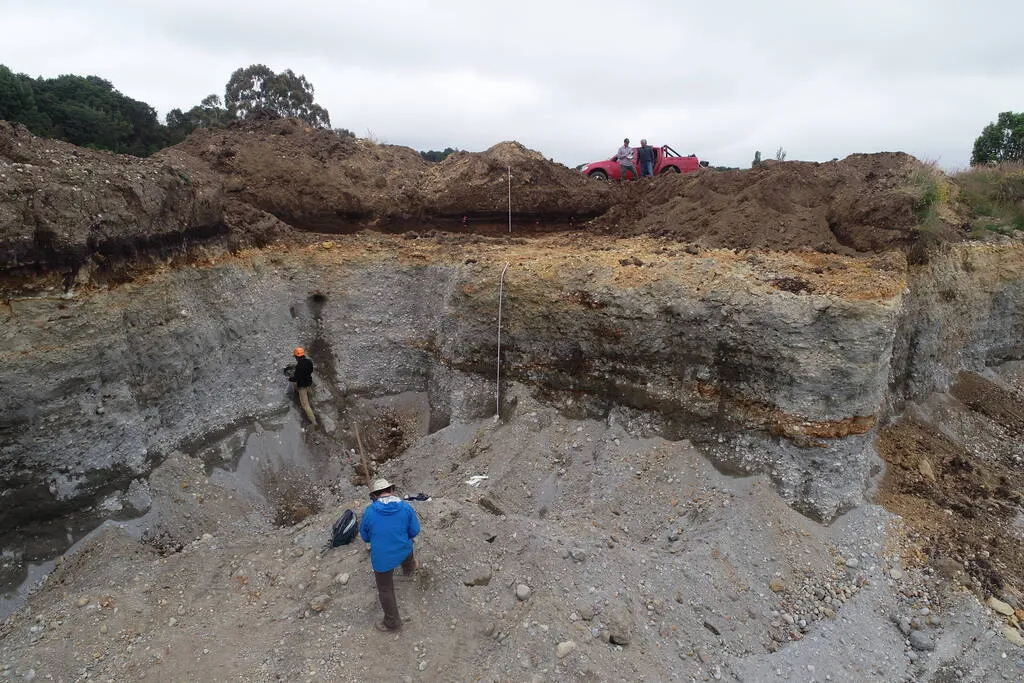
Study Revises Understanding of Human Migration to America
For centuries, the question of when humans first arrived in America has intrigued scientists. Initially, it was believed that the first inhabitants reached the continent between 13,400 and 12,800 years ago, likely crossing from Siberia to Alaska via the Bering Strait. However, this theory faced scrutiny in 1977 when archaeologists dated the Monte Verde site in Chile to be approximately 14,500 years old. This finding suggested that the Clovis people were not the first to settle in America, as previously thought. Recent research published in the journal Science has further complicated this narrative, indicating that humans may have populated the continent much more recently than previously believed.
New Evidence from Monte Verde and Beyond
A team of researchers from Wyoming has conducted detailed studies at the Monte Verde site, concluding that it was inhabited between 8,000 and 6,000 years ago. They argue that earlier analyses may have been affected by soil erosion, which caused geological layers from different periods to intermingle, leading to inaccurate dating results. Dr. Todd Surovell and his team assert that their findings call into question the previously accepted timeline of the first human migrations into America, although they acknowledge that this does not settle the ongoing debate about the continent's early inhabitants. Other archaeological sites in Mexico, Argentina, and Uruguay, believed to be established before the Clovis people reached Alaska, are set for analysis to further explore these questions. Dr. Surovell stated, "I want to investigate these sites, but I do not want to be the harbinger of archaeological doom." The implications of this study suggest a need to reevaluate the history of human migration to the Americas, highlighting the complexity of our understanding of ancient civilizations.
As reported by valeursactuelles.com.