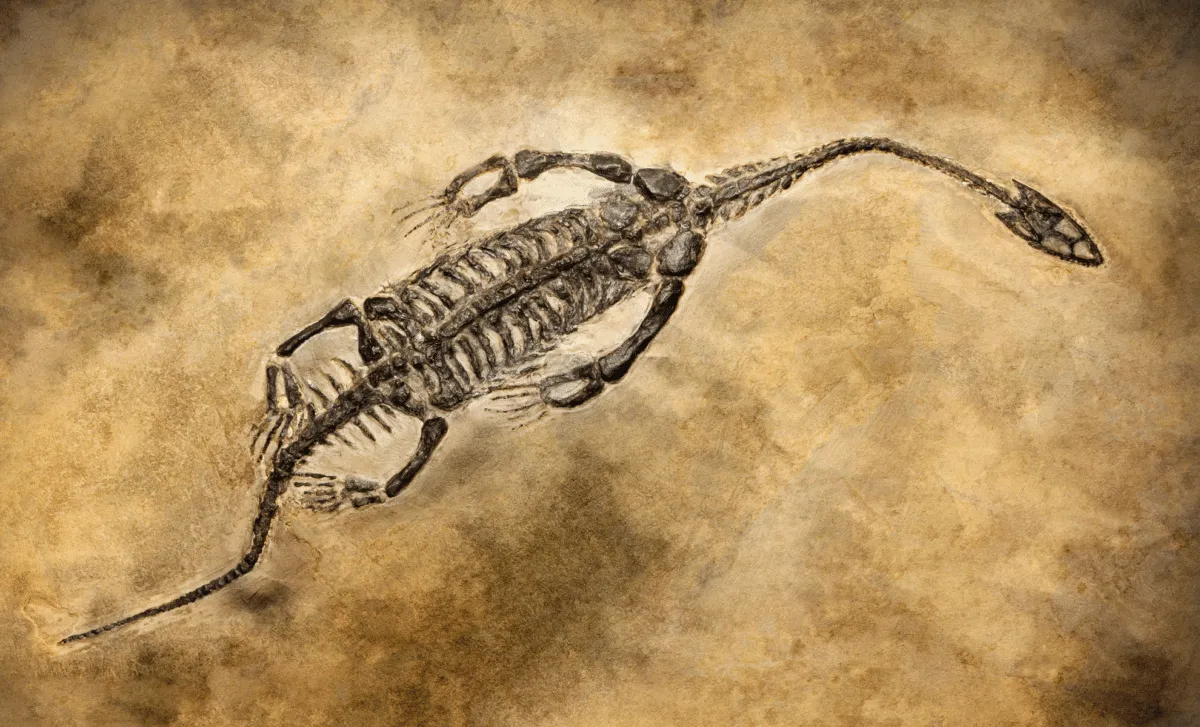

A newly identified species of titanosaur from Morocco is revolutionizing our understanding of dinosaur evolution and the ancient connections between continents, as revealed in a recent study published in the journal Diversity. The dinosaur, named Phosphatotitan khouribgaensis, roamed the Earth approximately 70 million years ago, providing valuable insights into how species evolved in isolation while maintaining unexpected links to far-off regions.
Fossils Uncovered in Morocco's Ancient Seabed
The remains of Phosphatotitan khouribgaensis were found in the phosphate-rich deposits of the Oulad Abdoun Basin in Morocco's Khouribga region, a well-known site for Late Cretaceous fossils. The recovered materials include vertebrae from both the back and tail, as well as fragments of the sacrum and pelvis, sufficient to classify this as a distinct new species within the titanosaur lineage. These sediments narrate the tale of a dramatically different environment, characterized by shallow seas and fluctuating coastlines that once dominated vast areas of North Africa.
According to the paleontologists involved in the study, "The phosphates of the Oulad Abdoun Basin consist of phosphatic sandstones, marls, and limestones. These were deposited in a warm, shallow epicontinental sea during the Late Cretaceous and Early Paleogene as part of a belt of phosphates that formed along the margins of the Atlantic and the Tethys Ocean." This geological setting emphasizes how the region served as a dynamic interface between land and sea, playing a critical role in both fossil preservation and the evolutionary paths of species inhabiting the area. Consequently, the relative scarcity of fossils from this region makes them scientifically valuable, offering rare glimpses into ecosystems that are otherwise poorly documented.
Connecting Continents Through Evolution
What distinguishes Phosphatotitan khouribgaensis is not solely its geographical origins but also what it indicates about dinosaur relationships across ancient continents. Despite being unearthed in North Africa, the species exhibits striking anatomical parallels to Lognkosauria, a group of titanosaurs previously identified only in South America, including colossal species like Patagotitan. These anatomical similarities, particularly in the structure of vertebrae and pelvis, imply a shared evolutionary lineage that challenges the notion of geographic isolation among these creatures.
According to Dr. Longrich and his colleagues, "The latest Cretaceous saw the final diversification of dinosaurs before the end-Cretaceous extinction. Far less is known about dinosaurian faunas of the southern hemisphere, especially Africa." This discovery, documented in the journal Diversity, directly addresses the existing gaps in our understanding, providing evidence that African dinosaur ecosystems were likely more intricate and interconnected than previously recognized. It suggests the possibility that these dinosaurs either shared a common ancestry dating back to the supercontinent Gondwana or traversed between landmasses through now-extinct routes, potentially overcoming narrow marine barriers.
Unlike its massive South American relatives, Phosphatotitan khouribgaensis was relatively small, weighing an estimated 3.5 to 4 tons. This diminutive size offers crucial insights into how environmental pressures can influence evolutionary outcomes, particularly in regions that may have been geographically fragmented. Researchers posit that during the Late Cretaceous, parts of North Africa may have functioned similarly to island ecosystems, where limited resources and isolation often drive species toward smaller body sizes.
“Phosphatotitan khouribgaensis, along with previously reported hadrosaurids, suggests that Morocco supported a unique, endemic fauna in the latest Cretaceous, distinct from those found elsewhere in Africa,” the authors explained. “High sea levels in the Late Cretaceous may have created isolated landmasses, with distinct faunas emerging that reflect a combination of vicariance, endemism, and regional extinction.” This viewpoint recontextualizes North Africa as a mosaic of ecological niches rather than a homogenous landmass, providing a fresh perspective on dinosaur diversity in the region.
The implications of this discovery extend to the larger narrative of dinosaur diversity before the mass extinction event. The findings contribute to a growing body of evidence suggesting that dinosaur ecosystems just prior to the extinction event were significantly more regionally diverse than previously understood. Instead of a uniform global fauna, different continents and even subregions may have hosted highly specialized and isolated species, complicating efforts to reconstruct global biodiversity patterns during the final chapter of the dinosaur era.
“The high degree of endemism in latest Cretaceous dinosaurs means that our understanding of dinosaur diversity is likely to be highly incomplete, complicating attempts to understand global patterns in dinosaur diversity prior to the end-Cretaceous extinction.” This insight underscores the necessity for ongoing exploration in under-sampled areas like Africa, where each new fossil discovery has the potential to redefine established scientific narratives. As more fossils come to light, the portrayal of the Late Cretaceous world is evolving into a complex tapestry of ecosystems interwoven by profound evolutionary histories.
As reported by indiandefencereview.com.