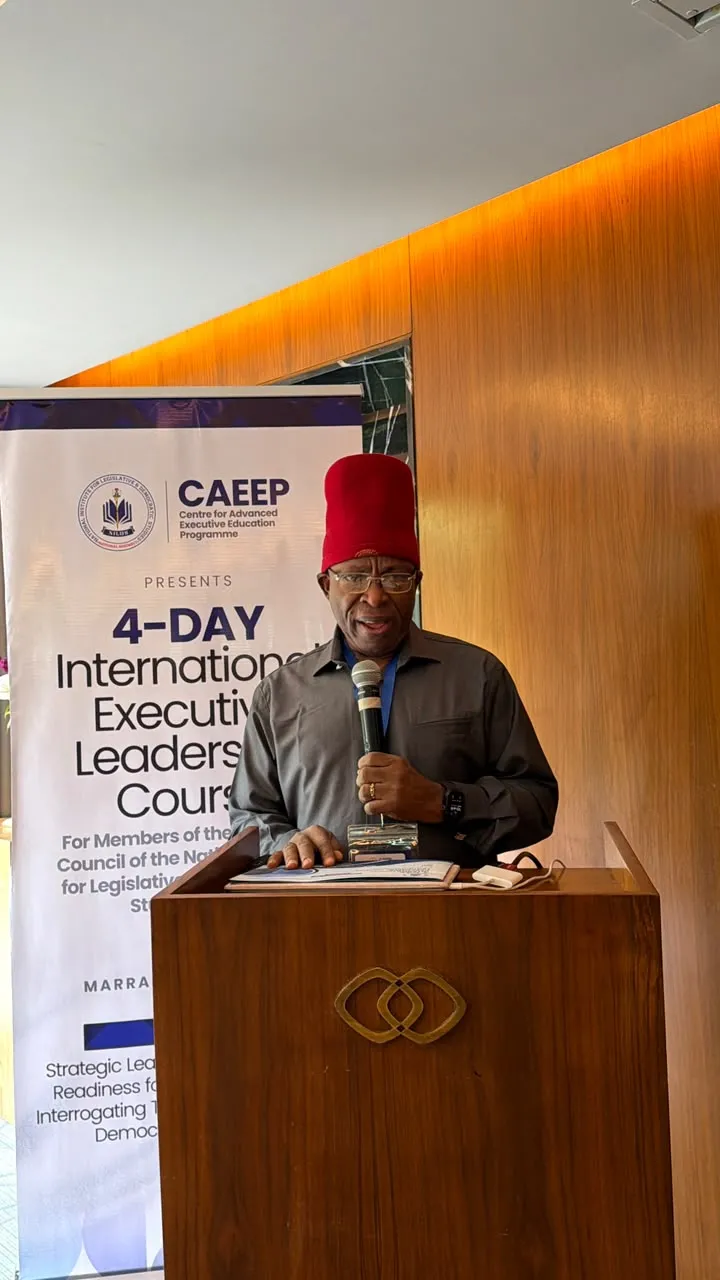

NILDS Launches Executive Leadership Course in Marrakech
Members of the Governing Council of the National Institute for Legislative and Democratic Studies (NILDS) have gathered in Marrakech, Morocco, for a four-day International Executive Leadership Course. This initiative is strategically aimed at fortifying leadership capabilities within Nigeria’s legislature in preparation for the upcoming 2027 general elections. A statement from the Media Office of NILDS at its national headquarters in Abuja confirmed the event, which is themed "Strategic Leadership and Institutional Readiness for Legislative Excellence: Interrogating Topical Issues on Nigeria’s Democratic Development." Organized by NILDS' Centre for Advanced Executive Education Programme (CAEEP), the course is designed to address significant legislative challenges and enhance institutional effectiveness.
Representing the President of the Senate and Chairman of the NILDS Governing Council, Senator Godswill Akpabio, Senator Victor Umeh is in attendance, alongside various members of the National Assembly and significant stakeholders. In his welcoming address, the Director-General of NILDS, Prof. Abubakar O. Sulaiman, emphasized that this course serves not merely as a retreat but as a crucial platform for participants to reflect, learn, and prepare for the pressing challenges that Nigeria’s democratic institutions are currently facing. He articulated the role of the Governing Council as the paramount policy body of NILDS, underscoring its responsibility to provide strategic direction that extends beyond mere routine oversight.
Prof. Sulaiman highlighted the far-reaching implications of the Council's decisions, not only for NILDS but also for the National Assembly's ability to fulfill its constitutional duties effectively. He pointed out that contemporary global trends—including advancements in technology, the rise of artificial intelligence, increasing demands for accountability, and complex security challenges—necessitate a departure from traditional leadership frameworks. According to him, strategic leadership must prioritize anticipating and shaping change, ensuring that institutions remain relevant in an ever-evolving landscape.
With the 2027 elections on the horizon, Prof. Sulaiman stressed the importance of early preparations to bolster the National Assembly's capability during this transition. This preparation includes induction and orientation for incoming legislators, the preservation of institutional knowledge, as well as comprehensive training on parliamentary procedures and oversight responsibilities. He firmly stated that achieving institutional readiness cannot be a last-minute endeavor, advocating for foresight, meticulous planning, coordination, and strategic leadership as essential components of this process.
Moreover, while acknowledging that each democracy has its unique characteristics, he asserted that universal principles such as professionalism, innovation, the retention of institutional memory, public engagement, and the effective application of technology are vital for success. The course features an array of resource persons from both Nigeria and abroad, including prominent figures such as UN Deputy Secretary-General Amina Mohammed, Nigeria’s Ambassador to Germany, Senator Ita Enang, former INEC Chairman and Presidential Adviser on Livestock Reforms, Prof. Attahiru Jega, and Prof. Zakaria Garno from Euromed University.
As reported by newtelegraphng.com.