
Tourism Trends in North Africa as of June 2026
The tourism industry in North Africa remains resilient despite variations in growth rates compared to the previous year. As of the end of June 2026, tourist arrivals in the region surged by 4.54%, reaching a total of 23 million visitors. This increase can be attributed to several factors including the ongoing recovery of the travel sector, a decrease in seasonal tourism fluctuations—as evidenced by robust spring performance—state promotional strategies, visa facilitation policies, enhanced air connectivity, and an improved range of tourism products available. However, these positive factors have been somewhat overshadowed by the outbreak of conflict in the Middle East, which has adversely affected tourist flows to the region, alongside rising airfare costs due to soaring jet fuel prices and prevailing geopolitical uncertainties.
Additionally, a notable absence of tourists from Gulf countries has also been felt; although their numbers are not substantial outside of Egypt, these visitors are known for their high spending habits. If we examine the current year's performance closely, the moderate growth in arrivals during the first half of 2026 can be explained by various underlying factors. The ongoing conflict in the Middle East has significantly disrupted air travel in the region and curtailed tourist arrivals from these areas. The resulting spike in airfare due to rising jet fuel prices has further deterred some travelers. It is also essential to note that last year's growth rate was exceptional at +18%, making it exceedingly challenging to replicate such figures this year.
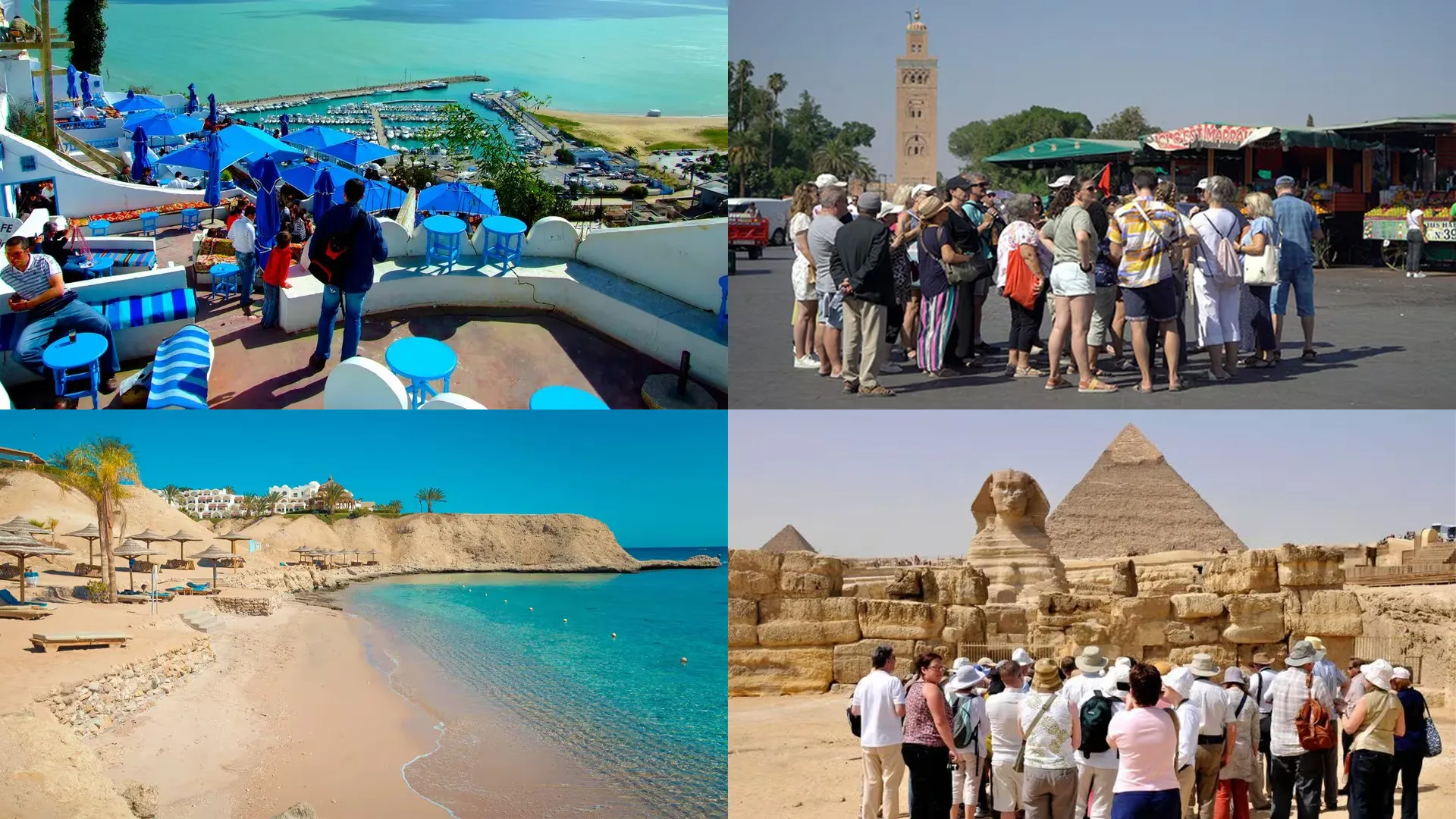
Despite this relatively moderate growth, the differences between countries within the region are stark. Morocco boasts a 6% increase in tourist arrivals, while Tunisia has managed only a modest 2.1% rise. Nevertheless, the three countries are on track to meet their tourism targets for 2026, with the competition for the title of the continent's top tourist destination remaining fiercely contested, particularly between Morocco and Egypt as they head into the second half of the year.
Morocco: Leading the Way with Impressive Growth
As of June 2026, Morocco solidified its position as Africa's top tourist destination, welcoming 9.4 million tourists, reflecting a 6% increase from the same period last year. This advancement puts Morocco ahead of Egypt by over 400,000 visitors. The growth stems from an increase in arrivals from key European markets including France (+9%), Germany (+14%), Belgium (+9%), the Netherlands (+10%), Italy (+6%), Poland (+32%), and the United States (+9%). The Moroccan market has effectively attracted European tourists who might have opted for Middle Eastern destinations due to geopolitical tensions. Furthermore, Morocco's geographical proximity to Europe has buffered it from the steep airfare increases that affect more distant tourist locations.
In parallel, overnight stays in Morocco increased by 9% by the end of June, compared to a 12.4% rise during the same timeframe last year, with significant contributions from cities like Ouarzazate (+24%), Rabat (+18%), Agadir (+13%), Casablanca (+12%), and Marrakech (+10%). Regarding tourism revenue, by the end of May, it reached 53.8 billion dirhams (approximately $5.72 billion at an exchange rate of 1 dollar = 9.40 dirhams), reflecting a 14.6% increase from the previous year. This growth in revenue significantly outpaces that of tourist arrivals, highlighting that visitors are spending more during their stays, with the average expenditure per tourist being 6,987 dirhams, or roughly $743.
Looking ahead, Moroccan authorities and tourism professionals are optimistic about maintaining the momentum of tourist arrivals during the summer season, particularly with the anticipated influx of Moroccans residing abroad (MRE) during the holiday period. Data from the Marhaba operation as of July 20, 2026, indicated that 1.86 million MRE had entered the country, a 1.04% increase from the same period last year. The expected rise in MRE arrivals during the second half of the year is crucial in achieving the target of 21 million tourists for 2026. To realize this objective, authorities aim to enhance international air links, particularly by developing services to several key markets, while also improving connectivity with China, the United States, and Middle Eastern countries. For the summer of 2026, Morocco will have 7.74 million international seats available, representing a 13% increase compared to the previous summer.
Furthermore, promotional efforts at various tourism fairs are expected to attract more international tourists to Morocco. In support of this tourism dynamic, the country plans to expand its accommodation capacity, with a goal of adding 60,000 hotel beds by 2030, aligning with the anticipated influx of 26 million tourists during the World Cup.
As reported by afrique.le360.ma.