
The Disintegration of the Official Narrative
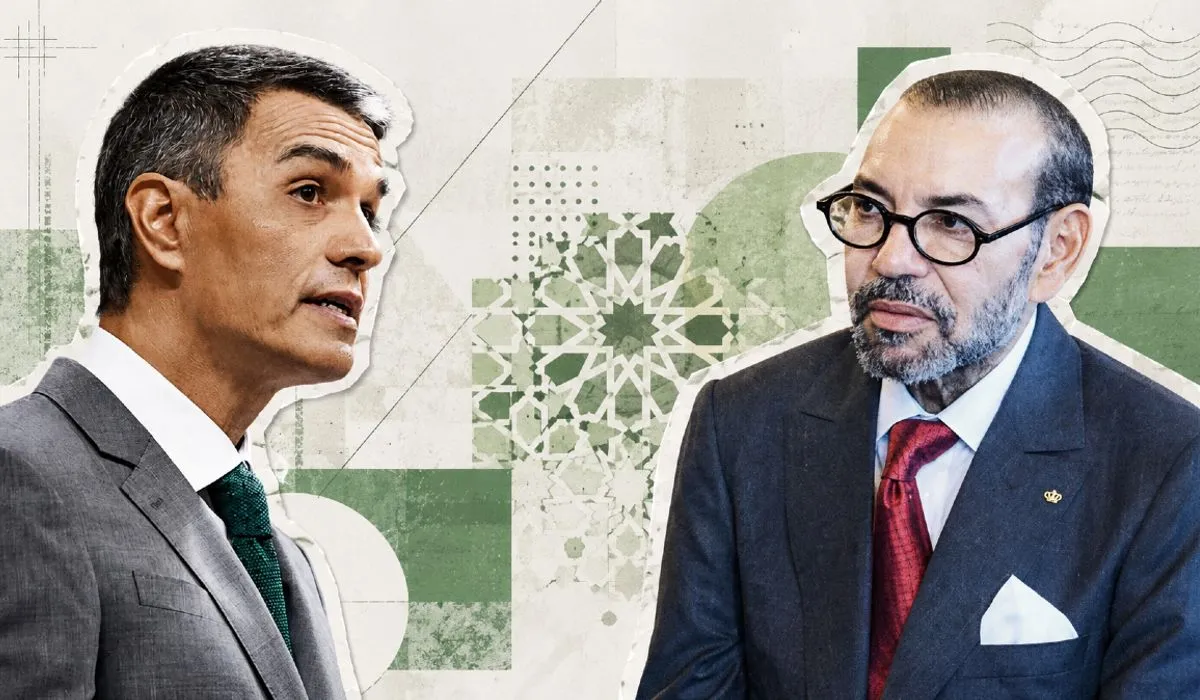
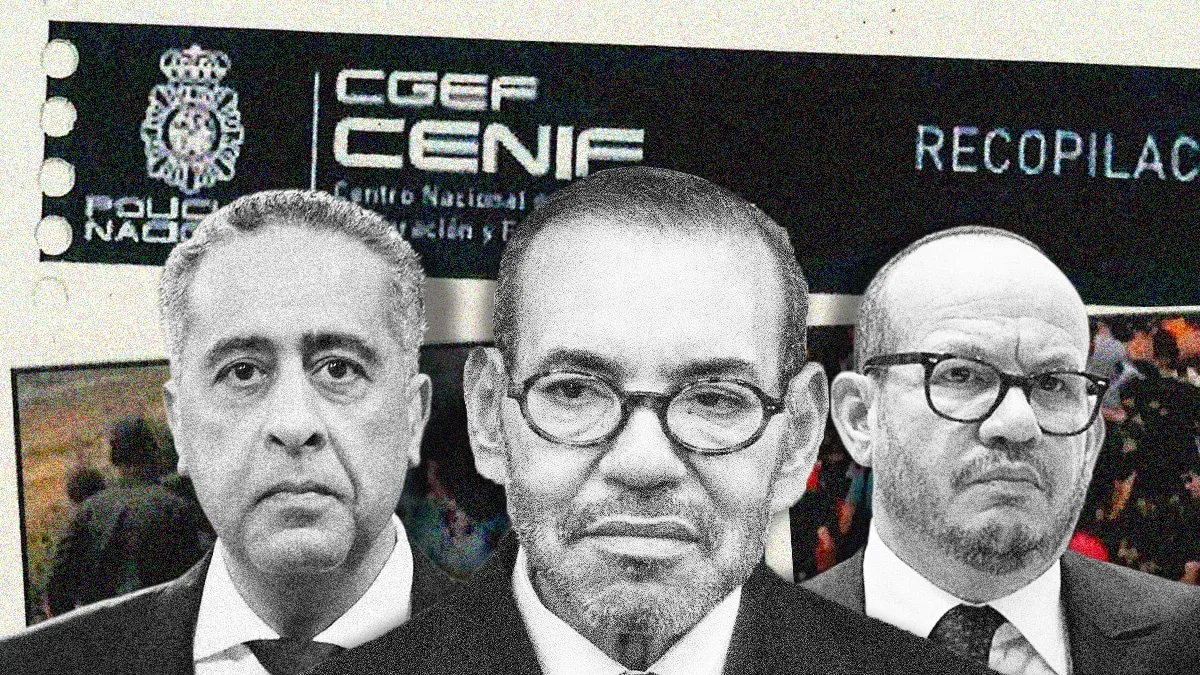
The official version regarding the involvement of Moroccan security forces in the crisis at Ceuta has rapidly fallen apart in light of the data presented in a report by the National Center for Immigration and Borders (CENIF) of the National Police. This analysis, published by Le360, a Moroccan digital outlet closely linked to the Moroccan Royal House, scrutinizes the actions of Moroccan security forces during the massive influx into Ceuta on July 30. However, any potential anxiety in Rabat concerning the repercussions of this information has been alleviated by the firm response from the Spanish government under Pedro Sánchez.
The stance of the Spanish Executive has been unequivocal: there is no report assigning blame to Moroccan security forces regarding the events in Ceuta. This was made clear by Francisco Pardo, the Director General of the Police, during a meeting with Interior Minister Fernando Grande-Marlaska, who sought clarification regarding the information disclosed by El Español and subsequently reported by El Independiente. As of now, Sánchez defended in Congress that no evidence has been presented to his government that would allow them to conclude that the mass entry into Ceuta was orchestrated or carried out by Moroccan authorities. It's worth noting that the CENIF report does not attribute blame but merely compiles information, detailing the "indications received by immigrants from Moroccan security forces," which, in some instances, participated in guiding crossings through the water and directing individuals towards the beach.
For Le360, the response from the Spanish Interior Ministry to the information highlighted in the police report represents nothing more than an "official denial." They perceive the information leaked by El Español as an attempt to cloak the newspaper's ideological viewpoint—which they accuse of systematic hostility towards Morocco—with the guise of "official security conclusions."
Rabat's Confidence in Spanish Weakness
The confidence exhibited by Rabat in emerging unscathed from this crisis is palpable. According to Fouad Abdelmoumni, one of many Moroccan opponents forced to leave their homeland, the authorities appear assured that Spain and Europe will avoid confrontation. Analyzing the official response to the crisis from Switzerland—his residence for over a year—Abdelmoumni remarked that Moroccan authorities were fully aware that reports would emerge, given that their entire operation unfolded in broad daylight. He argues that the Spanish government is placing itself in a "position of weakness" against a neighbor that seemingly has nothing to lose from escalating tensions. This is evidenced by statements from certain Moroccan ministers shortly after the Ceuta incident, who took the opportunity to assert Morocco's historical and geographical claims over the territory.
Consequently, the content of the CENIF report does not concern them at all, especially after witnessing the Spanish government's reaction. As noted by Abdelilah Issou, a former Moroccan Army officer, the Moroccan authorities clearly understood that there would be reports, whether from the police or other Spanish security bodies, as their operation was conducted openly, and the involvement of the authorities was well documented and recorded. This is not the first instance in which Spain has responded with excessive caution to provocations from Rabat. Abdelmoumni lists a history of "very weak" reactions from the government in response to challenges posed by Moroccan authorities. This includes inaction concerning indications of espionage involving Israeli software Pegasus targeting Pedro Sánchez and other government members, as well as the pressure exerted following the reception of Brahim Ghali, the Polisario Front leader, in Spanish territory for medical treatment, leading to the mass entry into Ceuta orchestrated by Morocco in 2021. Instead of acting decisively, the crisis resulted in the dismissal of then-Foreign Minister Arancha González Laya.
The narrative from Pedro Sánchez indicates a desire to absolve blame from Morocco, as he has intensified rhetoric against them while avoiding implicating their leaders as responsible for the crisis. Sources from Moncloa have assured that the CENIF report "supports" their position, as it points to Moroccan agents but does not identify the ultimate author of what is understood to be a "planned" action. Those familiar with the functioning of the armed forces in Morocco refute this thesis. Issou emphasizes that neither the Moroccan military nor any other security body can initiate such an action without direct orders from the Palace. Few things escape the control of Mohamed VI's inner circle in Morocco. Reports from hackers at Jabaroot have pointed to two high-ranking Moroccan officials—Fuad Ali El Himma and Abdllatif Hammouchi—as the masterminds behind the assault on Ceuta.
It is indecent to believe that Moroccan services did not anticipate the movement, did not allow it to happen, or lacked the human and logistical resources to stop it from the outset. This sentiment is echoed not only by former military members but also by Abdelmoumni, who firmly states that Morocco is an "extremely hierarchical police state": "Soldiers and police officers cannot undertake any widespread course of action that does not stem from hierarchical instructions." He believes it is reasonable to think that Moroccan agents did not expect a migrant wave of the magnitude witnessed at Ceuta—80,000 individuals. However, it is not implausible that external parties "with the intention of exploiting the situation" exacerbated it to the point of making it "unmanageable" for authorities on both sides of the border. Regardless, he dismisses the notion that the upper echelons of power were unaware of what was looming. It is absurd to think that Moroccan services did not foresee the movement or lacked the resources to handle it from inception. The regime possesses phenomenal firepower that cannot be surprised or overwhelmed by unarmed surges like those witnessed last July.
The actions of the Moroccan Armed Forces have not gone unnoticed within the country, particularly concerning the responses faced by immigrants crossing back to Morocco immediately after arriving in Ceuta. The image of a soldier throwing a rock at an unarmed man spread like wildfire on social media. Just as the apparent leniency shown towards the crossing of thousands of individuals stemmed from an "order from above," Issou underscores that the control is strict. Rather than punishing the soldier's actions caught on video, the Alawite authorities have chosen to pursue citizens who expressed outrage over such images. Recently, a young man was judged and sentenced to a year in prison for sharing the footage on social media, accompanied by critical remarks about the police's actions. According to the detained individual's brother, he is charged with "incitement to commit minor and major offenses by electronic means" and "insulting public officials and an organized body in the exercise of their functions." Despite attempts to silence the incident, Rabat's authorities have been unable to prevent the emergence of discontent over the death of more than a hundred individuals in their endeavor to reach Spain. Calls for clarification about the whereabouts of the missing and the identification of all victims of the tragedy are growing louder.
This week, the Moroccan League for the Defense of Human Rights has called for an international commission under the supervision of the UN to investigate what transpired. In a report, this NGO condemned the violence suffered by immigrants at the hands of Spanish soldiers, as well as the Moroccan Army. Along with the publication of the document, some members of the association participated in a peaceful protest outside the Spanish Embassy in Rabat, demanding accountability from both Spain and Morocco. However, according to reports from ENASS, the authorities prohibited the gathering.
As reported by elindependiente.com.