
Transforming Rail Travel in Morocco: Six New Stations for the LGV
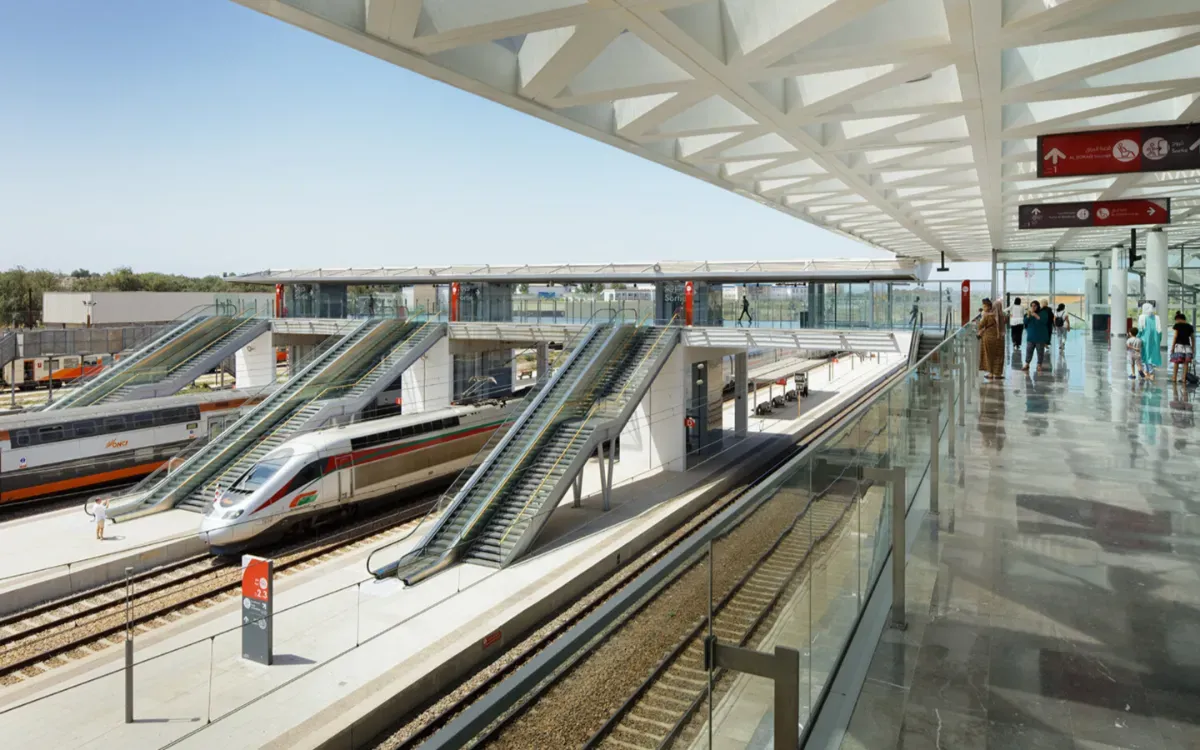
On September 17, 2026, the National Railway Office of Morocco (ONCF) announced an exciting new project involving the construction of six railway stations along the crucial Kenitra-Casablanca corridor. This initiative is part of the broader development of a high-speed train (LGV) line that will ultimately connect Kenitra to Marrakech. The estimated budget for this ambitious project stands at an impressive 480 million dirhams, which will cover the construction of stations in Salé, Bouknadel, Aïn Atiq, and the new urban area of Zenata.
The official call for tenders, published on the same day, outlines the specific stations involved in this project: Sidi Taibi, Sidi Bouknadel, Sidi Abdellah, Salé Tabriquet, Aïn Atiq, and Zenata Ville Nouvelle. Interested companies have until October 29 at 9 AM to submit their bids electronically, as specified in the announcement made on the Moroccan public procurement portal.
This project is significant not only for its scale but also for its implications for regional connectivity. By reducing travel time between Kenitra and Marrakech to approximately two and a half hours, it reflects a commitment to enhancing the nation's rail infrastructure beyond mere track laying and technical installations. The focus on passenger facilities marks a pivotal step in modernizing Morocco's railway services, aligning them with contemporary expectations of travel convenience and efficiency.
A Strategic Expansion of Rail Infrastructure
The strategic placement of these new stations is noteworthy, with five located within the Kenitra-Rabat-Témara corridor, while Zenata Ville Nouvelle extends the rail network further into the north of Casablanca. This foresight in planning indicates a recognition of the rapid demographic growth in these areas, ensuring that the railway network can cater to the needs of an expanding population while improving access to major urban centers.
However, it is essential to clarify that while these six stations are directly associated with the LGV project, they will not all necessarily be serviced by the high-speed Al Boraq trains. The development of the LGV entails a comprehensive restructuring of the existing rail network along the Atlantic axis, which may allow for regional and metropolitan services that benefit from the new capacities and infrastructure improvements.
The scope of work encompasses reinforced concrete, steel, masonry, and pre-stressed or post-tensioned concrete structures, although the timeline for execution and the commissioning dates for each station have not yet been disclosed. This tender complements earlier contracts related to tracks, facilities, maintenance centers, and electrical supply for the future Marrakech segment of the high-speed line, with three substations set to connect to the network in Benslimane, Settat, and Benguerir.
With the introduction of these six stations, the project is beginning to take tangible form for future passengers. The LGV line is designed not only to shorten travel times to Marrakech but also to redefine the connectivity framework among Kenitra, Rabat, Témara, and northern Casablanca.
As reported by bladi.net.