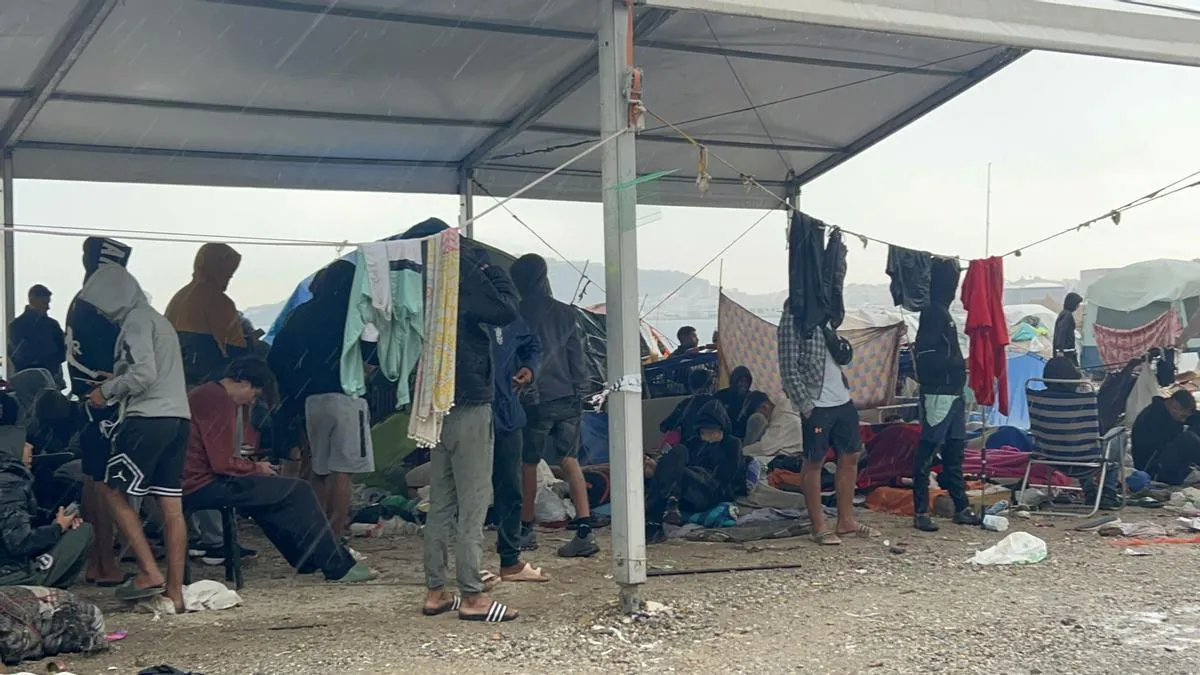

Significant Returns of Migrants from Ceuta to Morocco
In a recent update, Ángel Víctor Torres, the Minister of Territorial Policy and Democratic Memory, disclosed that a staggering total of 11,026 migrants have either returned to Morocco or have been expelled since August. This announcement comes in the wake of ongoing efforts to address the migrant situation following the crisis that unfolded on July 30 and 31. Despite this significant number of returns, Torres acknowledged that there are still individuals present in Ceuta who entered the city irregularly, with many dispersed across various neighborhoods, homes, and mountainous regions.
During a press conference following a meeting of the Situation Committee, Torres revealed that 10,513 people have voluntarily returned to Morocco, while an additional 513 have been forcibly expelled. This marks an increase of 2,783 departures since September 29, indicating that this week has seen the highest number of returns since the operations began. A substantial part of these figures is attributed to the recent evacuation of the Trampolín beach area, which took place over the weekend, allowing 1,813 individuals to return to Morocco by Tuesday morning. Torres emphasized that the operation concluded without any security incidents and that the commitment to clear this settlement before October 15 was fulfilled ahead of schedule.
Ongoing Efforts and Challenges in Ceuta
However, the dismantling of the main camps does not imply that all occupants have left Ceuta. When questioned about the presence of migrants in various locations, including streets and homes, the minister admitted that there are still individuals who remain unaccounted for, although he did not provide an estimated number. "Whether they are in the hills, in houses, or wherever they are, the Spanish government's intention is to ensure that everyone is accounted for," Torres stated. He also announced that police operations would continue, adhering to principles of discretion and security to prevent migrants from fleeing before officials arrive.
Torres denied the occurrence of raids and clarified that individuals who are relocated during these operations are taken to the Temporary Attention Center for Foreigners (CATE), where they can go through identification and triage processes or opt for voluntary return to Morocco. Many choose to return to avoid the initiation of a deportation process. Regarding hosting resources, Torres noted that the government has expanded its capacity from two facilities with about 2,000 places on August 24 to ten resources with over 7,000 places currently available. He also reported that 4,039 triages have been conducted for adults, which is an increase of 819 from the previous week. Moreover, the Caballería facility has been adapted to accommodate up to 540 women and unaccompanied minors.
All temporary facilities are set to be dismantled once the migration emergency concludes, with assurances that areas established in the port or Caballería will not become permanent reception centers. Concerning minors, the minister reported that there are currently 2,827 minors in the regional protection system. So far, 200 triages have been conducted, with 24 family reunification cases sent back to Morocco and 86 minors successfully reunited on the mainland, while 173 have been relocated to various autonomous communities.
Importantly, Torres confirmed that none of the over 11,000 returns and expulsions involve minors. In terms of health, 4,400 individuals have been vaccinated, and out of the 212 hospital beds available, 93 are occupied, with thirteen of those being migrants. Additionally, the government will present a proposal to the Council of Ministers for 45 million euros to offset extraordinary expenses incurred by Ceuta, with payments already initiated for 800 out of 1,700 aid applications submitted under a broader package of 309 million euros.
In response to prior warnings regarding the crisis, Torres refuted claims that the government concealed a communication sent on July 24 by the former government delegate, Miguel Ángel Pérez Triano. He stated that he did not personally receive the document but confirmed that it was forwarded to the relevant ministries. A meeting on July 29 was held to discuss the requested measures. The minister asserted that the situation has improved compared to the initial weeks of August, although he acknowledged that considerable work remains ahead. His goal is to restore normalcy as soon as possible, coinciding with the upcoming visit of the Kings to Ceuta on Tuesday, October 13.
As reported by deia.eus.