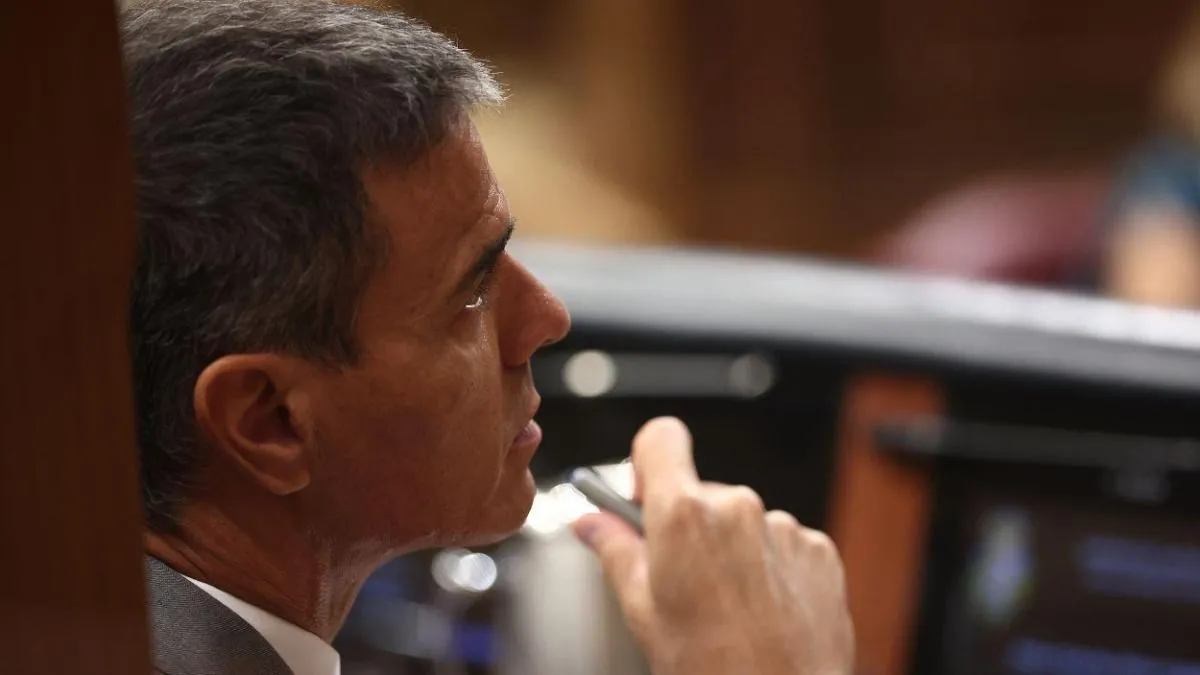
In a week marked by the ongoing Ceuta crisis, Spanish Prime Minister **Pedro Sánchez** is set to confront questions from the Congress of Deputies this Wednesday. This first session of governmental control for the new legislative term is expected to be particularly challenging for the president, as he will not only face a united front of opposition but also a growing detachment from his coalition partners. Leading the charge, **Alberto Núñez Feijóo**, the head of the Popular Party (PP), and **Gabriel Rufián**, the spokesperson for ERC in the lower house, will prompt Sánchez to discuss the remaining issues of the legislative term. While the questions are anticipated to address the situation in Ceuta, they will also delve into the various legal challenges surrounding the PSOE and the policy initiatives that the government plans to roll out by 2027. Furthermore, **Santiago Abascal**, the leader of Vox, plans to elevate the discourse by intertwining conspiracy theories regarding Morocco's involvement and allegations concerning Sánchez's affiliations.
The Popular Party is poised to leverage the Ceuta situation to launch a broader attack on the government, with **eight targeted questions** directed at other ministers. The government will find itself seated in the blue benches just hours before all reports related to the crisis in the autonomous city are made public, which they hope will address some of the lingering questions surrounding the event. These inquiries are aimed at uncovering the government’s stance and transparency regarding the crisis, potentially leading to significant political ramifications.
Sánchez previously acknowledged the likelihood of these confrontations during a recent appearance in Congress, where he highlighted the isolation of his administration as it approaches the final stretch before the general elections. The alignment of both opposition parties and coalition partners in their criticism of the president is expected to manifest more clearly than ever in this session. Feijóo will confront Sánchez with the question, “**How do you plan to govern for the remainder of the legislative term?**” Meanwhile, Rufián will ask, “**How do you intend to tackle what remains?**” Prior to these questions, Abascal will pose a provocative inquiry regarding Sánchez’s relationship with Morocco amid the Ceuta crisis, asking, “**Are you being blackmailed by Morocco due to information they possess about your corruption and that of your family?**” Abascal’s insinuation is based on unverified claims that the espionage of government officials via Pegasus has provided Morocco with compromising information about Sánchez.
The PP is determined not to let the Ceuta crisis fade from the spotlight, as they target various government officials for accountability. They will seek to press **Yolanda Díaz** for her perspective on Morocco's role in the massive influx of migrants, which her party has criticized in contrast to the socialist wing of the administration. The vice president's silence on this matter is expected to be challenged by Melilla representative **Sofía Acedo**, who will ask, “**What is your assessment of the Ceuta crisis, vice president?**” In total, the PP has submitted eight questions to different members of the government relating to Ceuta, indicating a concerted effort to hold the administration accountable.
In addition, more critical coalition partners are likely to capitalize on this session to voice their concerns. **Junts** will redirect the discussion to Catalonia, questioning the Minister of Finance, **Arcadi España**, about the economic measures being adopted to support families in that region. Similarly, the **PNV** will inquire about the ongoing crisis with health professionals and the lack of consensus surrounding the Statute Framework from the Minister of Health.
Another pressing issue is expected to be raised by Sumar, focusing on the recent assaults against journalists during demonstrations supporting Ceuta. **Alberto Ibáñez**, a representative from Compromís, will question Minister Marlaska about the implications of such assaults on democracy, specifically addressing the barriers faced by journalists in their efforts to report amid apparent police inaction.
As reported by elplural.com.