
President Sánchez Aims for Quick Resolution in Ceuta
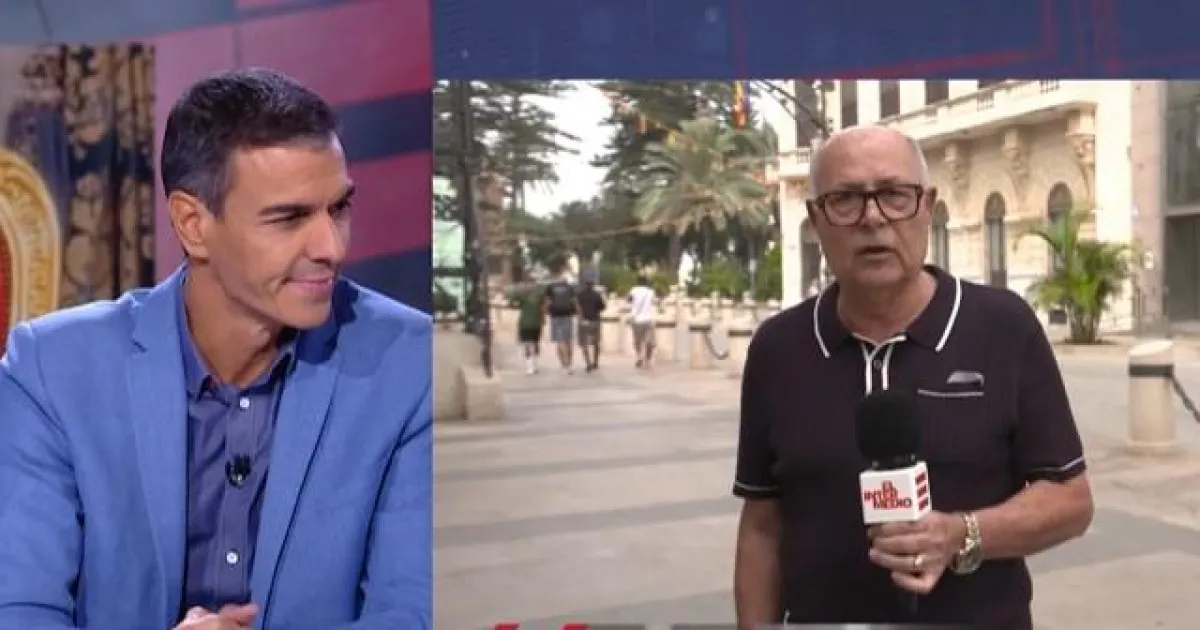
Pedro Sánchez, the President of Spain, has laid out a clear objective regarding the ongoing crisis in Ceuta, stating that he intends to resolve the situation "before the end of the year." While refraining from providing specific details, he defended his government's efforts and underscored the importance of maintaining a positive relationship with Morocco, claiming that "no information proves their involvement" and denying any allegations of being blackmailed by Rabat. In an interview on El Intermedio, a Spanish television program, Sánchez urged the residents of Ceuta to exercise "patience and empathy" following a significant migration crisis that saw approximately 72,000 individuals arriving from Morocco within just 48 hours. A month and a half post-crisis, he proudly noted that his administration had managed to return 90% of those migrants. However, he did not specify the remaining numbers and requested "time" to ensure proper reception, triage, and the necessary protection for those migrants, as is required by the rule of law.
Sánchez addressed the intelligence services' performance amidst conflicting narratives from the National Intelligence Center (CNI), the Ministry of Defense, and other security agencies. He emphasized that the intelligence services did not fail but criticized the CNI's management, arguing that "WhatsApp messages are not proof of an alert." He insisted that citizens should know that in a serious country, intelligence operates based on reports communicated to high-level officials. He noted that while Spanish authorities were attentive, the level of alertness did not match the actual events that unfolded.
Relations with Morocco and Domestic Politics
During the interview, Sánchez elaborated on the role of Moroccan authorities, remarking that after a prolonged influx of migrants, Morocco appeared "more mobilized and active" in returning those individuals. The regime of King Mohammed VI was a recurring topic throughout the discussion. When asked by a citizen why he seemed "afraid" of Morocco, Sánchez reiterated the necessity of establishing relationships based on facts rather than rumors, suggesting that those who advocate for severing ties with Morocco do not offer solutions but rather exacerbate the problem. He dismissed any fears regarding potential espionage from Morocco affecting his communications, asserting that maintaining positive relations with Morocco is crucial for addressing the current migrant return issue. He stated, "I have never said there won't be a strong response to Morocco if it is proven that the regime is behind certain actions, but as of now, there is no evidence to support that claim," a stance he shares with Rabat.
However, Sánchez's views diverge from those of Juan Jesús Vivas, the President of the autonomous city of Ceuta, who was once seen as a model of good governance by Sánchez. In light of recent tensions, Sánchez noted that Vivas has changed, highlighting that their collaboration in 2021 was markedly different from the current climate, which has been marred by difficulties. When queried about the reasons behind this change, Sánchez opted not to place the blame solely on Vivas, instead pointing to the national headquarters of the Popular Party (PP) and Vox as having an interest in using the Ceuta crisis to undermine the government.
As the Ceuta crisis continues, the Spanish Supreme Court has introduced another complication by suspending voting rights for hundreds of thousands of naturalized Spaniards under the 'Grandchildren's Law,' citing a "serious danger" of destabilizing the electoral roll. Sánchez firmly criticized this decision, questioning whether it is justifiable to suspend voting rights for 400,000 Spaniards. He emphasized that fear should not stem from the vote itself, but rather from parties that aim to curtail or eliminate fundamental rights. He argued against the notion of creating a hierarchy of citizenship based on political candidates, responding to accusations of electoral fraud from the PP and Vox.
The legal landscape was another significant focus during the El Intermedio interview. Following the Supreme Court matter, Sánchez addressed the retirement of Judge Juan Carlos Peinado, who presided over the so-called 'Begoña case.' He remarked that not all judges perform their duties adequately, asserting that Peinado has caused considerable harm to justice and will not be remembered as an impartial judge. He reiterated the innocence and political persecution faced by his brother, who has been convicted and intends to appeal a decision that they find incomprehensible, as well as his wife, who is on the brink of a trial with a jury, calling for fairness and justice.
On the pressing matter of the date for the upcoming general elections, Sánchez remained non-committal, indicating that he would push to the end of the legislative term while considering the presentation of the budget and the level of support he can muster. He has not left room for the possibility of an early election, as some local mayors and leaders have requested, preferring to wait until after the municipal and regional elections.
As reported by huffingtonpost.es.