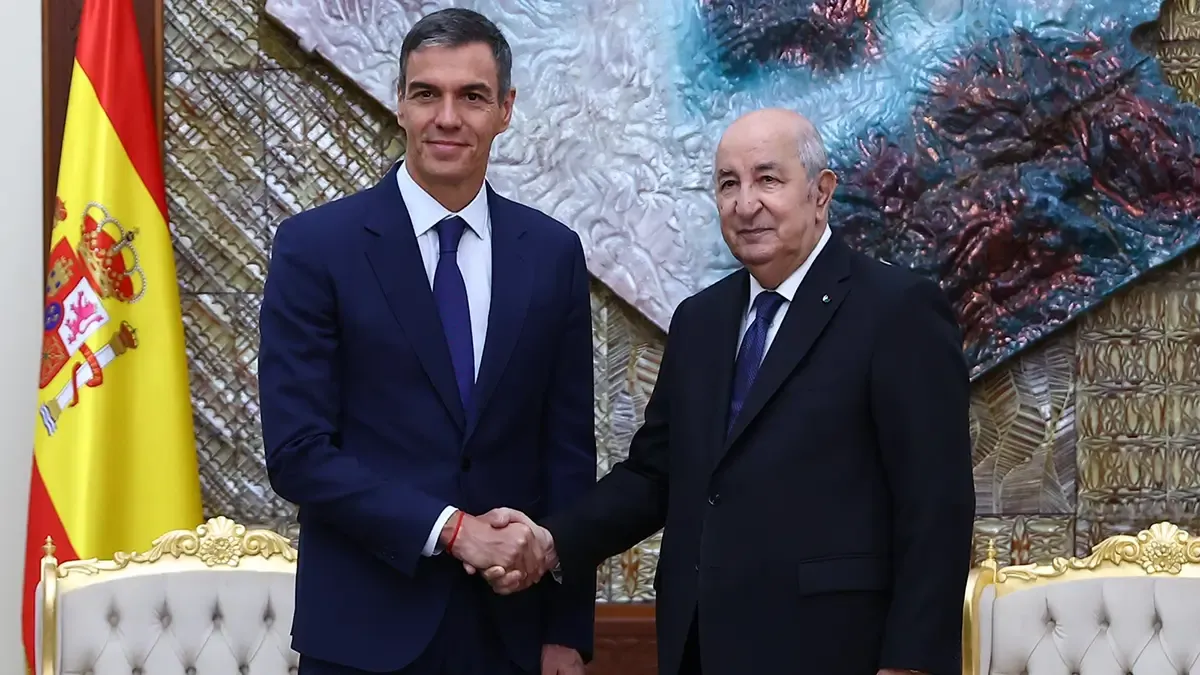
The Spanish Prime Minister, Pedro Sánchez, made a significant diplomatic visit to Algeria on Monday, arriving on a direct flight from New York. This brief but powerful trip is marked by both political and economic implications, aimed at revitalizing the bilateral relations that had deteriorated over the past four years due to a diplomatic rift.
Sánchez's delegation included the Minister of Foreign Affairs, the European Union, and Cooperation, José Manuel Albares, along with the head of Ecological Transition and Demographic Challenge, Sara Aagesen. The Spanish officials are prioritizing the enhancement of energy security and negotiating an increase in the flow of Algerian gas as critical agenda items.
Despite pressing economic challenges, the Moncloa remains steadfast in its official stance, reaffirming absolute support for Morocco's autonomy plan concerning Western Sahara, which was the catalyst for the diplomatic breakdown with Algeria in 2022.
Geopolitical Balance: Normalizing Relations with Algeria without Undermining Alliance with Rabat
This visit presents a crucial test for Spanish diplomacy. The thaw in relations with Algeria follows a prolonged standoff initiated when Sánchez recognized Morocco's autonomy proposal for Western Sahara as the most serious, realistic, and credible basis for resolution. This decision provoked outrage from Algerian President Abdelmadjid Tebboune, who responded by suspending the Treaty of Friendship and Cooperation, recalling his ambassador from Madrid, and freezing trade exchanges. Such aggressive economic pressure tactics ultimately proved ineffective in altering Spain's position.
Officials in Moncloa stress that Spain has not changed its position regarding Western Sahara in any way. Interestingly, Algeria has gradually retreated in recent months, driven by its urgent need to protect its commercial flows and maintain cooperation on security and migration control, effectively aligning with the terms set by Madrid.
Spain seeks to preserve its commercial interests in North Africa while simultaneously maintaining its strategic alliance with Morocco without relinquishing its historical ties with Algeria.
Natural Gas and Energy Alliance: Cornerstones of the Meeting
The primary economic objective of this visit is to solidify energy supply chains. Spain aims to achieve a projected 10% increase in Algerian gas deliveries, primarily through the underwater Medgaz pipeline. Accompanying Sánchez on his official aircraft are leaders from major Spanish energy companies such as Repsol, Naturgy, the former Cepsa now known as Moeve, and Enagás. Their goal is to finalize long-term contracts and explore joint projects in renewable energy and green hydrogen sectors.
Moreover, the Spanish delegation is keen on reopening the Algerian market to national firms, targeting key sectors including infrastructure, transportation, defense technologies, and notably, water resource management and desalination projects, which are critical for Spain’s strategic interests.
As a lighthearted anecdote, Sánchez's journey was overshadowed by the sporting triumph of the Spanish national football team, which won the World Cup in New York just before his flight to Algeria. This direct travel route caused a slight delay in his arrival at Alger Airport.
Upon being received at the Presidency of the Republic of Algeria (Palais d'El Mouradia) with official honors, President Tebboune warmly congratulated Sánchez on the sports victory. As a gesture of goodwill, Sánchez presented him with an official Spanish national team jersey, numbered 26, symbolizing a personal rapport that may pave the way for this new diplomatic phase. Following an official lunch and a joint statement, Sánchez is set to return to Madrid to welcome the World Cup champions at La Moncloa.
As reported by atalayar.com.