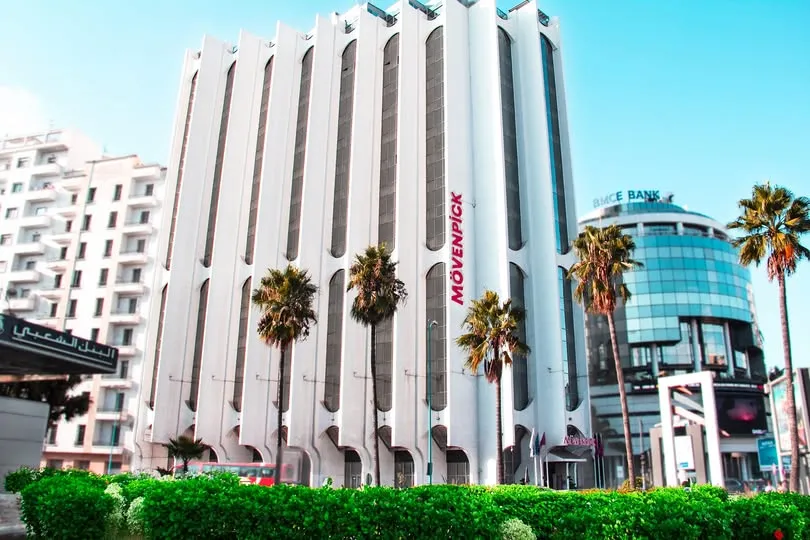

Pickalbatros Hotels & Resorts Eyes Mövenpick Casablanca Acquisition
Whispers of a significant development are reverberating through the professional circles of Casablanca, as it has come to light that the Egyptian group, Pickalbatros Hotels & Resorts, is reportedly in advanced discussions to acquire the Mövenpick Hotel Casablanca. While no official announcement has been made yet, various industry insiders suggest that a communication window could open between late April and early May 2026, following the conclusion of final negotiations.
This potential acquisition does not appear far-fetched, especially considering that Pickalbatros Hotels & Resorts has been actively pursuing an opportunistic acquisition strategy in Morocco for the past eighteen months. The group has been targeting a variety of assets, including struggling hotels, aging properties, and establishments that are poorly repositioned or held by investors eager to divest. In 2024 alone, the group successfully acquired several hotels in Marrakech and Agadir, culminating in the recent purchase of the Sofitel Casablanca Tour Blanche for 450 million dirhams, a deal that was officially announced just a few days ago. Such actions highlight the group's aggressive expansion strategy and its intent to solidify its presence in the Moroccan hospitality market.
Challenges and Cultural Clashes Ahead
Given this context, it is not surprising that Pickalbatros is now setting its sights on the Mövenpick Hotel. The group's objective seems clear: to build a substantial portfolio in Casablanca that can influence the corporate market, conferences, and business clientele. The Mövenpick Hotel, with its prime location in the business district and intermediate size, fits perfectly into this urban platform strategy. The hotel has operated under the Mövenpick brand since 2014, following the acquisition of the former Husa Casablanca Plaza.
However, the real concern may not lie in the acquisition itself, but rather in the aftermath of such a transaction. Industry professionals have already begun to voice concerns regarding the complexities that arise in the integration of recently acquired Moroccan establishments into the Pickalbatros framework. The challenges appear to stem less from the assets themselves and more from the cultural shock that occurs between different hotel management styles. On one side, there are Moroccan or international teams accustomed to more flexible, lifestyle-oriented standards aligned with Accor's culture or traditional high-end hotel codes. On the other side, there is the Pickalbatros method, characterized by strong centralization, tight control over expenses, daily reporting, standardized purchasing, and a relentless focus on fixed costs.
Several managers have privately described what they refer to as a 'pharaonic spirit' within the organization—a governance style that is very vertical, with minimal emphasis on consultation, where decisions are made quickly and discussed little. In some hotels already absorbed by Pickalbatros, friction has reportedly emerged with long-standing directors, department heads, or sales teams who find it challenging to adapt to a management style perceived as harsh and highly accounting-focused. There is a recurring sentiment that while Pickalbatros excels at acquiring, renovating, and filling hotels, many question its ability to maintain the soul of a high-end hotel when applying its volume and yield strategies. This matter is particularly sensitive in Casablanca, where the Mövenpick does not rely on beach tourism or family packages, but rather serves a more demanding, loyal, and less tolerant business clientele.
The underlying risk is evident: striving to deliver a five-star experience at the cost of a three-star budget. Cutting corners on staffing, dining, maintenance, or services can swiftly undermine a property's value, which fundamentally relies on consistency and perceived quality. While short-term profitability may soar, the long-term brand image could suffer. The paradox is striking; Pickalbatros enters the Moroccan market as an aggressive cost-cutter at a time when part of the Moroccan hospitality sector is attempting to elevate its offerings ahead of the 2030 World Cup. Consequently, there exists a temptation to expedite purchases, implement minimal renovations, and standardize operations across the board. However, it is crucial to note that Casablanca is neither Hurghada nor Sharm el-Sheikh. Strategies that succeed in a mass resort environment may not translate effectively to an urban business hotel.
For the time being, caution is warranted. The Mövenpick acquisition remains unconfirmed, but one thing is certain: if this transaction materializes, it will not merely signify a change in ownership. It will serve as a litmus test for Pickalbatros Hotels & Resorts to demonstrate its capacity to do more than just buy properties and cut costs. In Casablanca, the new owner will be judged not only on financial investments but also on what remains of the hotel's identity following the transition.
As reported by premiumtravelnews.com.