
Podemos Condemns Government's Response to Ceuta Crisis
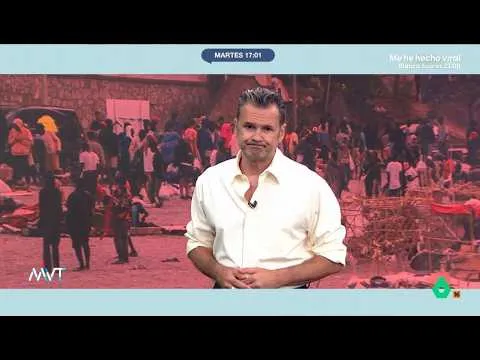
Pablo Fernández, the spokesperson for Podemos, has harshly criticized the explanations provided by Spanish Prime Minister Pedro Sánchez regarding the ongoing migration and humanitarian crisis in Ceuta, which has persisted since July 30. During his first appearance after returning from vacation, Sánchez addressed the government's management of the situation on the _Cadena Ser_ radio station. However, his remarks have not resonated well with those on the left of the Socialist Party. Fernández described the government's handling of the crisis as catastrophic and utterly disastrous, deeming it unacceptable that there are still approximately 5,000 individuals, many of whom are minors, crammed onto a beach. He expressed his deep dissatisfaction with the government's failure to resolve the crisis promptly, stating that the current situation is intolerable.
Fernández particularly criticized what he perceived as the government's subservience to the regime of Mohammed VI, calling it lamentable that Sánchez appears to be kneeling before the Moroccan dictatorship. He posed a provocative question: "What does Pedro Sánchez owe Morocco?" According to Fernández, the Socialist Party’s migration policy is essentially indistinguishable from that of the People's Party. He emphasized that the recent migration and asylum agreement approved by the European bipartisan system is fundamentally a far-right, racist pact that effectively externalizes borders. This practice, he pointed out, has led Spain to invest millions of euros into Morocco to manage its borders, a strategy that has been ongoing for several years. Fernández argued that the Ceuta crisis could have been swiftly addressed had the government deployed the necessary resources from the onset. He characterized the government's inaction as a calculated move that has exacerbated the crisis, particularly highlighting Sánchez's inability to provide concrete solutions during his recent interview.
Criticism from Other Political Leaders
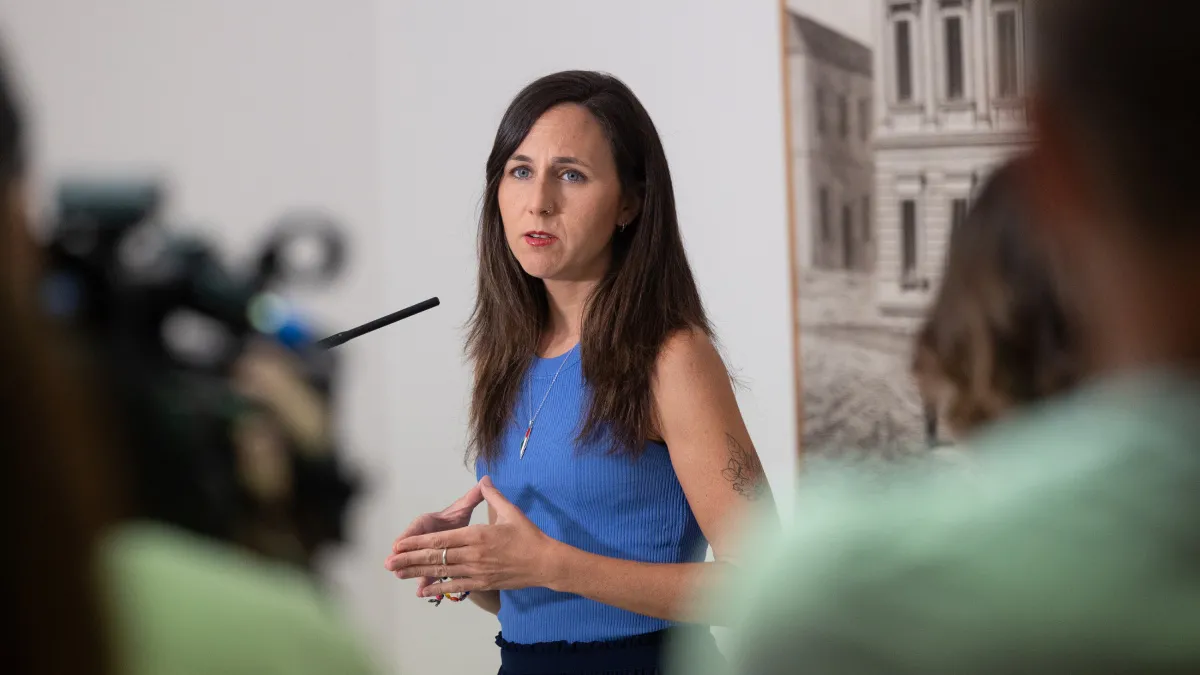
Ione Belarra, the Secretary General of Podemos, expressed her concern over Sánchez's interview, suggesting that he is attempting to position himself as an opposition figure against Trump while ultimately appearing as a president who has surrendered to Morocco and its allies, including the United States and Israel. Belarra remarked that Sánchez is fearful of a repeat of the events of July and is incapable of taking decisive action to sever ties with Morocco. This aligns with Podemos' stance on the matter, which asserts that all relations with the Moroccan dictatorship should be suspended until it ceases to use individuals as weapons and tools of pressure.
Similarly, Ernest Urtasun, the Minister of Culture and spokesperson for Comuns, emphasized that Morocco bears clear responsibility for the crisis, either through action or inaction. He interpreted the mass influx of migrants in July as a politically motivated attempt to destabilize the Spanish government, noting that the Moroccan regime, equipped with one of Africa's best-equipped police forces, appeared to tolerate this situation. Urtasun asserted that the events in Ceuta are indicative of the broader failure of the European Union's external border policy, emphasizing the need for swift normalization of the situation. He advocated for the transfer of minors and asylum-seekers to the mainland for their cases to be processed adequately, all while adhering to legal standards and respecting migrant rights.
Verónica Martínez Barbero, co-coordinator of the Sumar movement, also criticized Sánchez's explanations, highlighting a lack of condemnation towards Morocco regarding the crisis. She underscored the necessity for organizing the relocation of migrants and refugees, advocating for legal processes to continue from the mainland. Antonio Maíllo, the federal coordinator of Izquierda Unida, concluded that Sánchez continues to err in his approach to Morocco, condemning what he termed as the government's appeasement policy. He suggested that the Moroccan government is fully aware of movements within its territory and criticized Sánchez for failing to hold Morocco accountable for the crisis. Alberto Ibáñez, a deputy from Compromís, shared similar sentiments, urging Sánchez to break free from what he described as a Stockholm syndrome regarding Morocco.
As reported by publico.es.