
Political Tensions Rise Over Ceuta Crisis
In recent weeks, Alberto Núñez Feijóo has intensified his criticisms of the Spanish government regarding the ongoing crisis in Ceuta, particularly pointing fingers at Morocco without hesitation. The recent revelation of a report from the National Police, which indirectly implicates Rabat in the events, has fortified Feijóo's stance. During an address at the Congress last Thursday, he confronted Prime Minister Pedro Sánchez, accusing him of concealing the Ceuta crisis out of personal fear of Morocco. This accusation was reiterated during a rally of the People's Party (PP) this past Saturday, where Feijóo expressed his discontent with the government's approach to allied nations while being submissive to those who threaten Spain’s borders.
Feijóo articulated his thoughts vehemently during a rally in Getafe, stating, "They are tough on allied nations that protect their borders, yet submissive to those who breach ours." He further criticized the government for its perceived distance from the King of Spain while showing reverence toward the Moroccan monarch. His comments were laced with irony as he noted that members of the government consider themselves staunch royalists but are misguided in their allegiances. This follows a politically charged week where discussions around King Felipe VI's potential visit to Ceuta prompted debates, with Sánchez attempting to justify the long absence of the monarchy in the city while he himself had engaged in discussions with its leaders.
Calls for Transparency and Accountability
Amidst these political tensions, Feijóo emphasized that Spain should not have to choose between maintaining good relations with its neighboring country and upholding its dignity. He argued that the nation should not seek permission or apologize for preserving its territorial integrity, asserting that this is a fundamental aspect of statehood. He accused Sánchez's government of being hostile towards those who are being invaded while being overly accommodating to the invaders.
In regards to the ongoing investigation into the massive influx of irregular entrants to Ceuta, Feijóo has asserted the right of Spaniards to know the truth. He reiterated his demand for the Director of the National Intelligence Center (CNI) to appear before the Congressional committee on official secrets to provide information to parliamentary groups in a closed session. He did not shy away from directly addressing Defense Minister Margarita Robles, urging her to authorize this appearance, stating, "If you continue to block it, even if you do not applaud, you are just like Pedro Sánchez."
Prior to Feijóo’s remarks, Madrid’s President Isabel Díaz Ayuso had unequivocally stated her belief that the entry of 72,000 people into Ceuta was a meticulously coordinated operation orchestrated by Moroccan intelligence services. She criticized Sánchez for appearing to be preoccupied with a videoconference while the crisis unfolded, suggesting he had no right to remain on vacation during such pressing national issues.
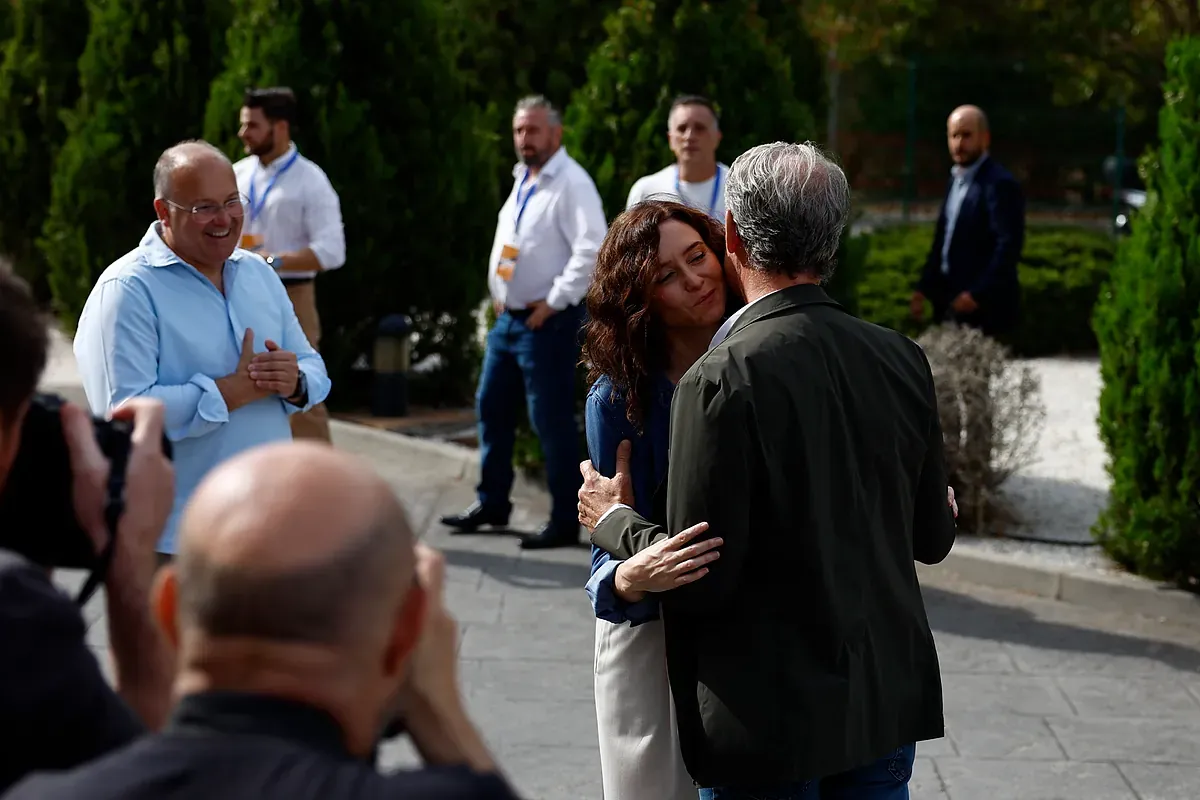
This crisis has become the centerpiece of the PP’s political agenda as they open their political season in Madrid, gathering national and local party leaders, including Feijóo, Ayuso, and the Mayor of Madrid, José Luis Martínez-Almeida. All party members emphasized the urgency and importance of the upcoming political landscape, with Feijóo warning that while change is on the horizon, nothing is guaranteed. He urged his Madrid colleagues not to become complacent and to work diligently towards achieving their political objectives. He called for a democratic and decisive ousting of Sánchez from La Moncloa, aligning with Ayuso's description of the central government as "delirious" and pursuing a "totalitarian project."
As reported by elmundo.es.