Leftist Parties Unite Against Fawzi Lekjaa's Political Move
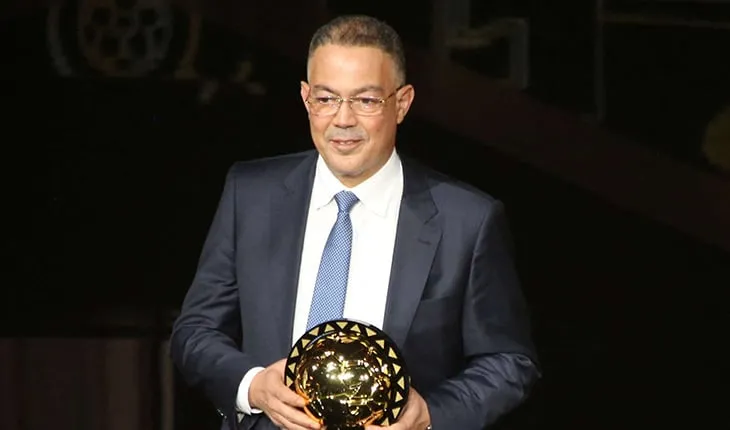
Fawzi Lekjaa, the president of the Moroccan Football Federation and the minister in charge of budgetary affairs, has recently made headlines by joining the Party of Authenticity and Modernity (PAM). His decision has drawn criticism not only from leftist opposition parties but also from his allies within the ruling coalition, including the National Rally of Independents (RNI) and the Justice and Development Party (PJD). Prominent political figures such as Nabil Benabdallah, the secretary-general of the Progress and Socialism Party, and Jamal Al-Asri, the secretary-general of the Unified Socialist Party, have labeled Lekjaa's move as a form of political maneuvering that fails to address the core issues facing the nation. They argue that bringing in high-profile figures like Lionel Messi or Cristiano Ronaldo will not alter public policies and question the legitimacy of upcoming elections if the name of the next prime minister appears to be predetermined.
This backlash comes in the wake of Lekjaa's official induction into PAM, during which he participated in the party's thirty-second national council meeting held in Salé, adjacent to the capital, Rabat. Prime Minister Aziz Akhannouch and former PJD secretary-general Abed Elilah Benkirane have both expressed their concerns about Lekjaa's alliance with PAM, with Akhannouch referring to the situation as a “mercato” in reference to player transfers in football. This sentiment reflects a broader unease among political actors regarding Lekjaa's rising popularity, which is largely attributed to his connection to the recent successes of Moroccan football on both continental and global stages.
Political Implications of Lekjaa's Membership
Analysts have pointed out that Lekjaa's political weight and public appeal are causing anxiety among various political stakeholders. His ability to unite traditionally opposing political factions, such as Akhannouch and Benkirane, underscores the significance of his move. During a meeting in Khmissat, Benabdallah criticized the trend of high-profile political recruitments, emphasizing that such changes do not lead to genuine solutions for the developmental challenges facing Morocco. He cautioned against practices that allow the ruling majority excessive freedom to operate without adequate oversight, citing ongoing controversies surrounding fuel pricing and alleged conflicts of interest within the government.
Furthermore, Benabdallah provided statistical evidence to illustrate that the proclaimed growth indicators have not translated into improved living conditions for the populace or significant reductions in unemployment. He expressed concern over the government's failure to fulfill its employment commitments and warned that increasing political apathy could pave the way for electoral corruption and vote-buying practices.
Echoing these sentiments, Al-Asri condemned what he termed the monopolization of economic, political, and sports sectors, labeling Lekjaa's entry into PAM as a manifestation of “political inundation.” He suggested that the political landscape is evolving to reflect a situation where a party is aligning itself with an individual rather than the other way around, which he views as detrimental to the political and party landscape.
Al-Asri also characterized the current government as a “regressive government,” highlighting the continuous protests by various professional and social groups, which signal growing discontent with public services. He called for a political thaw and a democratic transition that breaks with authoritarianism, arguing that the leftist coalition should advocate for a comprehensive political reconciliation that includes the release of political prisoners and those involved in social movements.
Meanwhile, Abdul Salam Al-Aziz, the secretary-general of the Democratic Left Federation, expressed astonishment at the premature discussions surrounding the next prime ministerial candidate, considering it a significant matter for Morocco's future. He described the current political climate as chaotic, noting that citizens are faced with contradictory models of governance.
In conclusion, while the Moroccan constitution affords Fawzi Lekjaa the right to engage in political activities, the reactions to his initial appearance within PAM suggest that his membership has not only raised questions among his political adversaries but has also instigated apprehension within PAM regarding the potential implications of this alliance for future political dynamics in Morocco.
As reported by alquds.co.uk.