
Understanding the Political Dynamics Between Spain and Morocco
The latest discussions surrounding Spain's political landscape reveal a growing trend among Spanish political parties to vocally express hostility towards Morocco. This significant shift indicates that the reservoir of animosity has reached its peak, saturating the Spanish political psyche. According to reports from the publication “Watan Al-Now,” Spanish parties are increasingly utilizing anti-Moroccan rhetoric as a strategic electoral tool, raising the pivotal question: "What electoral gains can a party achieve by intensifying its hostile discourse against Morocco?" This inquiry stems from multiple pressing issues that have come to define the current political climate in Spain.
One striking observation noted in the article is the near-universal consensus among Spanish political factions regarding hostility towards Morocco, particularly as the nation approaches electoral moments. This phenomenon underscores the politicization of the Moroccan issue within Spain. Each political entity views Morocco through the lens of its ideological stance and electoral interests, treating it as a malleable political asset. In an interview with the weekly publication, university professor Al-Moussaoui Al-Ajlawi emphasized that Morocco has always represented a central theme in Spain's internal discourse, tracing back to the fall of Andalusia. He pointed out that the contemporary narrative reflects a continuation of historical contradictions dating back to the era of Ferdinand and Isabella, juxtaposing the national state founded on the Reconquista and the Inquisition, the Treaty of Tetuan in 1860, and the defense of 'Dar al-Islam' against colonial incursions. He lamented the fact that contemporary political elites from both right and left are echoing colonial rhetoric and the Church's discourse that once accompanied the Reconquista.
Media Influence and the Election Narrative
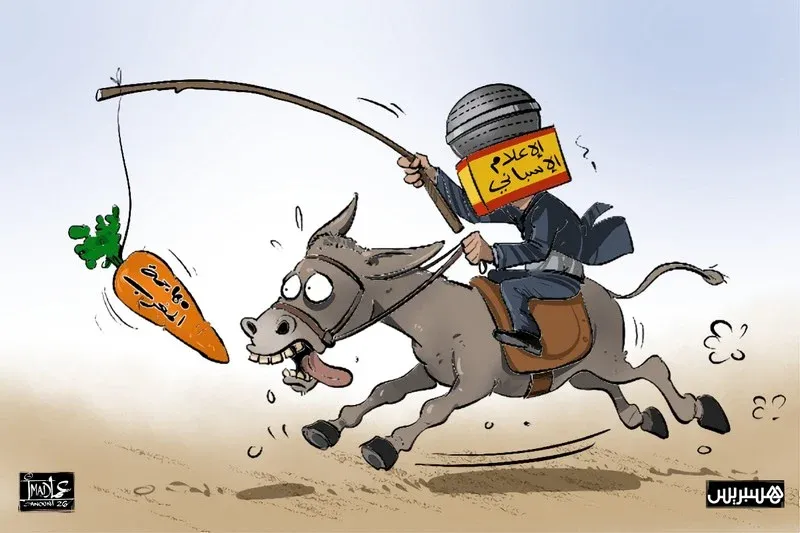
Furthermore, researcher Fikri Soussan, in his conversation with the same outlet, noted that whenever Spanish politics enters a phase of tension, Morocco swiftly re-emerges at the heart of domestic debate. However, rather than being recognized as a neighboring country with legitimate interests or as a partner shaped by geography, history, and intertwined economies, Morocco is often portrayed merely as a card for political exploitation. Abdel Salam Andalusi, a professor of media and communication at the Faculty of Arts and Humanities in Tetouan, further elaborated that the deterioration of relations between the two nations enhances the role of Spanish media, particularly in relation to Islamic themes connected to the cities of Ceuta and Melilla. He underscored the media's increasing involvement in perpetuating stereotypes about Morocco and its religious identity, which can skew public perception and fuel militaristic sentiments.
Media commentator Amin Chibal asserted that Morocco is not just a foreign policy issue for Spain; it fundamentally shapes the geopolitical consciousness of the nation. Both right and left-wing discourses engage with the Moroccan narrative, albeit through different lenses. He articulated that the uniqueness of the Moroccan-Spanish relationship lies in its dual nature: it is neither a fully cooperative partnership nor an ongoing conflict, but rather a relationship characterized by mutual dependence that intertwines strategic necessity with historical legacies and domestic political calculations. The presence of Morocco in Spanish geopolitical awareness is persistent, varying in expression across different political factions and contexts.
In a related note, the weekly “Al-Akhbar” reported on community leaders urging the local governor of Youssoufia, Abdel Mounim Talib, to address ongoing transportation difficulties in the Sidi Chiker area and its surroundings, particularly concerning the challenges posed by crossing the Tensift River. The Communication and Development Association emphasized the urgent need for governmental intervention to provide sustainable solutions that facilitate the movement of people and goods, alleviating the daily isolation experienced by residents. They highlighted that the hardships faced are most pronounced among vulnerable groups, including the sick, women, children, and the elderly, all of whom encounter additional barriers to accessing essential services.
The same publication also noted that the Al-Makhazeen dam in Ksar Kebir is in a precarious state due to increasing water demand, particularly from irrigated lands, which poses significant pressure on its capacity in the coming years. A field study published in the magazine "Environmental Challenges" indicates that water resources are under strain from 2023 to 2050, driven by climate change, population growth, agricultural expansion, and inter-reservoir water transfers, projecting a potential decline in incoming water and an annual demand spike from 164 million cubic meters to 246 million cubic meters.
Moreover, the issue of what citizens have termed the "wave of neglect of collective responsibilities" in the Tangier-Tetouan-Al Hoceima region has sparked widespread debate, as many elected officials seem to be distancing themselves from their duties in leading various communities and regional councils amid preparations for upcoming electoral contests. As reported, several representatives are actively seeking party endorsements to participate in parliamentary elections, prompting a reshuffling of leadership positions within local governance structures, especially in coastal regions.
In an interview with “Ayyam,” political science and constitutional law professor Abdel Hafid Lounsi remarked that the function of elections varies from one country to another, influenced by each nation’s political culture and the level of democratization across its three dimensions: rule of law, accountability, and the freedom of people to choose their leaders. Consequently, linking electoral outcomes directly to decision-making is far more complex than many assume. The theory of representative democracy, which is premised on the notion of general will delegating sovereignty to representatives, has experienced fluctuations in modern times. Therefore, the modern state's challenge concerning elections is to uphold a narrative of democratic representation that serves as the foundation for the legitimacy of public actions through institutions that emerge from the electoral process. Today, the so-called rational legitimacy is crucial for bolstering state actions, particularly in a complex and uncertain context. Thus, ensuring organized elections is a common denominator for both democratic and authoritarian regimes, although the key difference lies in the existence of genuine stakes that encourage active public participation in elections, such as increased voter turnout or political mobilization incentives.
As reported by hespress.com.