
Government's Response to the Ceuta Crisis: A Lack of Accountability
The recent statements from key ministers regarding the crisis in Ceuta reveal a troubling and controversial conclusion: the government asserts there is no specific individual responsible for the unprecedented influx of **72,000 individuals**—the latest official figure—into the autonomous city on July 30. This assertion is alarming because a lack of accountability suggests that there are no repercussions for the circumstances that unfolded. It is also contentious, as almost all allied parties and opposition groups vehemently disagree, pointing fingers at Morocco as the orchestrating force behind what they describe as the most significant "attack on the integrity of Spain." This includes members of the coalition government, such as those from Izquierda Unida (IU), who have criticized Prime Minister **Pedro Sánchez** for exhibiting a "weak" stance in the face of this challenge.
The official narrative that absolves Morocco sets the stage for the anticipated address by Sánchez on **Thursday, September 3**, and highlights some of the primary criticisms he is likely to face—particularly regarding his management of diplomatic relations with Rabat and his belief in Morocco as a "reliable partner." It is worth noting that Sánchez is grappling with multiple pressing issues stemming from the Ceuta crisis, but Morocco remains a particularly vulnerable point of contention. His allies and opposition parties are poised to delve into this matter, especially in light of previous incidents involving the _Pegasus_ spyware that targeted Sánchez's and other officials' mobile devices, raising questions about whether this episode is influencing his current response. This inquiry is not limited to the **People's Party (PP)**; it has been posed by the parties that support Sánchez's administration in Moncloa.
Divergent Views Within the Government
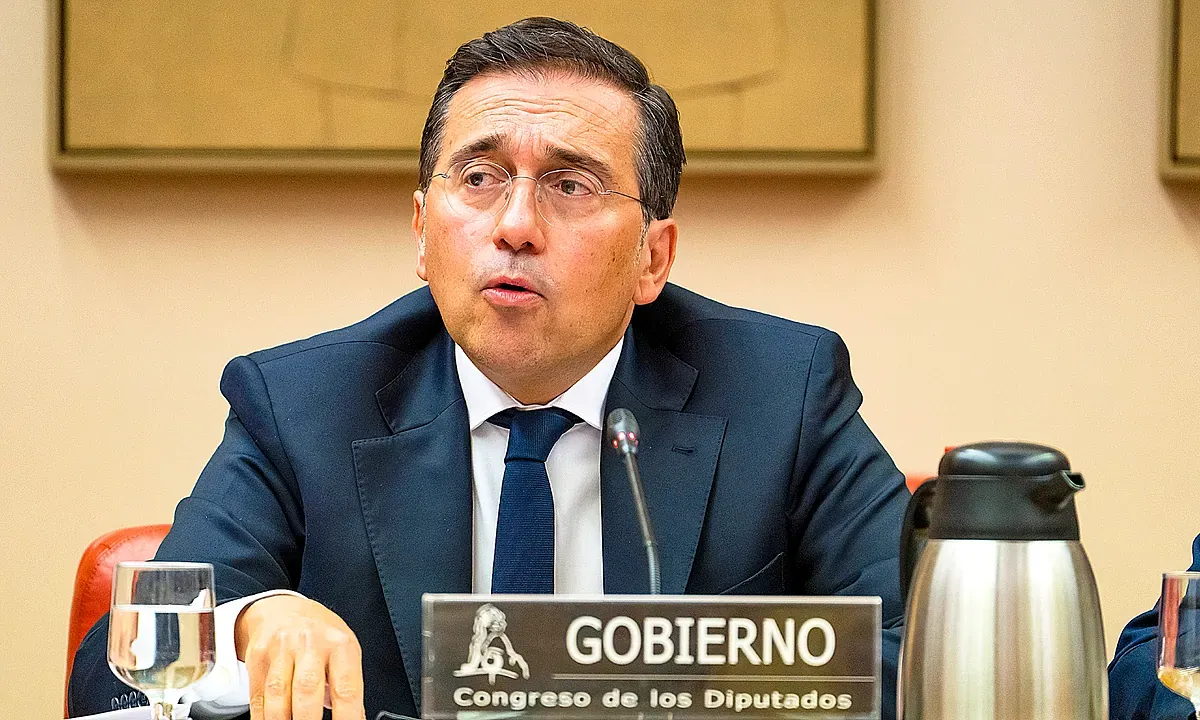
The official narrative denying Morocco's culpability has cracks even within the government itself. While the controversy regarding whether the **National Intelligence Center (CNI)** warned of the impending crisis is not as overt, it remains a significant issue. Minister of Defense **Margarita Robles** stands out as a dissenting voice, expressing doubts about the actual perpetrators and implying that social media may have merely served as a conduit for misinformation. In contrast, **José Manuel Albares** (Foreign Affairs) and **Félix Bolaños** (Presidency and Justice) completely exonerate Morocco from any blame, passionately defending it as a partner that collaborates effectively. Bolaños has stated that suggesting otherwise would be disrespectful to Morocco without any supporting evidence.
Albares describes Morocco's role as "essential" in "stopping the crisis," attributing the mass entry solely to the "unprecedented viral spread of lies and falsehoods" on social media that incited the crowd. Thus, he argues that the response should be rooted in diplomacy, asserting that dialogue with Morocco is "indispensable" for cooperation. Although Robles refrains from directly accusing Morocco, she also does not clear it of suspicion. During her remarks, she highlighted that "hybrid threats" exploit immigration for destabilizing purposes. She cautioned, "Let us not deceive ourselves; many issues will take time to uncover, and some we may never know. There are interested parties that likely exacerbated this crisis or are using it for clear political destabilization, not just of Spain, but also of the European Union." She further emphasized the urgent need for a unified democratic response to defend shared values and the dignity of all individuals.
Members of Congress have pressed for clarity on whether Morocco is responsible. Robles responded, "It is not my place to comment on the actions of the neighboring country. The neighboring country will know what it has done and what it has not done." Meanwhile, Albares refrained from discussing hybrid threats and did not express any veiled criticism of Morocco's apparent laxity in border control during the tragic events of July 30. He placed the blame squarely on the power of social media to spread "fake news". He remarked, "These platforms have been the flammable channel through which lies have spread globally at an unprecedented speed," while attributing much of the dissemination to Moroccan press and influencers, particularly following the viral video of two young individuals swimming across the border that reached 30 million viewers in those pivotal days.
Robles noted that the European Union itself has acknowledged in its reports that social media has become a potent tool for the rapid mobilization of migrants through encrypted messages that facilitate real-time sharing of information at border crossings, clearly manipulated by destabilizing agents. Thus, according to her statements, there is an interested actor pursuing this objective. In summary, Albares presents the crisis as an unanticipated event triggered suddenly on social media, while Robles insists there was prior information indicating a call for action to swim across the border the day before. Neither Spain nor Morocco reinforced their borders, with the Moroccan side appearing more open than ever since the 2021 crisis.
Even the most steadfast allies of Sánchez have criticized the lack of a unified official account of the events. **Francesc Álvaro** from **ERC** lamented, "The more I listen, the less I understand; the summary of this week is disheartening: the accounts do not align." **Jon Iñarritu** from **Bildu** expressed his surprise that the government has been unable to agree on a narrative regarding the warnings about Ceuta, noting, "The only thing they have agreed upon is to defend Morocco." The manner in which Moncloa has dismissed any potential responsibility of Morocco, at least in terms of lax border control during the influx, is evident by the absence of any public record requesting explanations from the Moroccan government. In contrast, Albares did summon the Italian ambassador after the **Giorgia Meloni** government linked the mass arrival to the extraordinary regularization of immigrants initiated by Sánchez's administration and suggested suspending the free movement within the **Schengen area** for travelers coming from Spain, which ultimately occurred.
When questioned about his perceived "softness" towards Rabat, the foreign minister urged against confusing diplomatic niceties and discretion with firmness. He asserted, "Just because I do not publicize diplomatic actions and conversations does not mean there is no firmness. When it comes to the territorial integrity and sovereignty of Spain, particularly regarding Ceuta and Melilla, I will always defend them."
As reported by elmundo.es.