
Spain Faces Political Turmoil Over Ceuta Migration Crisis
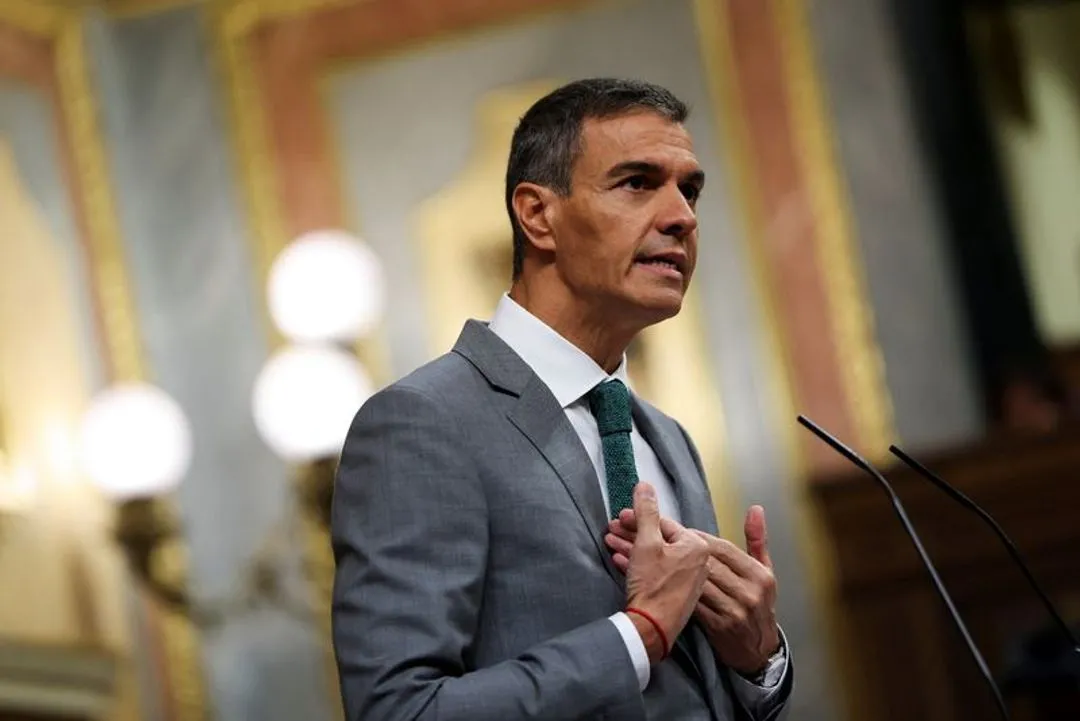
Spain is currently experiencing one of the most intense phases of political agitation and polarization in recent months, largely stemming from the migration crisis in Ceuta. This situation has reignited the debate surrounding Spain's relationship with Morocco. The controversy has intensified following the emergence of a new police report suggesting a possibly orchestrated operation involving individuals connected to Moroccan security forces. In light of growing skepticism regarding Rabat's involvement, Prime Minister Pedro Sánchez addressed Congress on Thursday, asserting that there is insufficient evidence to implicate Morocco in the organization or execution of the mass entry of migrants.
Political Fallout and Calls for Accountability
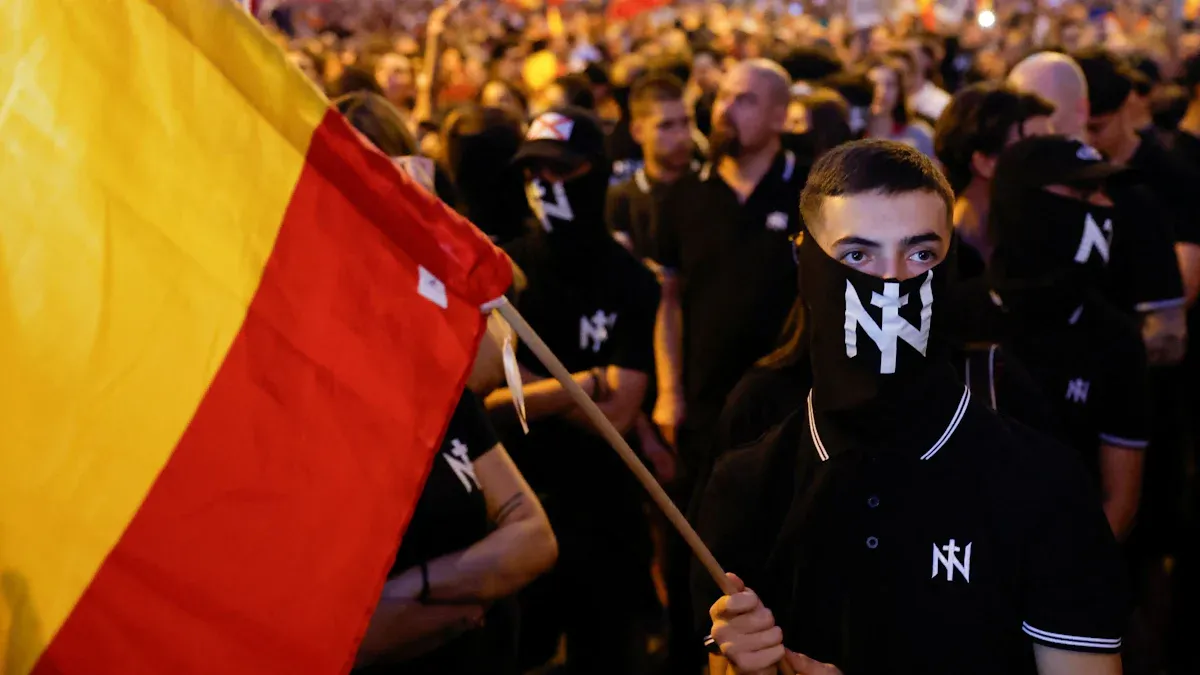
This congressional appearance comes at a particularly precarious moment for Sánchez, as massive protests are erupting in Ceuta and various locations across Spain in response to his handling of the crisis and in defense of the city’s Spanish identity. This is compounded by pressure from his leftist allies and major opposition parties, who have demanded explanations regarding the government's actions. The latest twist in the crisis involves a report submitted by the police to judge María Tardón, who is investigating the events. The document characterizes the entries on July 30 and 31 as a "planned operation" rather than a spontaneous movement, indicating that individuals connected to Moroccan security forces were among its organizers and executors.
According to the report, the scale of the operation required high-level planning, far exceeding the typical capabilities of human trafficking networks. Furthermore, investigators noted that the vast majority of messages disseminated in the days leading up to July 30 originated from Moroccan phones. The findings have sparked a renewed political battle in Spain, raising questions about Morocco's possible involvement in a crisis that directly impacts one of Spain's most sensitive border points.
Despite this contentious backdrop, the Spanish government maintains a strategic relationship with Morocco in areas such as immigration, security, and border control. In recent years, Morocco has become a crucial partner for Spain in managing irregular migration and facilitating returns. However, the release of the report triggered a political storm. The Popular Party (PP), the main opposition force led by Alberto Núñez Feijóo, accused the government of withholding information and demanded clarifications regarding Morocco's role. Feijóo even called for the immediate summoning of the Moroccan ambassador in Spain for explanations.
Pressure on Sánchez is not limited to the right. Sumar, the leftist coalition partner alongside the Socialist Workers' Party (PSOE) led by Sánchez, has also raised concerns about the government's response and demanded greater transparency regarding the events. Likewise, other parliamentary allies of the president have expressed doubts about the official narrative. In this context, Pedro Sánchez focused his defense in Congress on a singular point: there is insufficient evidence to claim that Moroccan authorities planned or executed the mass migration into Ceuta on July 30. While acknowledging existing "doubts and indications" surrounding the incident, he called for "rigor and caution" before attributing responsibility.
As the Prime Minister, it is Sánchez's duty to manage this crisis with both rigor and prudence. He emphasized that no Spanish institution, foreign government, or international organization has thus far provided "solid evidence" to conclude that Morocco orchestrated or executed the episode. Sánchez assured that should any evidence emerge proving such involvement, Spain would respond decisively. "This government is not afraid to confront foreign powers when the situation demands it," he stated, urging that any decisions of such gravity be supported by "verified facts."
To bolster his argument, he referenced the Iraq War and the experience of "an illegal war based on false evidence," referring to the information used to justify the existence of weapons of mass destruction prior to the 2003 invasion. Nevertheless, the president acknowledged that Morocco’s actions during the crisis raise questions. According to his account, for approximately ten hours on July 30, the Moroccan Gendarmerie allowed crossings at the border before later regaining control. "If there was incapacity or inaction, that is something that needs clarification," he stated, while also asserting that Spain must maintain a "good neighborly relationship" with Morocco, although he cautioned that this cooperation must change following the recent events.
Consequently, the government will review its "coordination and alert mechanisms" with Rabat to incorporate "additional guarantees" to respond effectively in similar situations. The defense of legal procedures concerning migrants also constituted a central aspect of his intervention. Sánchez asserted that "Spain is a great democracy," a "social and democratic state of law fully integrated into the European Union," emphasizing the importance of adhering to laws, international treaties, community law, and domestic legislation that obligate compliance and preservation.
The president insisted that this compliance is undertaken "obviously out of obligation," but also "out of conviction, empathy, and dignity, because we believe it serves to build a better world." He firmly maintained that a democracy is not stronger by circumventing the law to resolve a problem; it is when it resolves an issue while faithfully adhering to the law that it proves its strength. He explicitly rejected any returns lacking guarantees: "One cannot simply grab a human being by the arm and throw them over the border as if they were a sack of earth." In parallel to his defense of the government's actions, Sánchez announced a gesture of institutional support for Ceuta and Melilla: King Felipe VI will visit both autonomous cities "in the coming weeks." According to the president, the trip will serve to convey "the absolute commitment of the State" to these two Spanish territories located in North Africa.
As reported by trtespanol.com.