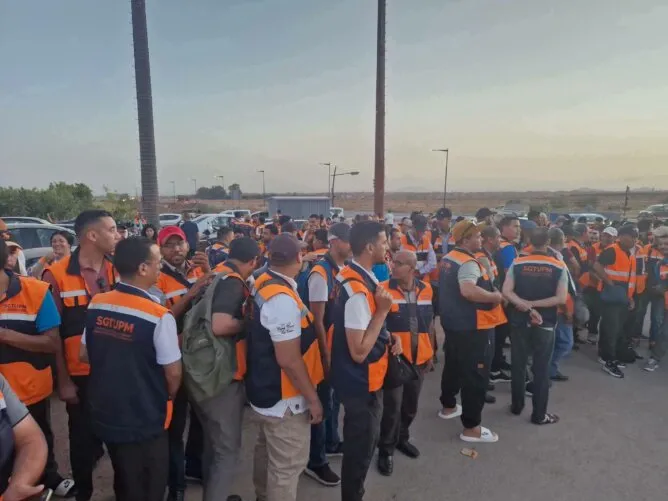

Strikes Disrupt Daily Life in Marrakech
The city of Marrakech has recently experienced significant turmoil within its urban transport system due to a strike initiated by bus drivers and staff. This labor action has had an immediate impact on the daily commutes of thousands of residents who rely on this essential service to reach their workplaces, educational institutions, and to fulfill various administrative and personal errands. The suspension of several bus services has resulted in overcrowded waiting areas, forcing many passengers to seek alternative transportation methods, which has escalated commuting costs and disrupted the normal flow of daily life in the city.
This strike is rooted in escalating tensions between workers and the management of the company responsible for overseeing the urban and semi-urban transport sector. Employees have expressed their dissatisfaction with the working and social conditions they have endured since the management of this facility was transferred to the current company. Protesters argue that the new phase has failed to meet their expectations for improved working conditions and has heightened their anxieties regarding their professional futures and the rights they consider to be hard-won entitlements that should not be compromised.
Negotiations and Workers' Demands
The origins of this conflict can be traced back to the transition of management to the new company, with employees asserting that this transfer should have occurred while fully preserving their original employment contracts and associated rights. The laws governing the transfer of businesses stipulate the continuity of the employment relationship without necessitating the imposition of new contracts. However, workers feel that certain measures accompanying this transition have raised substantial concerns among them, particularly in regard to the potential impact on their professional and social standing.
In an effort to avoid reaching the point of a strike, the union, according to its representatives, opted for dialogue as a fundamental means to address the existing disputes. A series of meetings were convened involving all relevant stakeholders in the sector's management, and official correspondence was sent to continue negotiations and discuss the demands of the workers. Nevertheless, these initiatives, as emphasized by employee representatives, did not yield tangible results, which deepened the workforce's sentiment that there was no genuine will to reach a mutually agreeable solution.
As the stalemate persisted, employees resorted to escalating protest actions, beginning with wearing protest badges at their workplaces, which eventually led to a strike that included hours of work stoppage coinciding with a demonstration to voice their demands. Protesters maintain that these actions were a last resort after exhausting all dialogue avenues, asserting that the strike was not their primary goal but was necessitated by the deadlock in negotiations.
The workers' demands center around a range of crucial issues aimed at improving their conditions, with a primary focus on reviewing wages to align with the continuous rise in living costs, alongside enhancing social and professional circumstances and ensuring respect for acquired rights. They argue that the economic pressures faced by Moroccan families make it imperative to reassess wages to ensure a minimum level of social stability, particularly for a group tasked with providing a vital public service that is integral to the daily lives of citizens.
On the other hand, protesters assert that the company possesses the resources necessary to address some of these demands, pointing out that the bus fleet is relatively modern and that the service continues to operate regularly. This leads them to believe that improving workers' conditions remains a viable option if sufficient willingness to engage in responsible dialogue, considering the interests of all parties involved, can be established.
This crisis underscores the importance of social dialogue within public facilities and essential services, as any friction between management and employees directly affects citizens before any other stakeholders. The disruption of urban transport not only impacts employees, students, and schoolchildren but also extends its effects to economic, commercial, and tourism activities reliant on ease of mobility within the city, particularly in a destination that continuously welcomes large numbers of visitors.
Moreover, this strike highlights the urgent need for more effective mechanisms to manage labor disputes before they escalate into open protests. Early and consistent dialogue between management and employee representatives contributes to alleviating tensions and helps to prevent disruptions that adversely affect the quality of services provided to the public.
Workers assert that their demands do not exceed the improvement of working conditions and the protection of rights guaranteed by law, while also recognizing the vital role that urban transport plays within the city of Marrakech. They emphasize that their goal is not to disrupt the interests of residents or complicate mobility, but rather to advocate for serious negotiations that lead to balanced solutions that preserve the rights of workers and ensure the continued operation of this essential service under optimal conditions.
The future of this crisis hinges on the willingness of all parties to return to the negotiating table in the near future, as citizens look forward to the resumption of transport services in a normal manner and the end of the disruption caused by the strike. It appears that reaching a consensus agreement will be the most effective solution to overcoming the disagreement and ensuring stability in the urban transport sector that serves the interests of both workers and passengers alike.
As reported by attasiaa.com.