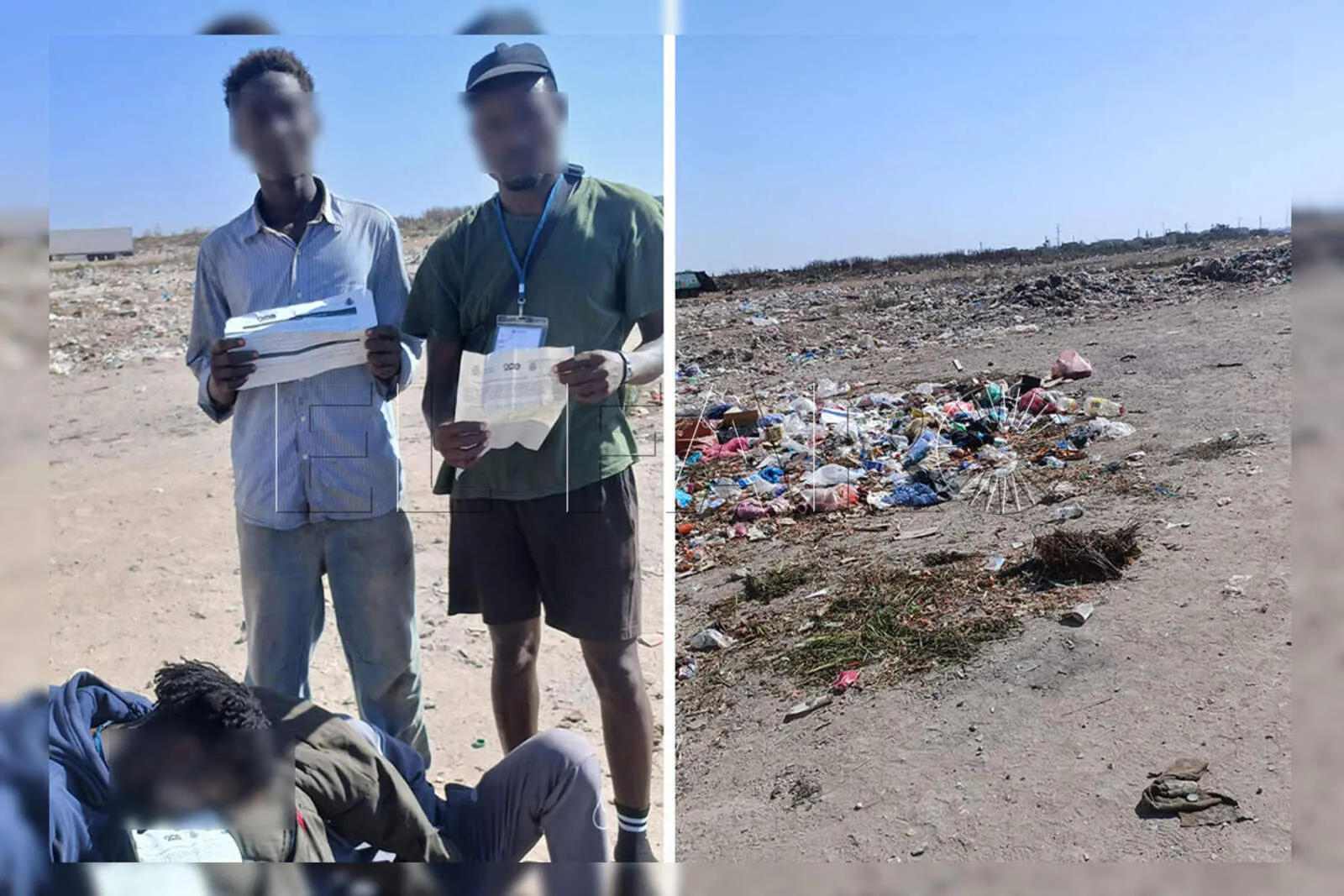

A young Sudanese migrant recently shared his experience with _El Faro_ from Morocco, confirming that he was returned during the early hours from Ceuta. He is part of a group that includes up to 14 Sub-Saharan individuals who were handed over to the Moroccan police at the Tarajal border crossing. Just a day prior, another operation was conducted involving nearly 25 Sub-Saharan migrants. All individuals involved had police files initiated for their return, duly signed by the local authorities in Ceuta.
The young man recounted the harrowing experience of being taken from his bed by police officers in the middle of the night, marking his return to Morocco. He noted that while he and his companions are all Sudanese, there were also migrants from other nationalities among them. Upon their arrival at the border, the Moroccan police confiscated their belongings. However, they were allowed to retrieve their phones after a thorough search and were subsequently relocated to a place called Aïn Harrouda, located about 17 kilometers from Casablanca, near a river.
Legal Framework Surrounding Returns
During the conversation with the newspaper, the migrants mentioned that they were previously living in a settlement, though it was unclear whether it was the CETI or Loma Margarita. Holding their police documentation, they shared photographs as proof of their presence in Morocco. In several cases, the migrants’ lawyers had filed appeals against their return. However, these returns were executed legally, based on the argument that the appeals did not suspend the return process, which was carried out as planned.
On the night in question, 14 individuals were returned to Morocco. Reports suggest that this group comprised primarily Sub-Saharan migrants, along with a few from Yemen and Algeria. Notably, during the police triage process, these migrants did not request asylum, as many of them aimed not to remain in Spain but to reach other countries where they have community support. In this particular case, the individuals expressed a desire to travel to the United Kingdom.
Government's Stance on Returns
This marked the first return of Sub-Saharan migrants since the crisis, although prior expulsions of Moroccan nationals from the CETI had occurred when asylum applications were denied for those who arrived in Ceuta before the mass influxes in July. Officially, the Spanish government has communicated its intent to return all irregular migrants, with Morocco indicating its willingness to facilitate these returns. The crux of the matter lies in conducting thorough triages.
One of the Sub-Saharan migrants returned early this morning received his return order earlier this week, specifically on the 23rd. His return was mandated after his illegal entry into Spain on the 30th, following the breach of border containment measures. The Government Delegation issued the resolution on September 23, stating that the return should occur "as soon as possible." However, with an appeal submitted nearly 24 hours later, the order was executed because the appeal did not suspend the return proceedings.
Currently, these migrants find themselves distanced from Northern Morocco, thus away from the heavily monitored border area that has seen increased vigilance following the mass entry events.
As the National Police continues to conduct triage operations for all migrants, the Spanish government's public messages have been clear, confirming that all individuals who entered illegally during the events of July 30 and 31 will be returned to their countries, except for those granted asylum who require international protection. Reflecting on previous years, it becomes evident that such returns of Sub-Saharan migrants through the Tarajal border crossing are not a new phenomenon.
As reported by elfarodeceuta.es.