Tragedy Strikes as Death Toll Rises
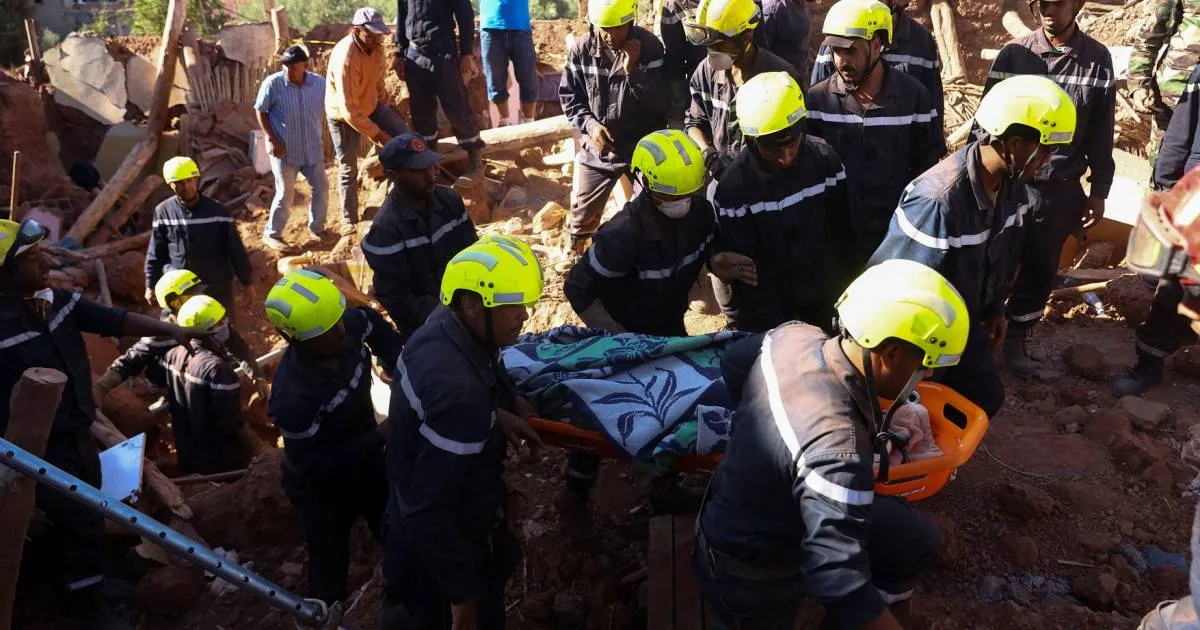
On Sunday, rescue workers were seen retrieving bodies from the rubble in the aftermath of a catastrophic earthquake that struck Morocco. Villagers mourned the loss of their loved ones beneath the debris of their homes, as the death toll surged to approximately 2,800, marking it as the deadliest earthquake Morocco has experienced in over six decades. Rescue teams are racing against time to locate survivors amidst the devastation.
International rescue teams from Spain, the UK, and Qatar have joined local efforts to find those trapped following the 6.8 magnitude earthquake that hit the Atlas Mountains, approximately 72 kilometers southwest of Marrakech late Friday night. According to Moroccan television reports on Monday, the official death toll had reached 2,862, with injuries reported in 2,562 individuals. Rescuers noted that traditional adobe houses, characteristic of the region, significantly reduced the chances of finding survivors due to their collapse.
Community Resilience Amidst Despair
Among the victims was seven-year-old Suleiman Ait Nasr, who was carried to his bedroom by his mother after falling asleep in the family’s living room in a small village near Talat Yaqub, one of the hardest-hit areas. His father, Ibrahim Ait Nasr, spoke through tears, recounting how the earthquake occurred just as his wife returned home, causing the roof to collapse on their son. On Monday, he spent the day attempting to salvage belongings from the ruins of their home.
In the village of Tikht, where few buildings remain standing, local resident Mohammed Oushan, 66, described the harrowing experience of rescuing 25 survivors from the rubble. His sister was among those saved. Oushan recounted, "We were so focused on rescuing that without any tools, we used our hands. Her head was visible, and we kept digging with our hands." A video from the remote village of Imi N'Tala captured rescuers and dogs scaling steep, debris-filled terrain, with Antonio Nogales, a coordinator from the organization Firefighters Without Borders, commenting on the extensive damage, stating, "No house remains standing. We will begin our search with the dogs and see if we can find anyone alive."
Despite the widespread destruction, Nogales expressed hope that rescue teams would still find survivors in the coming days, emphasizing, "We believe there may still be people in the collapsed buildings... We will never give up hope." Following an initial response deemed slow by some survivors, search and rescue operations appeared to accelerate on Monday, with makeshift camps being set up where people had spent three nights outdoors.
Footage from Moroccan television showed a military helicopter flying over an area near the earthquake's epicenter, dropping essential supply bundles for isolated families. As many affected areas remain difficult to access, authorities have not released estimates of how many individuals are still missing. Gradually, the earthquake's impact on Morocco's cultural heritage is becoming evident, with damage reported to buildings in Marrakech's old city, a UNESCO World Heritage site, as well as significant damage to the historic 12th-century Tinmel Mosque located in a remote mountainous area near the quake's epicenter.
Residents in Tinmel, a rural village near the epicenter where 15 fatalities occurred, shared food, water, and medical supplies but urgently requested tents and blankets to protect against the cold nights in the mountainous region. The U.S. Geological Survey reported that this earthquake is the deadliest in Morocco since 1960, when a significant quake resulted in at least 12,000 deaths, and the strongest in the region since at least 1900. Government spokesperson Mustafa Baïtas stated in a televised address on Sunday that every effort is being made on the ground.
The Moroccan military announced it was bolstering search and rescue teams while providing drinking water and distributing food, tents, and blankets. A major road connecting the Atlas Mountains to Marrakech was closed on Monday evening due to the heavy traffic of vehicles and individuals carrying relief supplies toward some of the most affected communities in the remote mountainous areas. Volunteers and Moroccan civilians, along with some foreigners, helped direct traffic and clear rock debris from the roads.
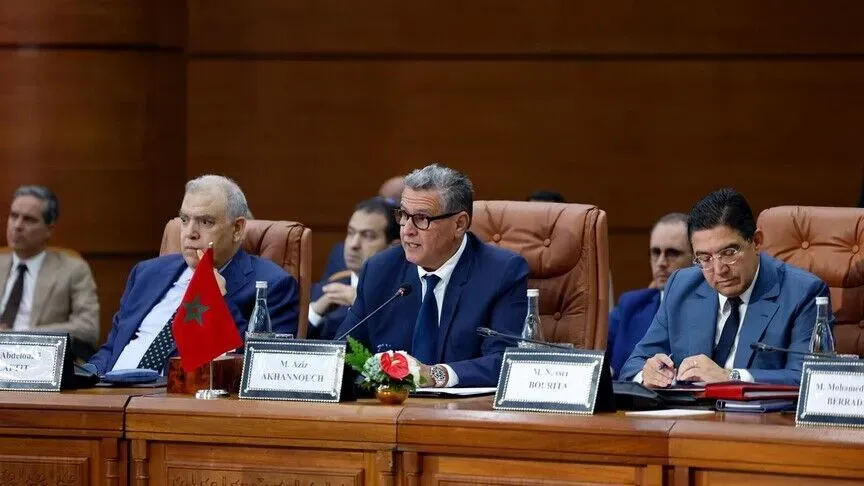
Prime Minister Aziz Akhannouch told local media that the government would compensate the victims but did not provide further details. Sources indicated that the Moroccan government intends to proceed with hosting the annual meetings of the International Monetary Fund and World Bank scheduled for October in Marrakech. Morocco has accepted offers of assistance from Spain and the UK, which sent search and rescue specialists along with trained dogs, as well as offers from the UAE and Qatar. State television reported that the government may accept aid offers from other countries later.
The Moroccan Ministry of Equipment announced that it has opened the main roads affected by the earthquake, with secondary roads reopening at over 90% capacity. As life gradually returns to normal in the disaster-stricken areas, an ambitious reconstruction plan has emerged, as announced by the royal palace. On Friday, the Minister Delegate in charge of the Budget, Fouzi Lekjaa, revealed that the earthquake had impacted approximately 2,930 villages inhabited by 2.8 million people in the Atlas Mountains. The royal palace disclosed details of a comprehensive project for the rehabilitation of areas affected by the earthquake, along with funding mechanisms for this massive initiative.
As reported by alghad.tv.