
Reevaluation of the Arabic Language Education Program for Moroccan Diaspora Children
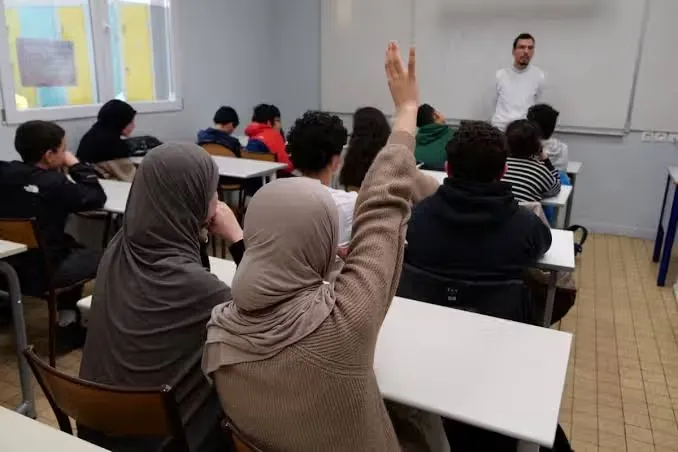
In light of recent developments, Morocco is poised to overhaul its Arabic language and cultural education program aimed at children of Moroccan expatriates in Spain. This initiative comes after several regional governments, notably those of Madrid and Murcia, announced their withdrawal from the program. Nasser Bourita, Morocco's Minister of Foreign Affairs, has elucidated the shortcomings, potential recourse, and future pathways for this educational endeavor in a written response obtained by Medias24.
Bourita suggests that it is prudent to contemplate new directions for the program, advocating for a reassessment of its components and an evaluation of its implementation mechanisms. This strategic reevaluation aims to safeguard the program against challenges that could undermine its objectives. The written response, dated July 17, 2026, was directed to Aziza Bougrida, a member of the Popular Movement party, addressing the suspension of the program by the autonomous communities of Madrid and Murcia set to take effect in the 2025-2026 academic year.
Challenges and Future Directions for Moroccan Diaspora Education
The program, which has been in effect since the 1994-1995 academic year and expanded progressively across twelve autonomous communities, is grounded in a cultural cooperation agreement signed on October 14, 1980, that took effect on October 10, 1985. A strategic partnership established on October 3, 2012, also stipulated that Spanish authorities would facilitate the organization of courses, while Morocco would oversee the training of educators.
The regional governments of Madrid and Murcia cited insufficient guarantees regarding the continuation of the program under the required conditions and serious dysfunctions as reasons for their withdrawal. Bourita highlighted that these administrations mentioned a lack of information and oversight, as well as difficulties in verifying the selection criteria for teachers and facilitators. In response, the Moroccan embassy in Madrid has reached out to the Spanish ministries of Foreign Affairs and Education to seek clarification and request a reevaluation of these decisions.
At the 16th meeting of the joint commission responsible for the program, held on July 18, 2025, at the Spanish Ministry of Education, the Moroccan delegation reiterated its opposition to the withdrawals from Madrid and Murcia. Spanish representatives responded by affirming that regional educational authorities possess full authority to terminate the program, while expressing regret over these decisions. Furthermore, Bourita noted that the Spanish Minister of Inclusion and Migration criticized initiatives that could foster division among citizens, labeling them as detrimental to social cohesion.
Notably, the situation in Andalusia remains unaddressed in the document, where a government agreement between the Popular Party and Vox, reached on July 2, 2026, is set to abolish the program starting in the 2027-2028 academic year. Currently, nearly 2,000 students benefit from this program across 96 institutions in the region.
In anticipation of the discontinuation of in-person classes, the Hassan II Foundation for Moroccans Living Abroad has launched a Spanish version of its E-madrassa platform. This service, which is free and easily accessible, allows diaspora children to participate in remote Arabic language and Moroccan cultural courses, tailored for non-Arabic speakers. Moreover, Bourita believes that the management of this issue by the Mohammedia Foundation for Moroccans Living Abroad could signify a "qualitative change." He posits that the development of innovative and alternative solutions should be a focal point of the new institutional framework dedicated to Moroccans worldwide.
On a broader scale, Bourita contextualizes these withdrawals within a political climate where migrants, particularly Moroccans, face discriminatory practices fueled by misleading narratives and inadequate promotion of values such as openness, coexistence, and tolerance. He asserts that the extreme right's rhetoric, characterized by provocative messages, embodies a hostile agenda towards foreigners, particularly Moroccan nationals, with certain prejudices being exploited to sway the Spanish electorate.
In conclusion, the Ministry of Foreign Affairs will continue to leverage its resources to advocate for Moroccans abroad and uphold their cultural ties to the Kingdom, despite obstacles often dictated by political agendas that should not be conflated with a widespread sentiment of hostility or discrimination within Spanish society. As reported by medias24.com.