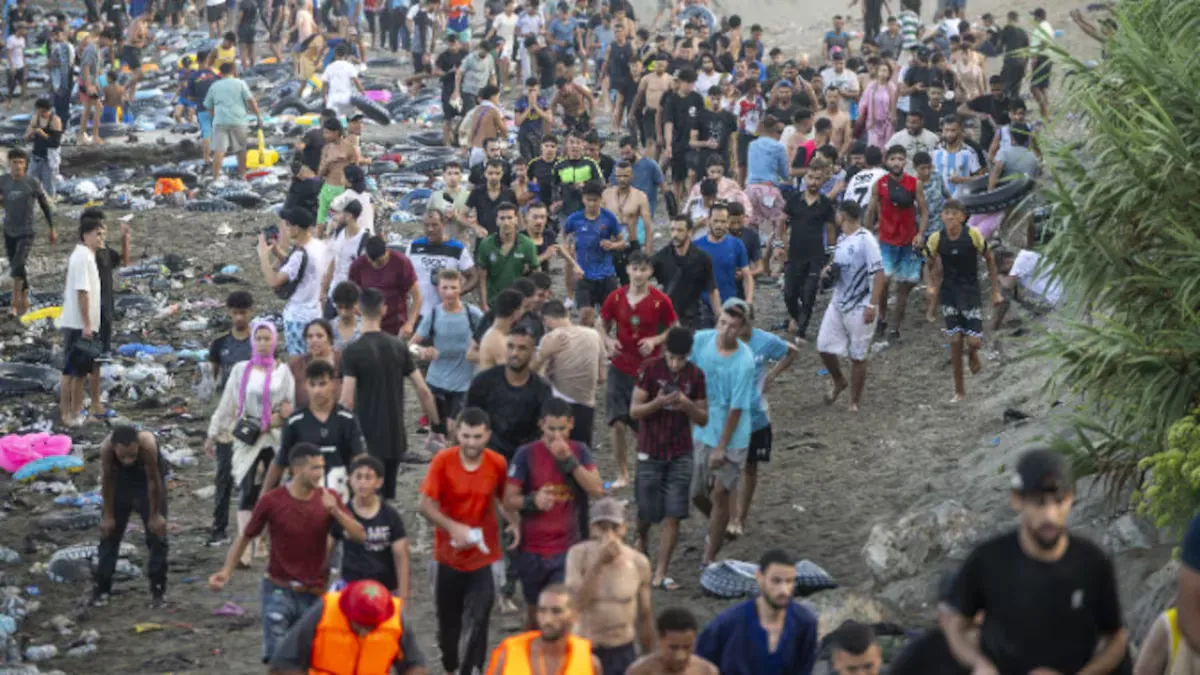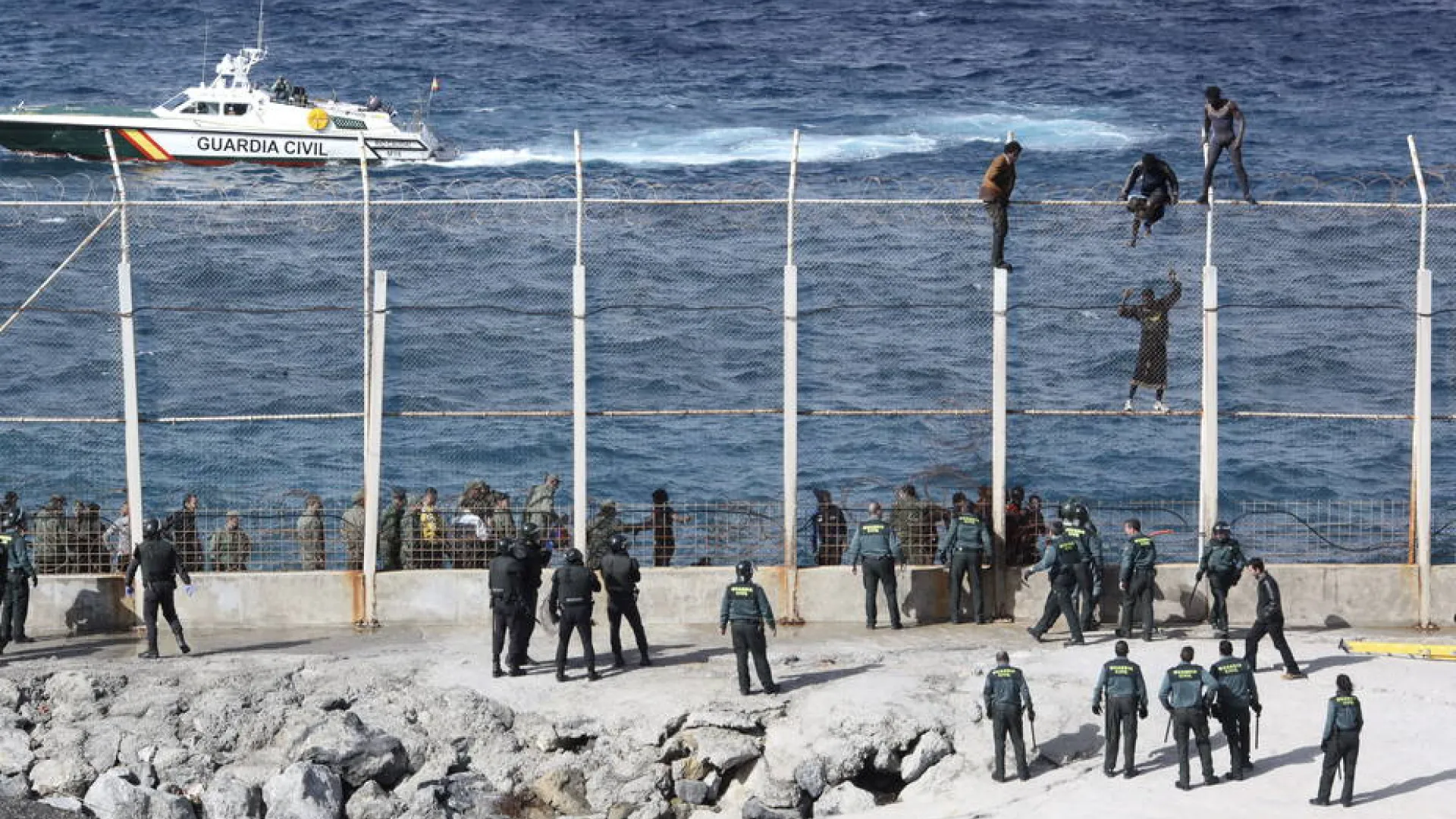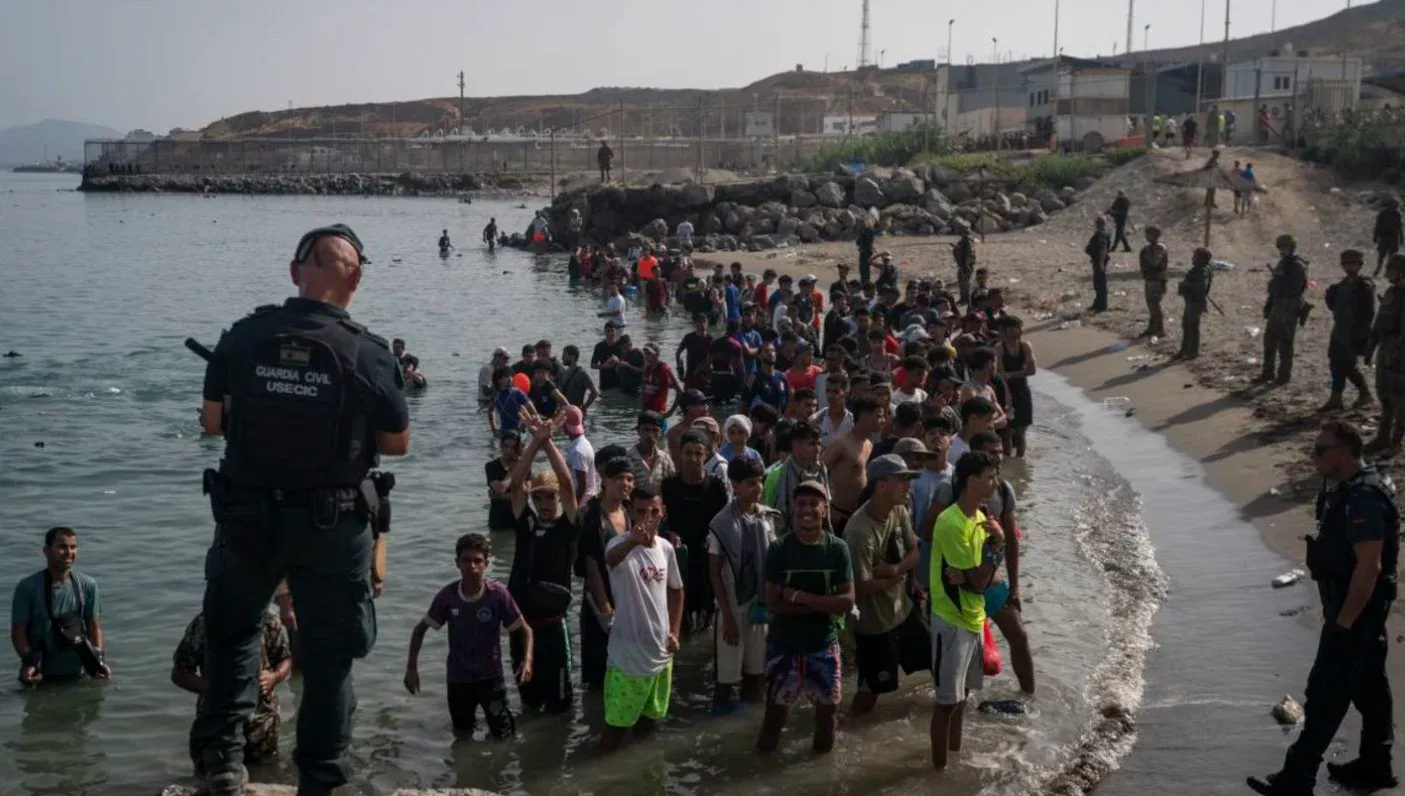

In a significant move, the Spanish government has made public a set of declassified documents detailing the events surrounding the Ceuta crisis, which occurred at the end of July. These documents, released on Wednesday evening, shed light on the alarming situation that unfolded as more than 70,000 individuals attempted to breach the border into Ceuta. The documents span from July 1 to July 31 and feature reports and correspondence from key intelligence and law enforcement agencies, including the National Intelligence Centre, the Armed Forces Intelligence Centre, the National Police, and the Civil Guard.
One of the most notable findings is a memo titled “Irregular migration: early warning of possible attempts to enter Ceuta during Throne Day week.” This memo reveals that Spanish intelligence had alerted Moroccan authorities about potential mass crossings into Ceuta, coinciding with the national celebrations of Throne Day. It specifically mentions that calls were being disseminated on social media platforms, encouraging individuals to swim across or breach the border fence during the festivities, taking advantage of the distraction of Moroccan security forces.
The intelligence report highlights the identification of several social media groups, including WhatsApp and Facebook, with names such as “Storming the Ceuta Fence,” “Ceuta-Fnideq,” and “Harraga Ceuta.” These groups had amassed over 160,000 members and were actively promoting the idea of crossing the border, with one post urging potential migrants to act quickly, stating, “Anyone who wants to cross has one last chance during Throne Day; at eight o'clock the authorities will be busy with the celebrations.” Such messages clearly reflected a coordinated effort to exploit the situation for mass migration.
Further communications reveal that a Spanish intelligence officer had directly informed the chief of staff of the government delegation in Ceuta about the imminent threats, detailing plans to storm the fence and enter by sea the following day. The officer's warnings also reached the Civil Guard’s intelligence command, who were advised about the potential attempts to enter Ceuta by both swimming and scaling the fence. However, the response from the Civil Guard indicated a lack of preparedness, with an official expressing that he was unavailable at the time of the alert.
These revelations starkly contrast the earlier statements made by the government delegation in Ceuta, which had denied receiving any prior warning about the impending crisis. Following remarks from Defence Minister Margarita Robles in Congress, which dismissed allegations of an intelligence alert, the published documents directly contradict this narrative by confirming that intelligence regarding the migration attempts was indeed received.
The Spanish government has acknowledged that while there were warnings about possible migration attempts, they did not foresee the unprecedented scale of over 70,000 individuals attempting to enter the territory. Furthermore, they clarified that the documents had been subjected to anonymisation to protect sensitive information related to state security and the operational capabilities of the involved agencies. This situation raises critical questions about the effectiveness of communication and preparedness among Spanish authorities during a time of crisis.
As reported by en.yabiladi.com.