
Government Awareness of Ceuta Assault: CNI Reports Uncovered
Recent declassified reports from Spain's National Intelligence Centre (CNI) regarding the assault on Ceuta have shed light on significant discrepancies in the government's narrative surrounding the incident. The reports reveal that the Government Delegation in Ceuta had prior knowledge of the impending crisis, as they received a tactical report on July 29, indicating the "extraordinary severity" of the situation anticipated during the following day's Throne Day celebrations. Furthermore, the CNI had also communicated these concerns to Morocco's intelligence services, raising questions about the effectiveness of their collaboration and the government's claims of ignorance regarding the seriousness of the threat.
The government has maintained that it was unaware of the potential risks, with the delegate in Ceuta explicitly denying having received any warnings. However, the declassified documents contradict this assertion, confirming that alerts were indeed sent out. Several ministers have praised Morocco's cooperation in managing the crisis, while it becomes increasingly evident that the Moroccan authorities did little to prevent the assault on Ceuta, despite having prior knowledge of the planned incursions.
Strategic and Tactical Notes Highlighting the Threat
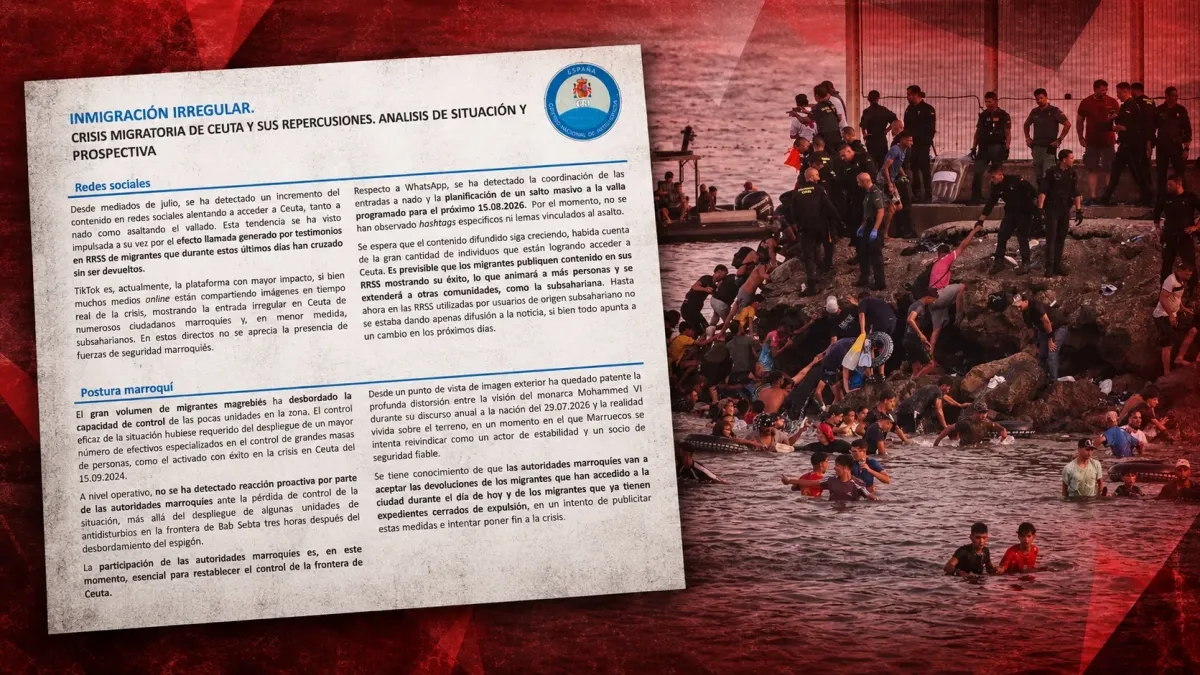
The declassified reports consist of two key notes from the CNI. The first, dated July 27, was sent to the Government Presidency and served as a strategic notification regarding the rising migratory pressure in Ceuta and Melilla. This report warned of the possibility of a mass swimming assault on Ceuta, which ultimately materialized. It linked the surge in migration attempts to a recent ruling by the Supreme Court, further emphasizing the gravity of the situation.
The second note, which is of a more tactical nature, was dispatched on July 29 through an early warning channel to three entities: the Civil Guard, the National Police, and the Government Delegation in Ceuta. Given the urgent nature of the situation, the note was specifically addressed to the Central Special Unit of the Civil Guard's information services and the intelligence unit of the National Police. This marked a rare inclusion of the Government Delegation in Ceuta in such communications, signifying the heightened awareness of the potential crisis.
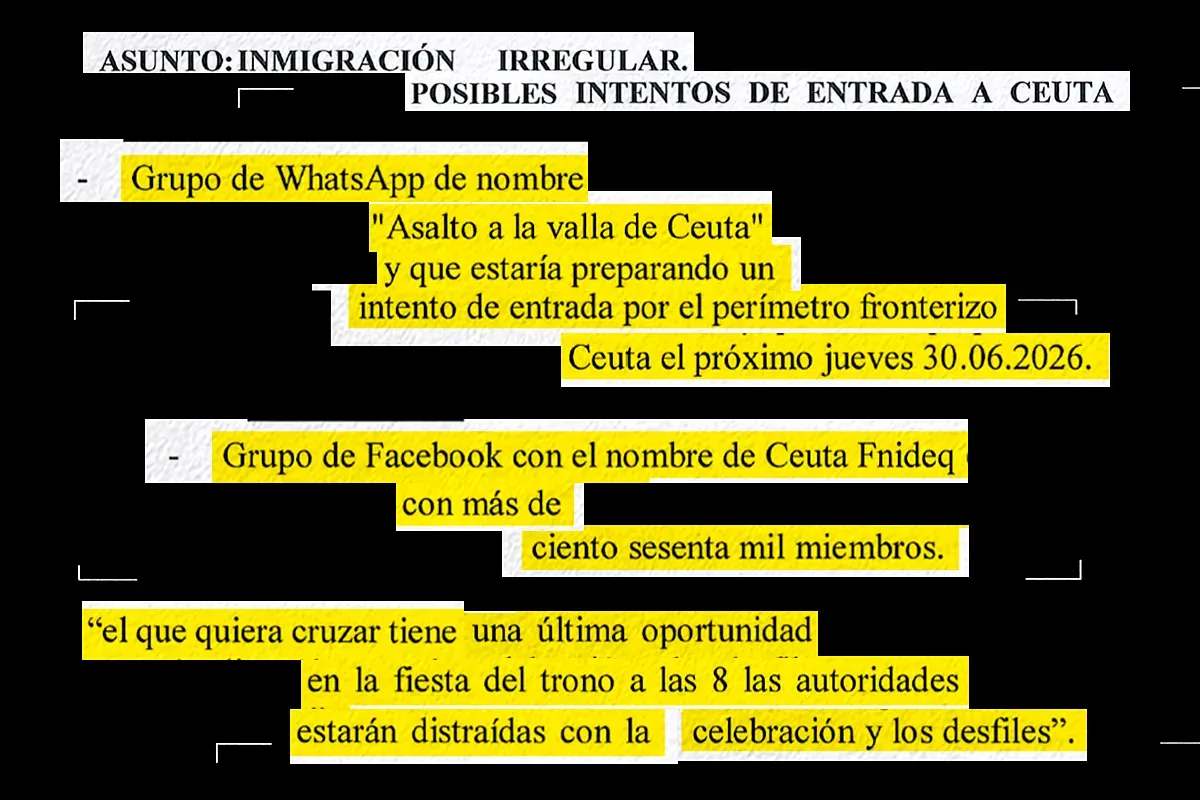
In a declassified WhatsApp conversation between the CNI and the Government Delegation, it was revealed that there were calls on social media for an assault on the border at 8 PM, coinciding with the Throne Day festivities—an indication of the premeditated nature of the planned actions. The CNI reported that there were two distinct groups comprising a total of 180,000 followers motivating the assault.
Additionally, the CNI identified three major organized groups that posed the most significant threat: a WhatsApp group named "Assault on the Ceuta Fence," a Facebook group with over 160,000 members called "Ceuta Fnideq," and another Facebook group named "Hraga Ceuta" with over 2,000 members. These groups actively communicated about the best timing for crossing, suggesting that the celebrations would divert the authorities' attention.
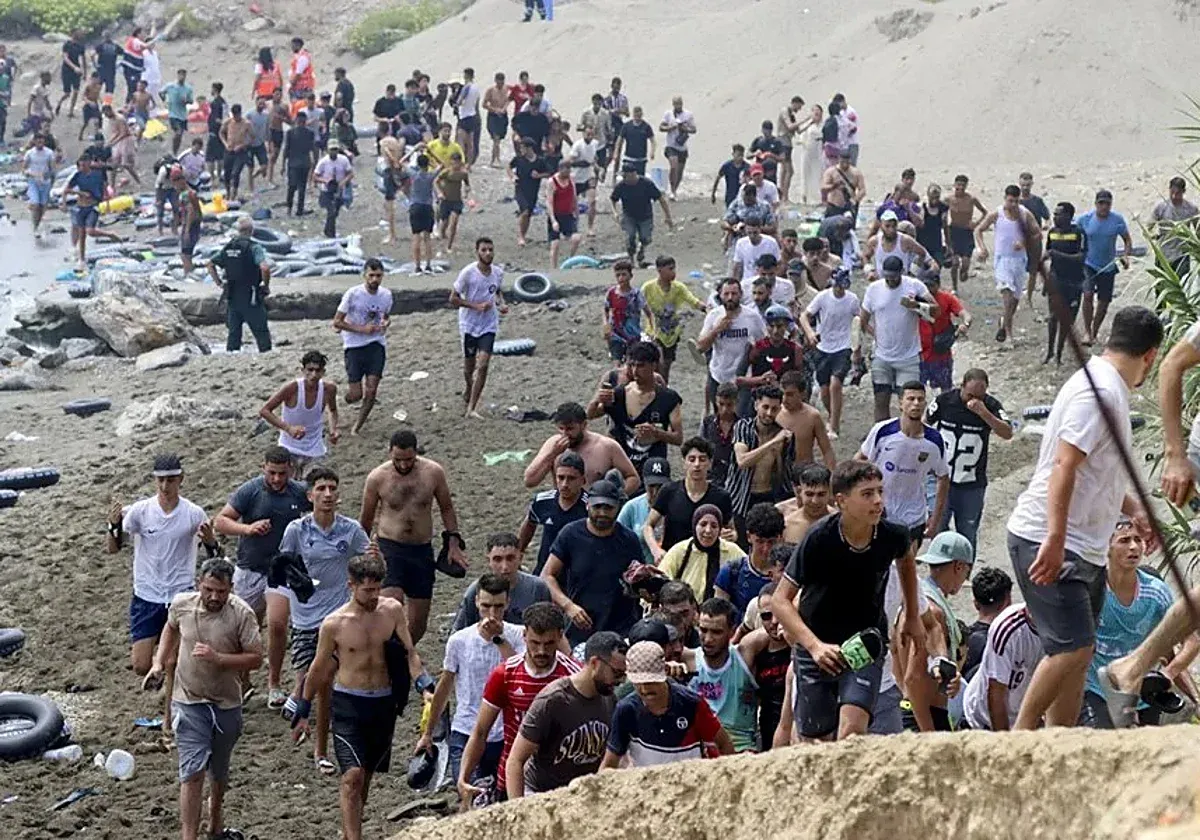
Despite the clear warnings and the identification of organized groups, the CNI’s subsequent note on July 30 indicated a lack of proactive response from Moroccan authorities, with analysts noting that there had been no significant action taken to regain control of the situation. On the evening of July 29, it was reported that a large crowd was already gathered, ready to cross by swimming. The presence of Moroccan police and gendarmerie proved inadequate to manage the situation, allowing hundreds of migrants to successfully cross into Ceuta.
As reported by elmundo.es.