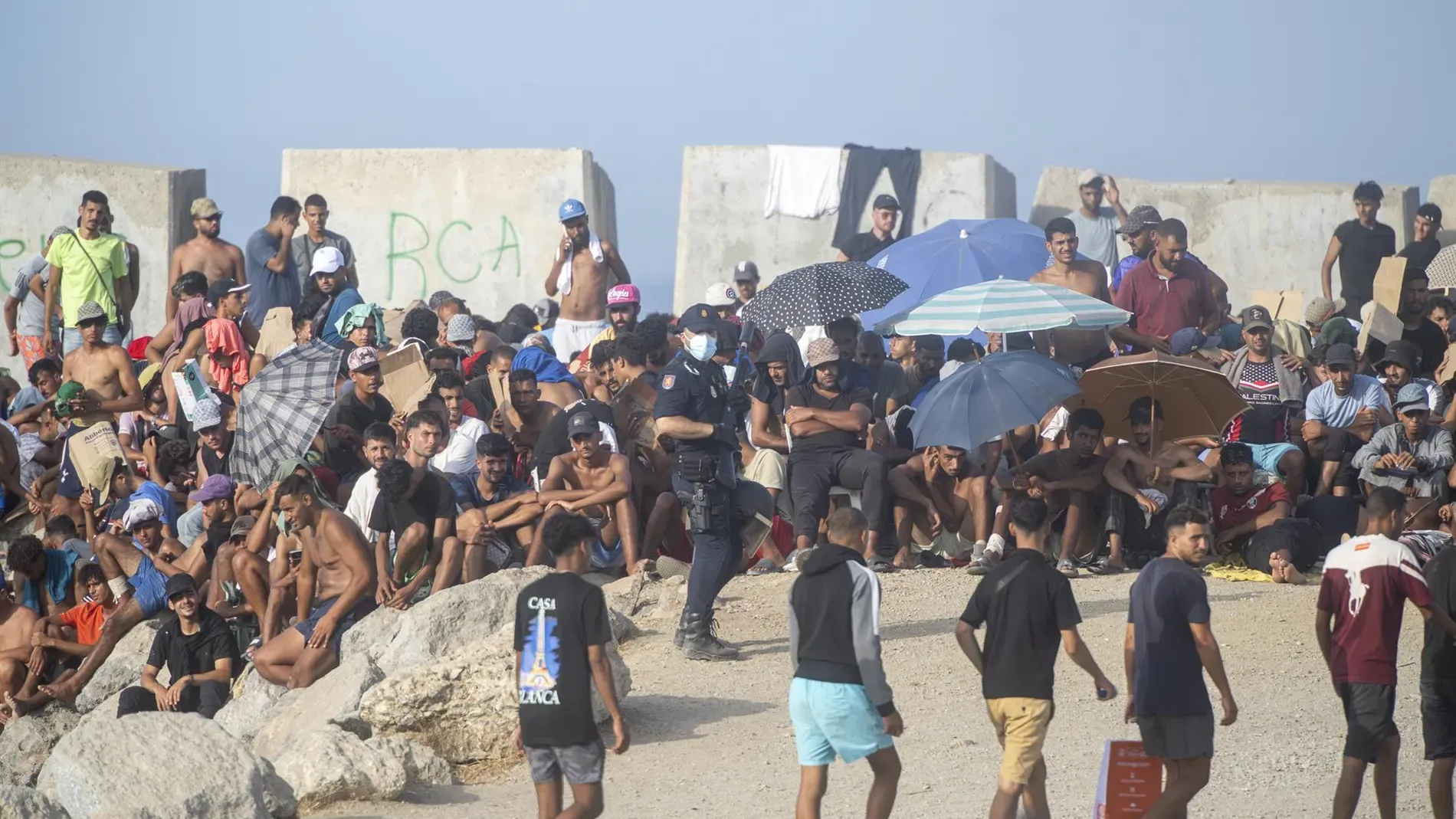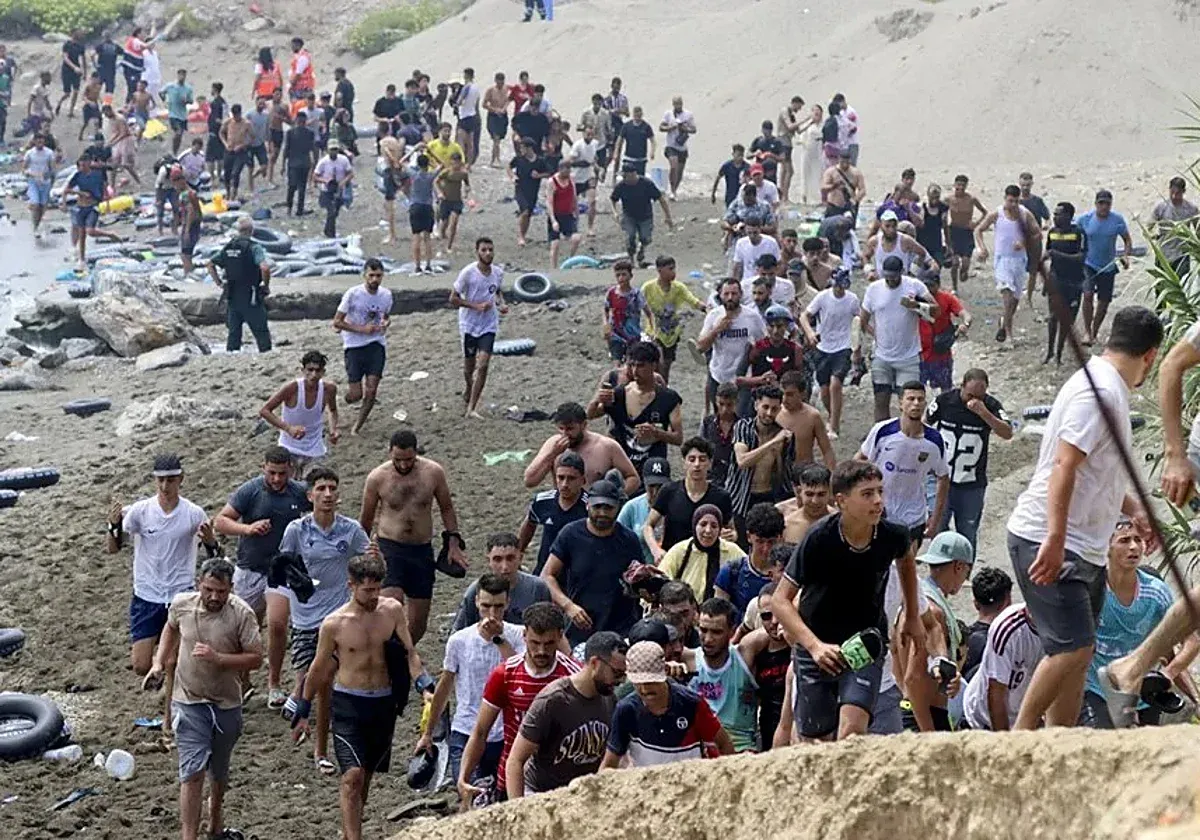

In a significant revelation regarding the recent surge of migrants attempting to reach Ceuta, Spanish intelligence directly alerted Rabat about the potential risk of an assault on the city prior to the large influx. On July 29, at 18:26, just before thousands of individuals began arriving en masse, the National Intelligence Centre (CNI) sent an urgent note to Morocco's top intelligence services, namely the DGST (General Directorate of Territorial Surveillance) and the DGED (General Directorate of Studies and Documentation). The communication warned of planned mobilizations aimed at accessing the autonomous city, both by swimming and via the border fence, taking advantage of the Throne Day celebrations. This situation raises unanswered questions regarding the actions taken by Moroccan authorities following the receipt of this critical warning.
The Spanish government, led by Pedro Sánchez, has constantly defended the collaboration of the Moroccan regime during this crisis, yet has refrained from providing specific information about the incident. The details of this revelation were disclosed among 40 reports and communications made public by the government recently. The distribution list from Moncloa clearly identifies the recipients of the urgent CNI note as the DGST and the DGED, emphasizing the time of dispatch, which was 18:26 on the evening of the 29th. Hours later, during the morning of July 30, the arrival of tens of thousands of individuals at the border commenced.
The information sent to Rabat was notably precise, titled "Irregular Immigration. Early Alert. Possible Attempts to Enter Ceuta During the Throne Day Week," it opened with a stark warning: "Recent days have revealed the planning of several mobilizations to carry out entries into Ceuta, both by swimming and through the fence, coinciding with the Throne Day celebrations." The urgency of the communication highlighted the existence of specific groups encouraging this mobilization, one of which was explicitly named "Assault on the Ceuta Fence." This was a WhatsApp channel that, according to intelligence sources, was preparing for an incursion through the border perimeter of Ceuta the following day.
Furthermore, Spanish agents had identified the administrator of this group and had access to two phone numbers associated with him—one Spanish and one Algerian. These details are partially anonymized in the documentation released by Moncloa. The alert also monitored two massive Facebook groups, one titled Ceuta Fnideq with over 160,000 members, and another named Hraga Ceuta with over 22,000 members. Within these groups, messages explicitly connected the timing of the planned crossings with the official Moroccan celebrations.
One of the posts noted, "Those wanting to cross have a final opportunity during the Throne Day at 8 PM, as the authorities will be distracted with the celebrations and parades." Another message extended the opportunity throughout the week, stating, "Castillejos-Ceuta. This whole week is good for those wanting to pass, this is the chance. May God assist you." In closing the communication, the CNI offered to keep their Moroccan counterparts informed of any new developments, expressing gratitude for their "invaluable and ongoing collaboration."
The warning to Rabat came after the CNI began disseminating the same information within Spain. At 13:52 on July 29, the CNI informed the government delegation in Ceuta that "there is a call on social media for an assault via the fence and by sea tomorrow at 8 PM," taking advantage of the Throne Day and the expectation that Moroccan security forces would be occupied. They noted that the two identified groups had around 180,000 followers, emphasizing the extensive reach of the information dissemination.
Just a minute later, at 13:53, intelligence attempted to contact a unit from the Civil Guard Information Service, warning them about the potential attempts to cross by swimming and jumping the fence the following day on Throne Day. The CNI further explained that there were "several groups on Facebook and WhatsApp encouraging these entries." However, the released documents do not clarify whether the DGST or DGED responded to the warning, how they assessed it, whether they communicated it to the forces deployed around Ceuta, or what measures they ordered before thousands began to gather. Additionally, there is no record of a Moroccan response to the urgent note.
As reported by elcorreo.com.