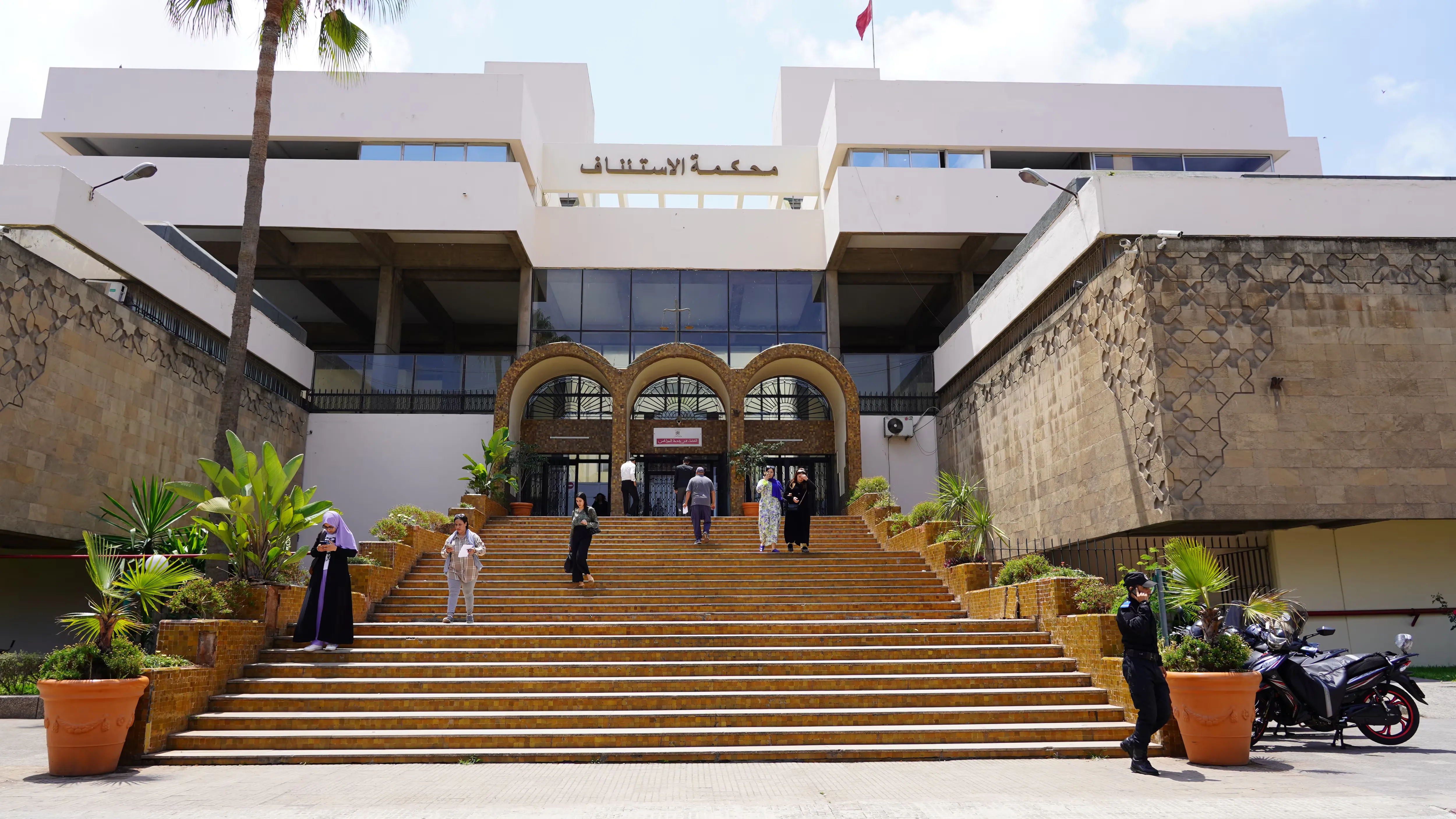

Resuming Judicial Activities in Casablanca
The Casablanca Court of Appeal has recently witnessed a revitalization of its judicial activities with the return of lawyers to the courtroom, signaling the end of a prolonged period of stagnation that had severely hindered judicial proceedings. As reported by the daily newspaper Assabah, the corridors and expansive courtrooms are once again filled with the sounds of attorney footsteps and legal arguments, as cases that had been postponed for months due to a strike are now being addressed.
Adapting to New Norms in Court Proceedings
Judges are now working diligently to catch up on the backlog of cases, where defendants appear either in person or remotely. Inside the courtrooms, large screens equipped with cameras and microphones emphasize the urgent need for such technology, showcasing the physical gap between the tribunal and the Oukacha prison. During public hearings, defendants are presented on-screen, seated in front of a camera that provides a direct link to the court examining their case. The judge announces the name of a detainee, with their identity confirmed via a loudspeaker, before engaging directly with the defendant. However, the fragmented communication and distant setting can disrupt the traditionally warm atmosphere of courtroom proceedings.
For instance, in courtroom number five, which is dedicated to criminal cases, a drug trafficking case sparked intense debate during the remote appearance of a defendant held in pretrial detention. The accused vehemently denied the charges against him, arguing that the case was based on superficial investigative procedures and baseless reports. The defense seized this opening to advocate for the acquittal of their client, emphasizing that he had been imprisoned based on summaries lacking confrontation and tangible evidence. The emotional weight of the situation was palpable, especially as the mother of one accused wept in the courthouse corridor, highlighting the intense human suffering tied to judicial verdicts. After the legal debate concluded in courtroom number five, the protocol and solemnity of justice faced significant strain due to the raw emotions expressed by families.
Similar scenarios unfolded in other courtrooms, blending factual disputes with strict legal requirements. In courtroom number six, a case of aggravated theft presented the judiciary with the complexities of the defendants' denials. During his interrogation, the detained accused acknowledged certain facts while contesting the theft of a motorcycle, claiming no connection to that specific accusation and citing the lack of material evidence. The civil party insisted on the materiality of the facts and the identification of the suspect, while the defense called for strict adherence to the law and the principle of the benefit of the doubt in the absence of irrefutable evidence.
The hearings proceeded smoothly, with the magistrate alternating between the public prosecutor and the defense, engaging in a judicial ballet where the confrontation of arguments strives to balance the rigor of the law with the protection of the defendant's rights. The effective return of lawyers has thus facilitated the resolution of numerous pending cases, while also illuminating the logistical and human challenges inherent in the modern judicial system. Justice is gradually regaining its momentum, even as legal professionals continue to grapple with an unprecedented workload that underscores the critical issues addressed daily in these courts.
As reported by fr.le360.ma.