
Urgent Demands for Infrastructure in Drâa-Tafilalet
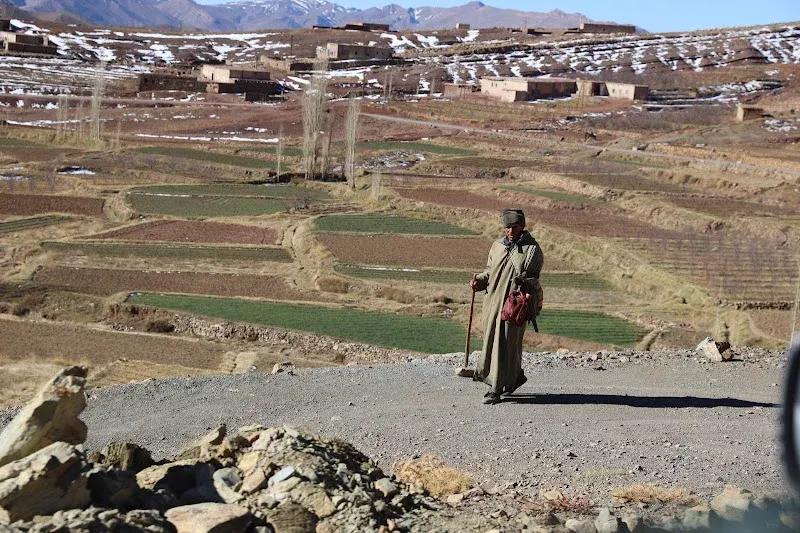
As the countdown to the upcoming legislative elections begins, the region of Drâa-Tafilalet is witnessing a resurgence of long-standing demands, prominently featuring the call to "break the isolation". Residents from the five provinces that comprise this region are once again raising the same banners they did years ago, advocating for a highway that connects them to the central areas, a rail system that shortens travel times, and airports that facilitate both domestic and international access.
In light of repeated promises and delays in the completion of strategic projects such as the Hajeb-Rich region highway and the Tichka tunnel, local stakeholders argue that development, without a robust transportation infrastructure, remains merely a "written commitment". They question how investments can be attracted, and tourism and agriculture revitalized, while travelers still endure long journeys across narrow and perilous roads that are time-consuming and elevate transportation costs significantly.
Local Voices and Aspirations for Change
As political parties release their electoral lists, cafes and meeting halls in Errachidia, Ouarzazate, Midelt, Tinghir, and Zagora have transformed into forums for renewing these demands. Transportation emerges as the foremost concern citizens present to candidates, directly impacting their purchasing power, education, health, local and regional development, and economic revival.
Hussein Amzir, a community activist from Tinghir, attributes the persistent high unemployment and emigration rates in the region to the lack of major infrastructure. He states, "Without a highway linking Errachidia to Hajeb, and a tunnel that reduces the distance through Tichka, local products and industries remain unable to compete in national markets, leaving job opportunities limited and seasonal." He elaborates that young individuals often feel compelled to leave the area in search of better futures, while "development promises lie suspended, awaiting projects that have been delayed and transformed from national priorities into mere statistics in unread reports."
The most pressing demands from the populace to the candidates endorsed by political parties for the upcoming parliamentary elections include connecting the region to the national highway network. A significant component of this is the long-awaited Hajeb-Rich highway project, which was initially expected to cut the travel time between Fez and Errachidia by more than two hours.
Mohamed Benhamou, another community leader from Errachidia, remarked, "Every winter, we are faced with the same tragedy on National Road 13, as the highway has become a necessity for rescue and the transport of patients and goods, not merely a luxury." He expresses sorrow over the recurring accidents, overturned trucks due to curves and fog, and patients losing their lives on the road because ambulances arrive late. He emphasizes that "the citizens in the southeast deserve the same rights to safe transportation as the rest of Moroccans."
Benhamou further insists that the Tichka tunnel issue is resurfacing, noting that the mountain pass connecting Ouarzazate to Marrakech shuts down annually due to snow and landslides, effectively cutting off a vital artery for tourism and trade. He highlights that transport associations in Ouarzazate are urging for expedited studies on the tunnel, arguing that "without this tunnel, the region remains hostage to weather conditions and deadly traffic accidents."
In terms of rail connectivity, the region remains off the map, with the last train station terminating in Meknes and Marrakech. Naima Ousmih, a student from Zagora studying in Settat, points out that travelers from Drâa-Tafilalet must cover more than 400 kilometers by bus before boarding a train. She argues that Drâa-Tafilalet is the region that suffers the most from developmental, social, and economic deficiencies, urging candidates for the upcoming elections to prioritize and advocate for this issue in their programs.
Abdallah Oumimoun, a human rights advocate from Midelt, emphasizes that the absence of train services across all provinces in Drâa-Tafilalet signifies a lack of investment. He contends that any industrial or agricultural investor would think twice before entering a region where transportation costs are exorbitant. He expresses his frustration, stating, "It is unreasonable that a large region comprising five provinces lacks a train, highway, or airport with national standards."
Oumimoun adds that the airports in Errachidia, Ouarzazate, and Zagora operate with limited and seasonal flights, declaring that the current demand is to increase the number of domestic flights and establish direct international routes, particularly to Europe and Gulf countries, to boost desert tourism and oasis activities. He asserts, "We have a world-class tourist product, but foreign tourists prefer to visit Marrakech because getting to us is costly and exhausting."
He underscores that the absence of these infrastructures comes at a steep cost to the region; for instance, dates from Errachidia, apples from Midelt, and film production in Ouarzazate all pay the 'transport tax.' Official data indicates that transportation costs from Errachidia or Zagora, as well as from Ouarzazate, Tinghir, and Midelt to Casablanca, exceed those from Agadir by 35% due to distance and road conditions.
As the legislative elections approach, political parties are beginning to include the issue of breaking the isolation in Drâa-Tafilalet within their programs. Some are advocating for the region's inclusion in the 2030 highway plan, while others propose a high-speed train extending to Errachidia. However, as Said Nasiri, an unemployed youth from Erfoud, points out, citizens have become adept at distinguishing between genuine promises and mere slogans. He insists, "We want a timeline and budget, not random speeches."
Ultimately, the upcoming legislative elections represent a true test for political parties and the forthcoming government. The Drâa-Tafilalet region, which has significantly contributed to the nation in agriculture, solar energy, and tourism, is now demanding basic conditions for regional justice, particularly in safe transportation, rail connectivity, and aviation services.
As reported by hespress.com.