
Escalation of U.S.-Iran Tensions
On July 23, 2026, tensions between the United States and Iran have noticeably intensified, with 'Mount Axe' near the Natanz uranium enrichment facility emerging as a new flashpoint in the ongoing confrontation. The rhetoric from Washington regarding potential strikes against this location has exacerbated the discord, raising concerns over renewed instability in the Middle East.
In recent days, the U.S. and Iran have exchanged threats, culminating in a stark warning from President Donald Trump on Tuesday. He stated that the U.S. is prepared to target what he termed a 'facility very soon,' emphasizing that any action would be executed 'with great force.' These threats came in the wake of Israeli intelligence assessments suggesting that Iran may have relocated advanced centrifuges to the underground complex at Mount Axe. However, in response to inquiries about the alleged relocation, Trump remarked that the U.S. lacks a 'record' confirming such claims.
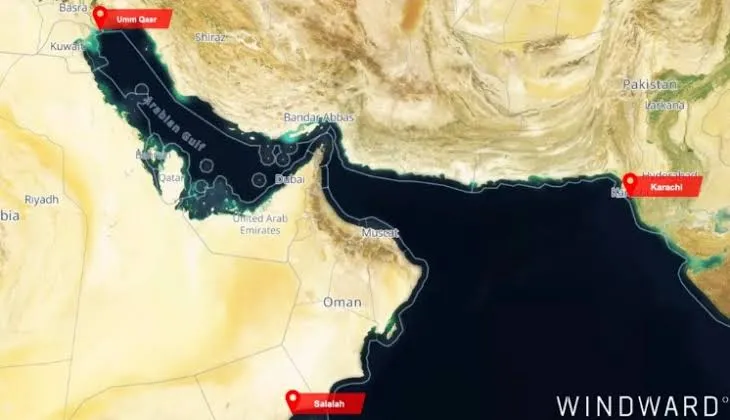
Iran has firmly rejected assertions that the site constitutes an undeclared nuclear facility, maintaining that the International Atomic Energy Agency was informed in 2020 about the site being designated for the future assembly of advanced centrifuges. In retaliation to the U.S. threats, the Iranian leadership, specifically the Central Headquarters of Khatam al-Anbiya, warned that any American assault on nuclear or other sensitive sites would be considered an escalation of conflict, leading to retaliatory strikes against U.S. interests and those of its allies throughout the region. In a separate statement, the headquarters cautioned that should the U.S. attack Iranian infrastructure, Iran would halt all oil exports from West Asia and target the region's oil, gas, electricity infrastructures, and economic facilities.
Experts contend that this exchange of threats reflects a cycle of pressure and mutual deterrence. They warn that any further escalation could complicate diplomatic efforts aimed at resolving the disagreements between the U.S. and Iran.
The Importance of 'Mount Axe'
'Mount Axe' has become a focal point in discussions surrounding Iran's nuclear infrastructure, primarily due to its strategic location, design, and level of fortification. Reports suggest that there is a complex located beneath Mount Axe, approximately two kilometers from the Natanz nuclear facility, with construction commencing after an explosion in 2020 that damaged the advanced centrifuge assembly facility at Natanz. Iranian officials have stated that this underground complex was built to protect nuclear infrastructure from sabotage or potential military attacks.
According to Mustafa Amin, an Egyptian researcher on Arab and international affairs, the project signifies Iran's efforts to enhance the protection of its key nuclear installations. Evaluations from nuclear experts and non-proliferation researchers indicate that parts of the facility are situated deep underground, beneath layers of rock and reinforced concrete structures, making it one of the most deeply fortified sites associated with the nuclear program. Amin noted that the limited access to certain areas of the site has contributed to varying assessments regarding its purpose; while Western and Israeli officials argue that the underground complex offers greater protection for sensitive nuclear activities, Iran asserts that its nuclear program is peaceful in nature.
Despite the U.S. commitment to target 'Mount Axe,' experts believe that any potential military strike would face significant technical challenges. Abu Bakr Al-Dib, a consultant at the Arab Center for Research and Studies based in Cairo, indicated that the depth and reinforced structure of the complex would pose major obstacles to any military operation. He explained that the parts of the underground facility are believed to be at a depth that could limit the effectiveness of conventional bunker-busting bombs, including massive penetrator bombs. Any aerial operation might damage entrances, ventilation systems, and supporting infrastructure without necessarily leading to the destruction of the core underground facilities.
While the complete destruction of such a complex is highly unlikely, any military strike against the site would represent a significant escalation in the already tense confrontation between the two nations. Al-Dib cautioned that any military action could widen the scope of instability beyond the immediate target, potentially drawing additional parties into the conflict, disrupting maritime trade routes, and threatening global energy supplies. Amin concurred with this assessment, stating that continued reliance on military pressure could undermine diplomatic efforts aimed at resolving disputes regarding the Iranian nuclear program, potentially heightening regional tensions and raising the risks of a broader confrontation, complicating international non-proliferation efforts even further.
As reported by arabic.news.cn.