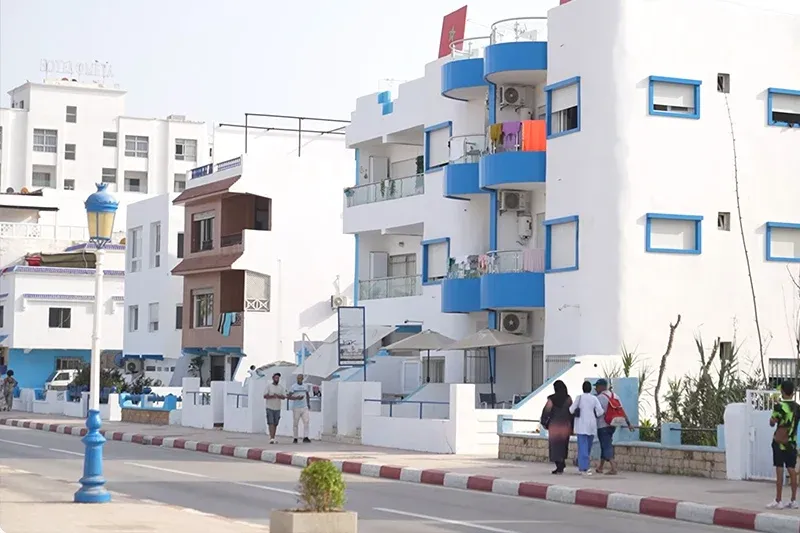

Escalating Rental Costs in Tourist Hotspots
As the peak summer season approaches, the coastal city of Martil and its neighboring beaches in the province of Mdiq-Fnideq are experiencing a significant surge in rental prices for furnished apartments and related tourist services. This situation has sparked frustration among many vacationers and presents increasing challenges for Moroccan families trying to secure accommodations that align with their budgets. The rapid increase in prices is particularly evident during August, a month that sees a substantial influx of visitors to the region.
Recent field observations reveal a dramatic hike in rental rates in Martil, especially for apartments with ocean views or those located near the promenade. During the winter season, nightly rates ranged from 250 to 300 dirhams, but during the peak of summer, these rates can soar to as high as 1000 dirhams, particularly in Cabo Negro. Meanwhile, the prices for apartments situated in less prominent areas have also risen, now varying between 400 and 600 dirhams per night, depending on their location and amenities.
Impact on Local Economy and Family Choices
The inflation in rental costs extends to various services associated with the tourism season. For instance, the price of certain fast food items, as well as beverages like tea and coffee, has increased by nearly four dirhams each compared to the winter season, further raising the overall holiday expenses for families visiting the area for a few days of relaxation. Similarly, in the nearby city of Mdiq, rental prices are also on the rise, with the cost for apartments near the main street reaching about 400 dirhams per night, while costs drop to between 250 and 300 dirhams as one moves towards the back streets. Tourist residences with swimming pools are priced between 700 and 800 dirhams per night, with some luxury accommodations exceeding 1000 dirhams per night.
A real estate agent in Martil highlighted that the demand for rentals peaks in August, prompting many property owners to significantly adjust their prices, capitalizing on the high visitor numbers that flock to the Tamuda Bay coastline during this time of year. The agent noted that most property owners prefer renting to families, as they are perceived to be more responsible in caring for the property and adhering to rental agreements, making it challenging for single young travelers to find suitable housing, even if they are willing to pay the requested amounts.
Interestingly, some visitors, such as one from Fez, pointed out that the rental prices often do not reflect the quality of the furnished apartments. Many of these accommodations suffer from worn-out furniture, peeling paint, and inadequate cleanliness, despite the high rates demanded by their owners during the summer months. This visitor remarked that some landlords are asking for over 1000 dirhams per night, a price that does not correspond to the condition of the apartments, leaving families feeling compelled to accept these terms due to the limited available options during the peak season, especially for those wishing to stay close to the beach.
Real estate brokers who spoke with reporters indicated that the increases in accommodation and service prices have sometimes surpassed the basic principles of supply and demand, labeling these practices as "seasonal exploitation". They cautioned about the negative implications this could have on the attractiveness of domestic tourism. Furthermore, the continuous rise in prices is prompting numerous Moroccan families to consider alternative destinations that are less costly. There is a call for a balance between the economic benefits of the season and the purchasing power of vacationers to ensure the sustainability of the tourism activity and enhance the reputation of northern coastal destinations among visitors.
As reported by hespress.com.