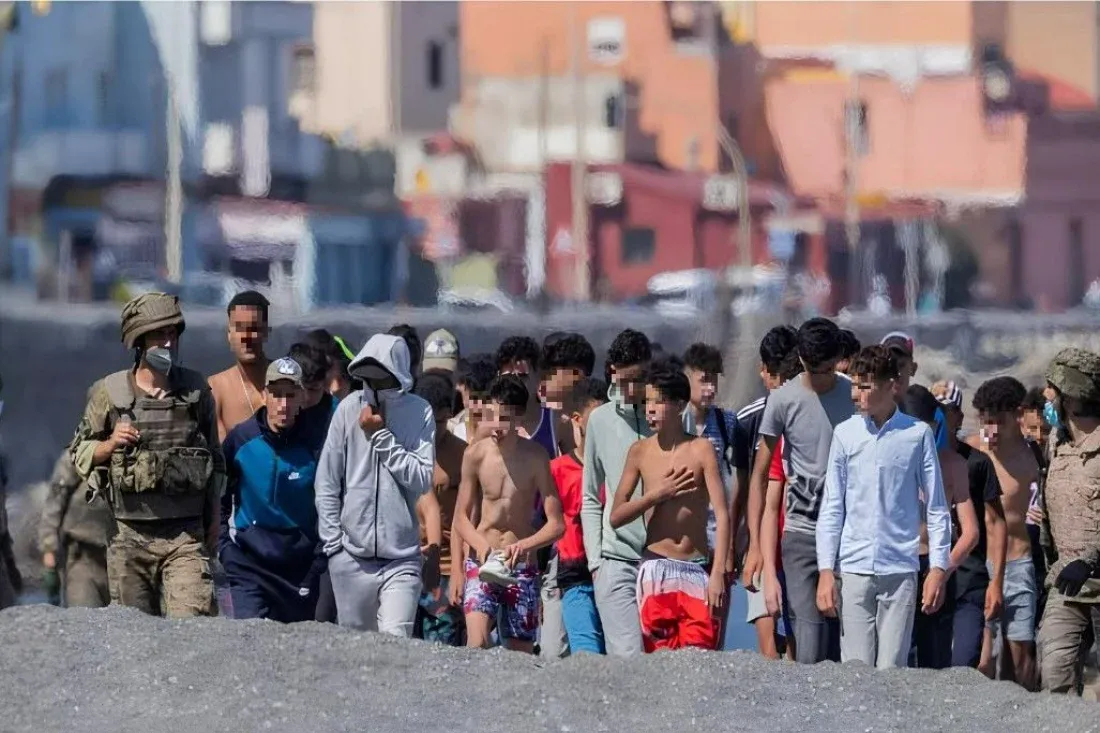

In response to the overwhelming pressure on its public services and reception facilities, the authorities of the occupied enclave of Sebta have reiterated their commitment to repatriate all individuals who entered the Spanish enclave irregularly at the end of July, including unaccompanied minors. This decision has been positioned as the primary response to the escalating tensions facing the city, which is currently struggling with a surge in demand for its social services.
The Spanish Ministry of Children has announced plans to transfer approximately 500 unaccompanied foreign minors currently sheltered in Sebta to various regions across the Iberian Peninsula. This initiative aims to alleviate the strain on the child protection system, which local authorities have described as overwhelmed and unable to meet the needs of the population.
In defending its strategy, the Sebta government highlights the support it has received from the European Commission. Notably, European Commissioner Marcos Lamert has expressed his endorsement for the return of individuals residing in the enclave irregularly, which includes minors. Local officials emphasize that the repatriation of minors to Morocco has been a consistent demand since the onset of the migration crisis. This stance has garnered support from members of the Spanish government who have visited the city in recent weeks, as child reception centers face what has been termed an "unprecedented" level of pressure.
Statistics provided by the authorities underscore the severity of the situation. The main reception center in Sebta is designed to accommodate 29 individuals but currently houses nearly 1,350 minors. This level of occupancy represents a burden that is forty-seven times greater than the originally intended capacity.
In light of these challenges, the local government asserts that it is mobilizing all available resources and has established temporary and emergency facilities to ensure the care of minors present in the territory. However, the authorities maintain that the continued expansion of reception capacities cannot serve as a sustainable solution to the crisis.
As a result, they continue to advocate for the repatriation of minors and other individuals who entered the enclave irregularly during the influx recorded at the end of July, viewing this option as the most viable means to facilitate a gradual return to normalcy within the city.
As reported by fr.hespress.com.