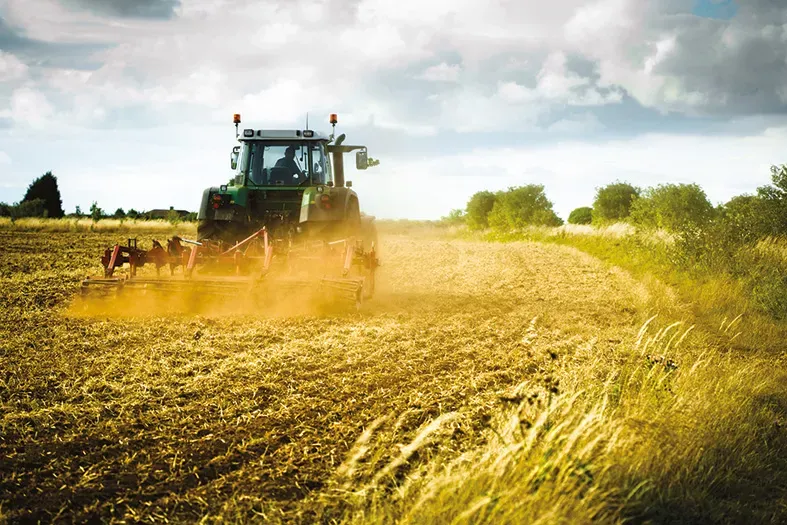

The cereal planting program in Morocco has been successfully completed, encompassing a total area of 852,555 hectares. This vast expanse includes 349,585 hectares dedicated to soft wheat, 241,350 hectares to durum wheat, and 261,620 hectares to barley, as detailed by Mr. Kharbouche in a statement to MAP. Notably, Settat Province has taken the lead with 319,500 hectares planted, followed by the region under the Regional Office for Agricultural Development of Doukkala (ORMVAD) with 244,305 hectares, and Berrechid Province with 104,000 hectares. Additional areas include 78,950 hectares in Benslimane, 73,700 hectares in El Jadida, and approximately 32,100 hectares in the Casablanca provincial agricultural zone.
Settat Province: A Hub of Cereal Production
Furthermore, the Regional Directorate of Agriculture anticipates that Settat Province will emerge as the top producer of cereals in the ongoing agricultural campaign, with an estimated harvest of nearly 10.4 million quintals (Mqx). Following closely is Sidi Bennour Province, expected to yield around 4 Mqx, largely due to the extensive cultivated areas and the availability of irrigated perimeters. Berrechid and El Jadida provinces are also projected to achieve significant production levels, estimated at approximately 3.8 and 3.9 Mqx, respectively, bolstered by favorable climatic conditions and the positive momentum of the agricultural sector in the region. In contrast, Benslimane's production is expected to reach around 2.6 Mqx, producing encouraging results, while the Casablanca provincial agricultural zone anticipates a yield of nearly 1.1 Mqx.
Rainfall Increases Boost Agricultural Indicators
Mr. Kharbouche highlighted the remarkable improvement in agricultural and hydric indicators this season, driven by substantial rainfall recorded in the region since November. The regional cumulative rainfall has reached approximately 512 millimeters, marking a 104% increase compared to the previous season and exceeding the normal annual total by 59%. This significant rainfall has positively impacted all agricultural activities and reinforced water resources.
On the ground, many farmers have expressed satisfaction with the season's indicators. For instance, El Mehdi, a farmer from the Chouerf area in El Jadida Province, noted that the rains have enhanced crop yields, expressing hope that the abundance of production will reflect positively on the prices of fodder and straw. Additionally, Abdelkarim, a combine harvester operator, emphasized that current conditions are conducive to harvesting operations, highlighting the availability of necessary equipment to cover the planted areas as the harvest of barley and soft wheat begins. The cost of mechanized harvesting ranges between 600 and 700 dirhams per hectare.
Meanwhile, Ahmed, a farmer in Oulad Bouaziz in El Jadida Province, pointed out the positive impact of rainfall on the quality and yield of crops, indicating that the expected production will significantly help cover agricultural expenses and ensure a steady supply of fodder for livestock. The technical services of the Regional Directorate of Agriculture in the Casablanca-Settat region continue to support farmers on-site, monitoring crop maturity stages and providing guidance on harvesting and storage operations to preserve production quality and enhance yields.
As reported by telquel.ma.