
Unraveling the Ceuta Crisis
The situation surrounding the crisis in Ceuta has taken a dramatic turn, revealing a complex web of responsibility involving Moroccan security forces. The official narrative put forth by Moncloa was significantly undermined following the release of a report by the National Center for Immigration and Borders (CENIF). This document directly implicates Moroccan security agencies in the orchestration and execution of the mass entry of approximately 80,000 individuals into the autonomous city on July 30 and 31. This police conclusion, now in the hands of the National Court and the Prosecutor's Office, starkly contrasts with how the emergency was managed by Moncloa and has triggered a substantial upheaval within the Ministry of the Interior.
In a state of visible agitation, Minister Fernando Grande-Marlaska demanded urgent explanations from the Director General of Police, Francisco Pardo. In a letter sent early Thursday, he requested verification of the intelligence document’s authenticity, questioning the timing of its acquisition and why it was not immediately communicated to the National Security Council following the declaration of a situation of national security interest on August 25.
Contradictions and Concerns
The response from Pardo emerged in the early afternoon, as the Ministry of the Interior sought to clarify its position and downplay the report’s implications. According to sources within Marlaska's department, the judge overseeing the criminal case had specifically instructed investigators not to disclose any information regarding the progress or content of their inquiries to their superiors. This restriction prevented the General Directorate from having prior knowledge of the dossier. Furthermore, after the judge granted police commanders access to the documentation, Pardo reportedly requested urgent analyses from the General Police Stations of Information and Foreigners and Borders. With these analyses in hand, he informed Marlaska that there were no conclusions linking Moroccan security forces to the planning or execution of the events that transpired in Ceuta during the last days of July.
Regarding the communication sent by CENIF to border posts on July 29, the head of the police clarified in his response to Marlaska that it was merely an ordinary risk alert common to the area. Pardo’s account to the Ministry’s hierarchy emphasized that the intelligence note did not contain any references or forecasts concerning a mass entry attempt for the following day.
However, the analysis produced by the General Police Station of Foreigners and Borders raises significant doubts about Moncloa’s version of events. This analysis dismisses the notion that the migration crisis was a result of spontaneous mobilization orchestrated by criminal organizations or social media calls. It also refutes any claims of influence from Israel or Russia, as previously suggested by the government. Instead, CENIF concludes that the migration movement was intentionally used as a cover for a carefully designed and coordinated operation originating from Morocco. The investigations, supported by extensive photographic evidence, indicate that members of the Moroccan Gendarmerie directed and guided thousands of individuals concentrated in Castillejos towards strategic crossing points such as the El Tarajal pier.
The report highlights a meticulously planned logistics operation aimed at breaching the border. It commenced with an initial wave of Moroccan youths equipped with wetsuits, fins, and flotation devices, tasked with overwhelming the containment measures at El Tarajal, exhausting Spanish forces, and completely collapsing operational response capabilities. Once this perimeter was compromised, the second phase focused on the mass entry of families, women, minors, and individuals from Sub-Saharan Africa. According to the central hypothesis of the report, the prior use of the first wave as a saturating element was designed to neutralize any possible reaction from Spanish forces, thus facilitating uncontrolled access for the most vulnerable populations.
The document clearly outlines a deliberate objective to challenge the anticipatory capacity of Spanish security forces, particularly questioning the effectiveness of the National Intelligence Center (CNI). Furthermore, it underscores Morocco's strict control over such movements, evidenced by the complete neutralization of a subsequent call on August 15, contrasting sharply with the free passage allowed on July 30 and 31.
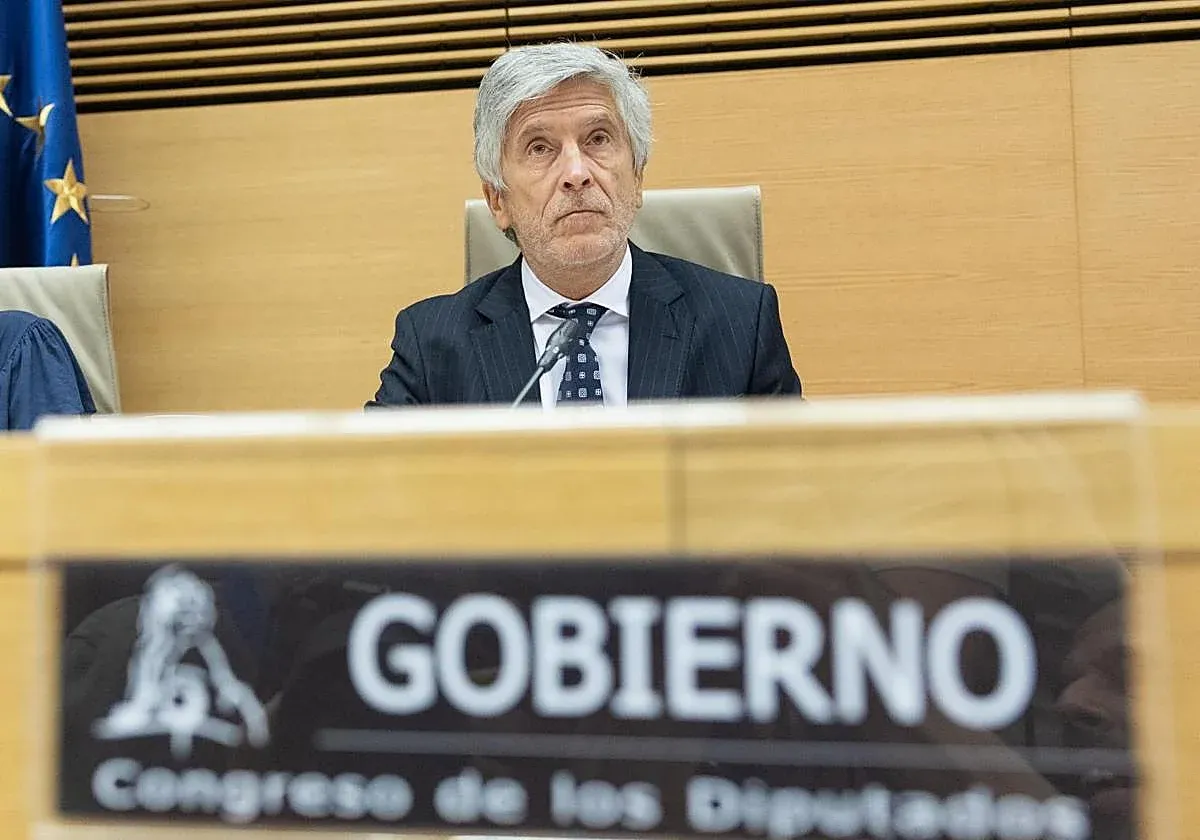
The CENIF documentation has been submitted to the court presided by Judge María Tardón as part of the ongoing proceedings in the National Court to determine if any indications of a crime against state integrity exist. The conclusions drawn by CENIF provide legal arguments for deeper investigations while casting doubt on the official narrative and the foreign policy maintained by the government regarding Rabat. The repercussions of this crisis, with unpredictable consequences, have widened the gap between judicial actions and the diplomatic line set by Moncloa, further complicating the relationship between Sánchez and the opposition. This unfolding scenario looms over an imminent parliamentary meeting: the upcoming appearance in Congress, where the police's findings threaten to completely dismantle the government's defended version of events to date.
As reported by elcorreo.com.