The Evolving Geopolitical Landscape
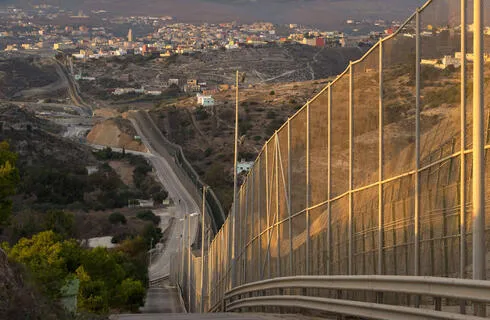
The ongoing geopolitical turmoil affecting Washington's relationship with Madrid has created a rare opportunity regarding one of the Arab world's oldest territorial disputes. Spain's refusal to grant the United States access to its military bases in Rota and Morón during the Iran campaign, combined with its persistent failure to meet NATO defense spending commitments, has led to a significant rift in Spain's strategic position concerning its North African enclaves, Ceuta and Melilla. This rift opens a door for Morocco, now bolstered by its partnership with Israel, to assert its claims with newfound vigor.
The groundwork for this shift has been laid over recent months. In March 2026, Michael Rubin from the American Enterprise Institute, writing for the Middle East Forum, urged the Trump administration to recognize Ceuta and Melilla as territories occupied by Morocco, labeling Spain as a colonial power operating in the region. Shortly thereafter, U.S. Representative Mario Díaz-Balart made similar statements, asserting that these enclaves do not belong to Spain but should be addressed as part of Moroccan territory. This rhetoric reflects a coordinated strategic shift rather than mere fringe opinion.
Israel's Role in the New Dynamics
Spain's growing estrangement from the United States has been exacerbated by internal Pentagon communications, which suggested potential actions such as suspending Spain from NATO due to its reluctance to support U.S. operations against Iran. Defense Secretary Pete Hegseth has publicly criticized European allies for their lack of commitment, pointing to Spain's poor record. Notably, Article 6 of the Washington Treaty excludes territories in continental Africa from NATO’s collective defense obligations, leaving Ceuta and Melilla vulnerable to diplomatic pressures that Spain has historically shielded against.
Amid this shifting landscape, Israel emerges as a pivotal player. The Abraham Accords have transformed Morocco from a passive participant into a formal military ally of Israel. In January 2026, the two nations signed a military cooperation agreement, enhancing their strategic collaboration. This newfound partnership provides Israel with a unique influence in North African affairs, particularly regarding Ceuta and Melilla. The alignment of interests between Washington, Jerusalem, and Rabat has created a triangular relationship where Israel's endorsement can significantly impact U.S. foreign policy decisions.
Israel can support Morocco's claims through several means: diplomatic signaling, leveraging influence within U.S. political corridors, and highlighting Spain's hypocrisy. By publicly acknowledging that Spain's occupation undermines post-colonial credibility, Israel could shift the narrative surrounding Ceuta and Melilla into a broader regional governance issue. Furthermore, within U.S. political circles, Israeli officials can advocate for Morocco's strategic importance as a long-standing ally, emphasizing its role in securing the western Mediterranean and the Strait of Gibraltar. Lastly, Israel can expose the contradiction in Spain's vocal condemnation of Israeli policies while maintaining its own colonial enclaves in Africa.
Morocco's approach has typically involved legal and diplomatic avenues rather than military confrontation. This patient method has proven effective, and Israel's role would be to amplify Morocco's claims within a supportive alliance structure. The United States recognizes Morocco as a Major Non-NATO Ally and has recently committed to a new defense roadmap with Rabat. In contrast, Spain finds itself increasingly isolated at a time when it lacks a robust legal defense for its vulnerable territories.
The framework established by the Abraham Accords not only reshapes alliances in the Middle East and North Africa but also serves the strategic interests of both the U.S. and Israel. Supporting Morocco in its pursuit of Ceuta and Melilla could reinforce this framework while penalizing a NATO member that has chosen obstruction over collaboration. For Israel, enhancing Morocco's claims is not merely an act of goodwill but a strategic investment in a partner that controls a critical maritime route.
As reported by ynetnews.com.