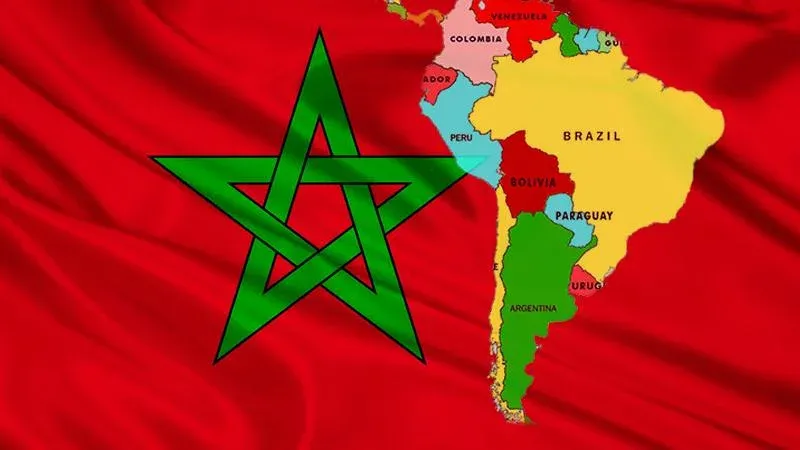

Morocco's Diplomatic Progress in Latin America
Recent developments in Latin America suggest a notable shift in diplomatic relations concerning Western Sahara, particularly in favor of Morocco. This transformation is not merely a product of political ideologies but reflects a complex interplay of economic cooperation and regional strategies. Colombia serves as a prime example of this shift; shortly after the inauguration of President Abelardo de la Espriella, the Colombian government suspended its relations with the Sahrawi Arab Democratic Republic (SADR) and officially recognized Moroccan sovereignty over Western Sahara. This pivot marks a significant departure from the previous administration's stance and underscores a commitment to enhancing ties with Morocco across various sectors including trade, investment, and food security.
This trend is not isolated to Colombia. Ecuador also halted its recognition of the SADR in 2024, while Bolivia severed its relations with the Sahrawi Republic in early 2026, opting instead to restore diplomatic ties with Morocco. Similarly, Honduras and Peru have expressed open support for Morocco's position on the contested territory. These moves suggest a broader regional pattern rather than isolated incidents, indicating that Morocco is effectively cultivating its diplomatic relationships in Latin America.
Over the years, Morocco's strategy has focused on presenting itself as a partner in economic cooperation and trade, effectively positioning Western Sahara as a focal point in its foreign relations. The Latin American and Caribbean Platform of Solidarity with the Sahrawi People (PLACSO) had already warned of these developments back in June 2022, highlighting Morocco's efforts to gain institutional support for its claims. Notably, at a plenary session of the Andean Parliament in Morocco in 2025, Moroccan officials portrayed the kingdom as a strategic link between Africa, Europe, and Latin America, further embedding its influence in the region.
Economic Interests and Political Narratives
Chile's relationship with Morocco exemplifies the growing economic ties and the complexities that come with them. The Chilean government is advancing discussions for what could become its first trade agreement with an African nation, utilizing the narrative of Morocco as a 'gateway' to Africa. This emphasis on economic collaboration is understandable given Morocco's infrastructure and trade networks across the continent. However, it raises the question of whether economic interests are overshadowing political realities, particularly the ongoing struggle for self-determination in Western Sahara.
Despite Morocco's advances, there remains a faction in Latin America committed to the Sahrawi cause. Countries like Mexico, Venezuela, Cuba, and Uruguay continue to advocate for the Sahrawi people's right to self-determination at international platforms such as the United Nations. Brazil, while maintaining significant economic ties to Morocco, emphasizes the need for a United Nations-led solution to the Western Sahara dispute. This illustrates a nuanced approach where economic partnerships do not necessarily equate to political endorsement of Moroccan claims.
Argentina's position is particularly complex, as its historical commitment to decolonization and the Falklands issue places it at odds with Morocco's narrative. Although Chile has not formally recognized the SADR, its growing economic relations with Morocco could create a diplomatic tightrope as it balances internal support for Sahrawi self-determination against external economic pressures.
In conclusion, while Morocco is making inroads into Latin American diplomacy, the Sahrawi cause remains resilient. The evolving political landscape does not erase the historical claims to self-determination nor does it diminish the ongoing struggle for recognition. Morocco's efforts to foster relationships and secure economic partnerships in the region may yield short-term diplomatic victories, but they cannot obscure the fundamental issues surrounding Western Sahara as a territory still awaiting decolonization. The challenge remains for both Morocco and the Sahrawi people as they navigate this intricate geopolitical terrain.
As reported by orinocotribune.com.