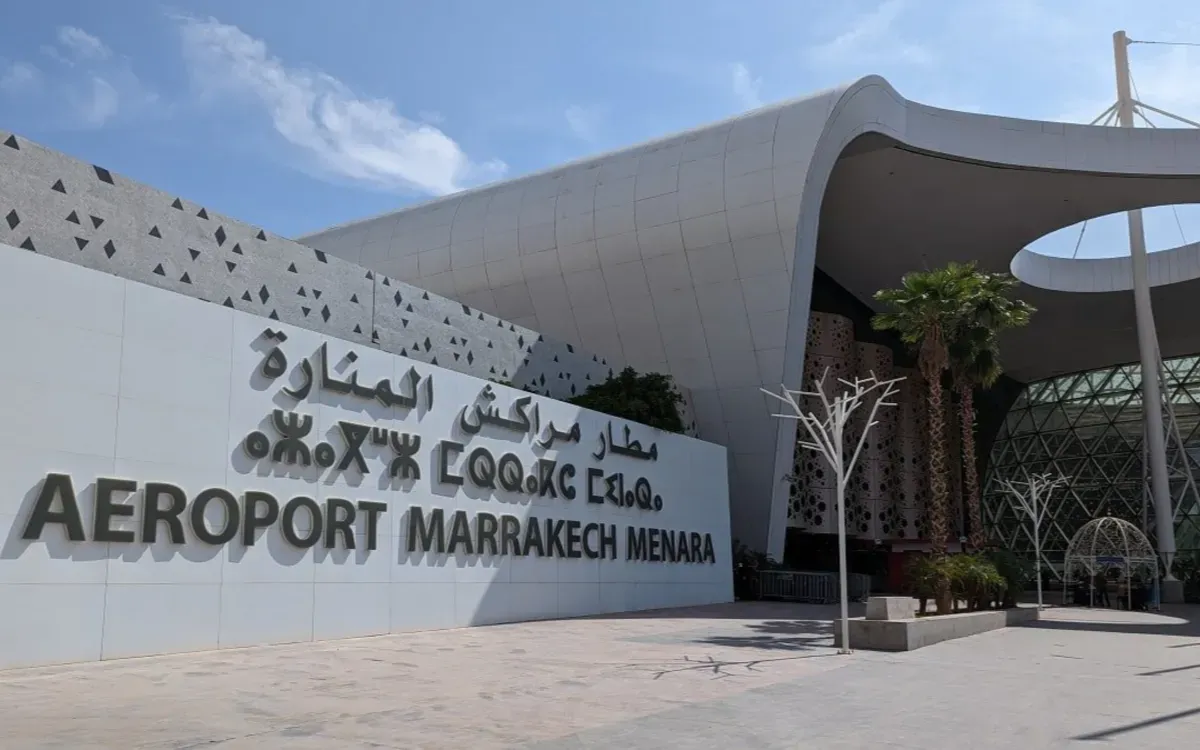

On Sunday, October 4, travelers at Marrakech-Menara Airport faced considerable disruptions as flight delays accumulated throughout the day. By late evening, it was reported that a staggering 61% of all departures were running late, with some European flights experiencing delays of nearly two hours. The flight tracking service, Flightradar24, indicated that there were 75 delayed flights along with two cancellations, highlighting the varying degrees of delays depending on airlines and destinations.
Among the most significantly delayed flights was easyJet flight U21254 bound for Basel, which departed nearly two hours late, specifically one hour and 57 minutes behind schedule. Similarly, Ryanair's flight to Turin took off an hour and 22 minutes after its scheduled departure. Bucharest was also affected, with Wizz Air flight W43272 experiencing a delay of one hour and 54 minutes. Notably, this route had only just resumed on September 20 after a seasonal hiatus and is set to increase to three weekly flights starting October 26.
Impact on French Connections
The delays extended to flights connecting Marrakech with various French cities. Transavia reported delays of one hour and 16 minutes for its flight to Paris-Orly, and one hour and five minutes for its flight to Rennes. Additionally, Air France had a flight to Roissy that departed with a 43-minute delay. Unfortunately, not all flights were able to take off as scheduled; easyJet's departure U26025 to Toulouse was canceled altogether. However, it is worth mentioning that the average delay reported by the end of the day was around twenty minutes, indicating that while some flights were significantly delayed, others were not affected as severely.
In the background, Marrakech is also preparing for the expansion of its airport facilities. A financing agreement worth €270 million was signed on September 30 with the African Development Bank to enhance the airports in Marrakech, Agadir, Tangier, and Fez. The expansion project at Marrakech-Menara aims to increase its annual passenger capacity to 14 million by 2030. Planned developments include the construction of a new control tower, the expansion of existing facilities, as well as upgrades to baggage handling systems and security equipment.
As reported by bladi.net.