
Spain's Urgent Response to Migration in Ceuta
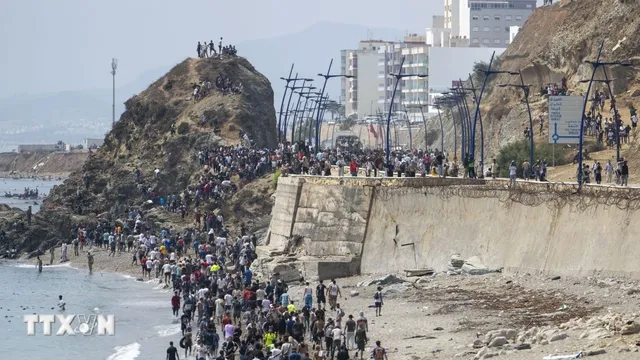
On August 25, 2026, the Spanish government took decisive steps to expedite the repatriation of thousands of migrants who remain stranded in the North African enclave of Ceuta. This action comes in the wake of a substantial influx of nearly 80,000 individuals from Morocco, who arrived during the last days of July, either by swimming across the sea or by crossing the border on foot. While many of these migrants returned to Morocco shortly after their arrival, estimates suggest that between 3,500 and 7,000 individuals, including a significant number of unaccompanied minors, remain in Ceuta and are awaiting resolution of their status.
Under current regulations, Spanish authorities are tasked with assessing the status of these remaining migrants to determine their eligibility for international protection. If they do not qualify, repatriation procedures will be initiated. However, the process has been criticized for its slow pace, prompting the authorities in Ceuta to seek a more efficient approach. In response, the Spanish cabinet has established a "unified command" in Ceuta, led by Minister of Territorial Policy, Angel Víctor Torres, aiming to streamline the repatriation process.
Humanitarian Concerns and Rising Tensions
Despite the government's efforts to expedite repatriations, there is an ongoing commitment to provide humanitarian assistance to asylum seekers and unaccompanied minors. Plans are underway to establish reception centers with a capacity for 1,800 individuals, highlighting the dual focus on repatriation and humanitarian aid. However, the surge in migration has also exacerbated social tensions, leading to a notable increase in hate speech on social media platforms. The Spanish Anti-Racism and Xenophobia Agency (OBERAXE) reported a staggering 9,590 hate posts recorded on July 30 and 31 alone, contributing to a total of 57,406 such posts for the month, a sharp rise from 40,800 in June. North Africans were the most targeted group, with 68% of the hateful content directed towards them.
Additionally, approximately 40% of these posts were found to be dehumanizing or severely derogatory, with many containing threats, calls for exclusion, or incitement to violence. In response to this alarming trend, social media platforms removed 12% of reported posts in July, an increase from the previous month. As the situation continues to evolve, it raises critical questions about the balance between addressing migration challenges and safeguarding human rights in Spain.
As reported by vietnam.vn.