

Accusations of Hybrid Warfare Against Spain
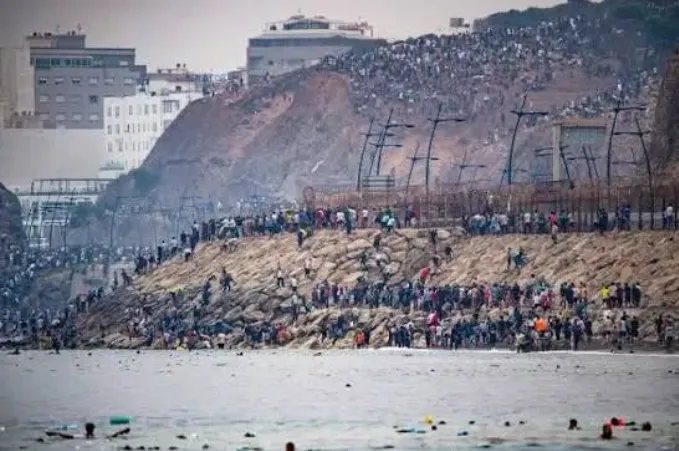
Spanish security experts and journalists have leveled serious accusations against the Moroccan regime, claiming that it has initiated a "hybrid" and "covert" war against Madrid. This battle reportedly utilizes illegal immigration and espionage as tools to exert pressure on Spain for political and financial gains. The discourse has gained traction following a significant influx of migrants to the Spanish enclave of Ceuta, which occurred at the end of July, illustrating Morocco's strategic maneuvering in this geopolitical chess game.
Vuljencio Col, a prominent security expert and former chief of staff of the Spanish army, articulated these views in an interview with the Spanish newspaper "Ok Diario." He contended that Morocco exploits migration flows as a means of coercion against Madrid. Col characterized the events of last summer in Ceuta as an "invasion," emphasizing that this situation transcended a mere immigration crisis and was instead part of a politically and strategically motivated pressure campaign. He underscored that Morocco is waging a "hybrid war" against Spain, employing non-military methods to achieve its political objectives.
Calls for Increased Military Presence and Economic Responses
Col's critiques did not end with mere observations; he advocated for a bolstered military presence in Ceuta, which lies directly at the border with Morocco. Furthermore, he proposed leveraging Spanish and European economic and commercial tools to counter Morocco's pressures effectively. This perspective aligns with a broader narrative suggesting that Moroccan tactics are systematically designed to exploit vulnerabilities within Spain's immigration policies.
In a related discourse, investigative journalist José Bautista, who has conducted extensive research into Moroccan intelligence operations utilizing the Israeli "Pegasus" spyware, echoed these sentiments. Bautista described Morocco's actions as a "covert war" against Spain, utilizing immigration and espionage as instruments to manipulate political dynamics in Madrid. This assertion comes with a strong condemnation of the Moroccan regime, which he labeled "dictatorial." Bautista further explained that the migration crisis in Ceuta was a direct consequence of Moroccan intelligence operations aimed at exerting pressure on Spain, reflecting a significant loss of control over migrant flows.
Bautista's insights suggest that Morocco operates outside the bounds of the rule of law, with security forces enjoying considerable leeway to act without adherence to democratic principles. This systemic issue has been particularly evident during crises related to migration, as seen in 2021, 2022, and the latest incidents in July. The journalist pointed to a recent investigation, coordinated by 14 European media outlets and the organization "Forbidden Stories," which focused on Moroccan intelligence agencies and unveiled sensitive information that could threaten the regime's stability.
Additionally, Bautista shed light on the influential role of royal advisor Fouad Ali Himma, whom he dubbed the "shadow king of Morocco," and the head of internal intelligence and police, Abdellatif Hammouchi. According to Bautista, Hammouchi's primary mission is to ensure the continuity of the regime.
On matters of human rights and freedom of expression, Bautista lamented the absence of press freedom in Morocco, characterizing the nation as a "dictatorial state masquerading as a democracy." He criticized the Moroccan regime's attempts to project an image of democratic values and respect for human rights on the international stage, emphasizing the stark contrast between these portrayals and the reality on the ground.
Furthermore, Bautista accused Morocco of leveraging cooperation in counter-terrorism and immigration as a political pressure tactic, indicating that the Moroccan government adjusts its collaboration based on the nature of its bilateral relationships, particularly when seeking diplomatic privileges or financial benefits. This intricate web of political maneuvering underscores the complexities of Spain-Morocco relations and the strategic implications of immigration and intelligence operations.
As reported by al24news.dz.
