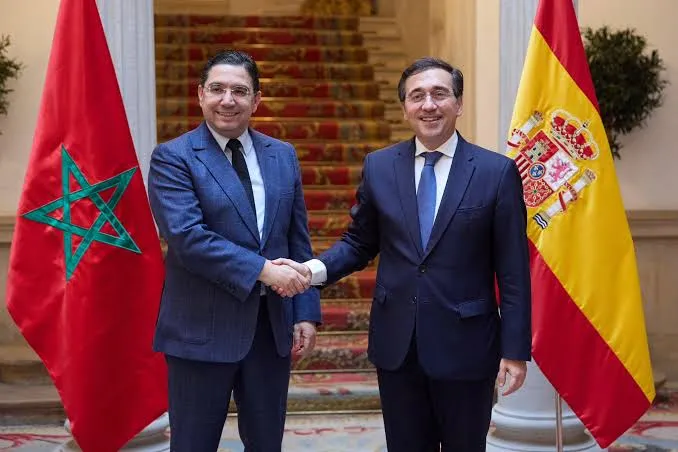

In a significant diplomatic effort, Spain's Foreign Ministry announced that Foreign Minister José Manuel Albares engages in daily conversations with his Moroccan counterpart, Nasser Bourita. This consistent communication underscores Spain's commitment to addressing the ongoing tension surrounding the occupied enclaves of Ceuta and Melilla. The ministry articulated the importance of diplomatic dialogue as a means to formulate an "effective and viable" response to the recent remarks made by Moroccan officials about these territories.
Recent statements from various Moroccan ministers have reignited discussions about Ceuta and Melilla, with claims that these cities are part of Morocco. In response to inquiries regarding whether Albares had reached out to Rabat to express Spain's concerns over these declarations, the Foreign Ministry reiterated its firm stance: "Ceuta and Melilla are two Spanish cities, integral to the borders of Spain and the European Union." The ministry emphasized Spain's territorial integrity and sovereignty over these enclaves, which are recognized on the international stage and classified as part of EU territory.
The escalating dispute was fueled by comments from Morocco's Justice Minister Abdellatif Ouahbi, who emphasized Morocco's "historical and geographical rights" over the cities and urged Spain to engage in dialogue on the issue. His remarks followed an address by Morocco’s Minister of Religious Affairs, Ahmed Toufiq, during a Mawlid ceremony led by King Mohammed VI, where he referred to Ceuta and Melilla as "occupied cities" and highlighted the contributions of two prominent Moroccan scholars from Ceuta to the nation's cultural heritage.
In response to the renewed claims, Spain has communicated its rejection of any contrary position regarding Ceuta and Melilla through formal diplomatic channels. The Spanish Foreign Ministry stressed the necessity of maintaining direct lines of communication with Rabat, with sources indicating that Albares considers Bourita a "friend". This diplomatic approach is seen as critical, especially in light of the ongoing discussions surrounding these territorial claims.
The diplomatic strain also coincides with heightened migration pressures on Ceuta, particularly following a significant influx of migrants in late July. Collaborative efforts between Moroccan and Spanish authorities have been initiated to prevent irregular crossings into Ceuta, leading to a reinforcement of border controls by Spanish officials. Madrid heavily relies on its partnership with Rabat to manage irregular migration across the Strait of Gibraltar, illustrating the complex interdependencies in their bilateral relationship.
Despite the current tensions regarding Ceuta and Melilla, Spain and Morocco have maintained a close working relationship over the past few years, particularly in areas such as migration management, security cooperation, and trade. The dynamics between the two nations have notably improved since Spain's endorsement of Morocco’s Autonomy Plan for Western Sahara in 2022. As the dialogue continues, the situation surrounding Ceuta and Melilla presents a crucial test for the future of Spanish-Moroccan relations, with Madrid remaining steadfast in its sovereignty claims while pursuing diplomatic engagement with Rabat.
As reported by moroccoworldnews.com.