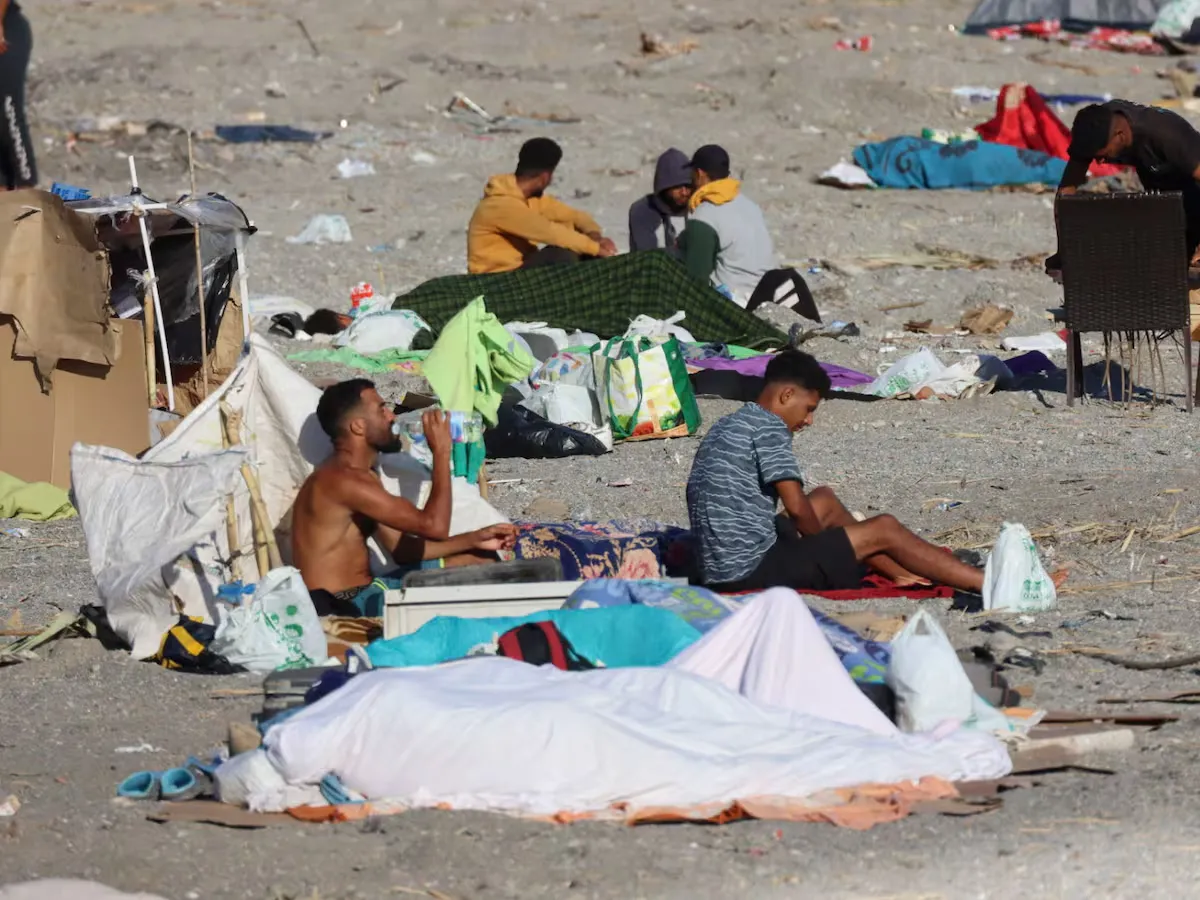
The Spanish government has swiftly responded to a recent declaration from the Moroccan administration, which expressed interest in the autonomous cities of Ceuta and Melilla. The Spanish authorities have reiterated that both cities are integral parts of Spain's territorial integrity and sovereignty. This assertion comes in response to comments made by Moroccan Justice Minister Abdellatif Ouahb, who, in an interview with the public channel 2M, labeled Ceuta and Melilla as a 'historical and geographical right' of Morocco.
Ouahb has been vocal in his claims over the past few weeks, emphasizing the necessity for dialogue between the governments of Madrid and Rabat to facilitate what he terms the 'return of these Spanish cities to the homeland.' In a prompt rebuttal, sources from Spain's Ministry of Foreign Affairs, led by José Manuel Albares, emphasized that Ceuta and Melilla are Spanish cities that serve as borders for both Spain and the European Union, forming an internationally recognized part of Spain's sovereignty. They firmly stated, 'We reject and will continue to reject any alternative proposals regarding Ceuta and Melilla.'
This position has been clearly communicated through diplomatic channels to Morocco. Minister Albares has maintained daily communication with Moroccan Foreign Minister Nasser Bourita, particularly concerning the crisis triggered by the influx of over 70,000 migrants from Morocco into Ceuta at the end of July.
Economic Support for Ceuta Amidst Migration Crisis
In other developments, the First Vice President and Minister of Economy, Trade, and Business, Carlos Cuerpo, is scheduled to visit Ceuta next week to assess the economic situation and evaluate potential support measures. According to sources from the Ministry of Economy, Cuerpo plans to hold working meetings with the local government, business associations, social agents, and companies. The aim is to deepen support for Ceuta, focusing not only on humanitarian and security perspectives but also on economic aspects. Cuerpo has actively participated in government coordination meetings regarding the migration crisis in Ceuta, including discussions held on August 17, where security reinforcement measures and the welfare of immigrants still present in the city were prioritized.
Additionally, at the beginning of August, Minister of Inclusion, Social Security, and Migration, Elma Saiz, announced that the government would allocate an additional 25 million euros to Ceuta aimed at assisting unaccompanied migrant minors who have arrived during this migration crisis.
Call for Royal Visit to Ceuta and Melilla
Juan José Imbroda, President of Melilla and head of the regional People's Party, has urged King Felipe VI to visit Ceuta and Melilla 'without further delay' in light of the recent crisis and ongoing migration pressure in these autonomous cities since July 30, 2026. Imbroda expressed this request through his official social media channels, asserting that the time has come for the monarch to visit both territories. He recalled that previous kings, Alfonso XIII and Juan Carlos I, had made visits to these cities.
Imbroda stated, 'I believe the moment has come for our King, Felipe VI, to visit Ceuta and Melilla,' referencing the historical visits by his predecessors. He emphasized the urgency of this visit, particularly in the context of the challenges faced in Ceuta, where over 70,000 Moroccan migrants have entered, resulting in the tragic deaths of more than a hundred individuals in their attempts to swim to safety. In Melilla, approximately 1,300 migrants have entered during the same period, with no recorded fatalities.
This appeal coincides with remarks from PP leader Alberto Núñez Feijóo, who suggested that the King 'wants to go to Ceuta' as it is his duty as head of state amid the ongoing humanitarian, public health, and public order crises affecting the autonomous city. Consequently, he has called on Pedro Sánchez's government to 'authorize' this visit.
As reported by eleconomista.es.